Few topics in education generate as much debate as how to teach reading. Yet the scientific consensus, built over five decades of research, is clear: systematic phonics instruction is the most effective method for teaching most children to read. Here is what that research means for you as a parent and how to put it to work at home.
What the National Reading Panel Found
In 2000, the US National Reading Panel reviewed more than 100,000 studies on reading instruction and concluded that explicit, systematic phonics teaching produces significantly better reading and spelling outcomes than whole-language or embedded approaches. This finding has been replicated in Australia, the UK, Canada and across Europe. The "science of reading" is not a new trend — it is a well-established evidence base that schools are finally catching up to.
Systematic means phonics is taught in a deliberate sequence from simple to complex. Explicit means the teacher directly tells the child the sound-spelling relationship rather than asking them to guess from context.
Common Myths About Phonics
Myth: Children who love books will learn to read naturally. A love of books is wonderful, but it does not replace explicit instruction in how the alphabetic code works.
Myth: Phonics is drill and dull. Quality phonics instruction is active, game-based and fast-paced. The best phonics resources feel like play, not rote memorisation.
Myth: Some children are just not readers. Approximately 95% of children can learn to read at grade level with appropriate instruction. Reading difficulties are almost always instructional, not neurological.
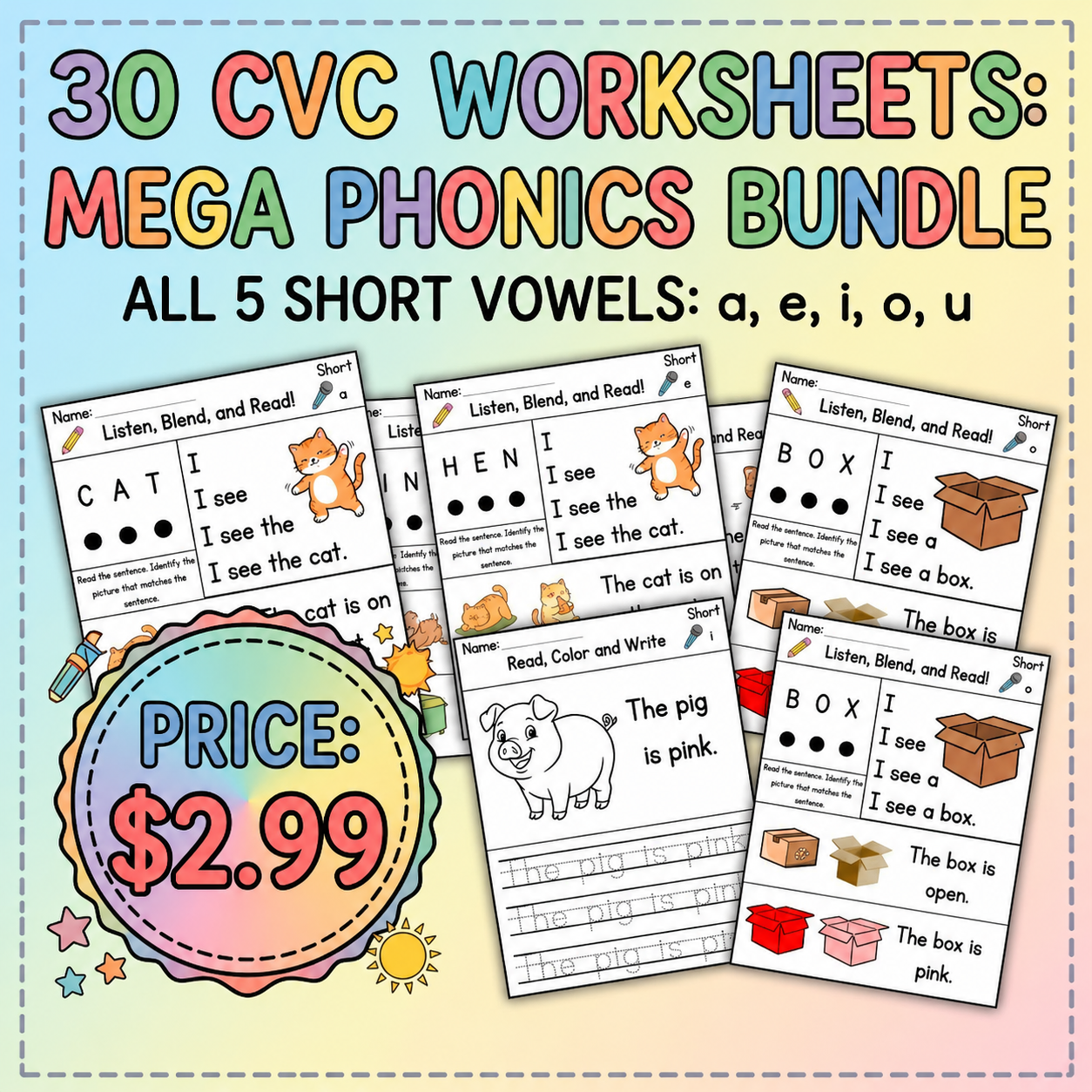
Our Phonics Mastery Bundle: Blends, Passages & Short Vowels ($2.50) is built around exactly this research — it progresses systematically from short vowels through blends to decodable reading passages, so every page builds on the last.
How to Practise Phonics at Home
Keep sessions short — ten to fifteen minutes daily is more effective than an hour once a week. Follow the sequence your child's school is using so home practice reinforces rather than confuses classroom learning. Start every session with a quick review of previously learned sounds before introducing anything new.
Connect phonics to real reading as soon as possible. The moment a child can decode simple CVC words, give them a decodable text so they experience the pride of reading a whole story independently. Also read: CVC Word Families: The Fastest Path to Early Reading for practical strategies that complement a systematic approach.
Frequently Asked Questions
At what age should phonics instruction begin?
Phonemic awareness activities (rhyming, clapping syllables, identifying initial sounds) can begin at age three to four. Letter-sound instruction typically starts at age four to five, once the child has some letter knowledge.
What if my child is behind in phonics?
More practice, not different practice, is usually the answer. Increase the frequency of sessions and slow the pace of new content introduction. If progress stalls after two to three months of consistent effort, consider a consultation with a reading specialist.
Build a Strong Reader Today
The research is on your side. With systematic, daily practice and the right materials, almost every child can become a confident reader. Explore our complete phonics collection — structured, research-aligned and designed for busy parents and teachers.