If there is one skill that unlocks early reading faster than anything else, it is mastery of CVC (consonant-vowel-consonant) word families. Words like cat, bat, hat, rat share a pattern that children can recognise and reuse, turning each new word into a puzzle they already know how to solve. This is not a trick — it is how skilled readers process text, and you can build it deliberately from age four.
What Are Word Families and Why Do They Work?
Word families group words by their ending chunk — the rime. When a child learns that -an makes the sound in can, they instantly have a toolkit for reading ran, fan, man, pan and more without sounding each word out from scratch. Research from the National Reading Panel confirms that rime-based instruction accelerates decoding speed compared to teaching each word in isolation, because the brain recognises repeated patterns far faster than it decodes individual letters.
The Five Most Important CVC Families to Teach First
Start with short-a families: -at, -an, -ap. These appear in hundreds of early reading books and give children immediate reading success. Move to short-i next (-it, -in, -ig), then short-o (-ot, -op, -og), followed by short-u and short-e. This sequence mirrors most structured literacy programmes, so home and classroom practice reinforce each other.
For each family, spend two to three days on recognition before moving to writing. Saying, reading and writing a pattern in close succession creates stronger memory traces than any single activity alone.
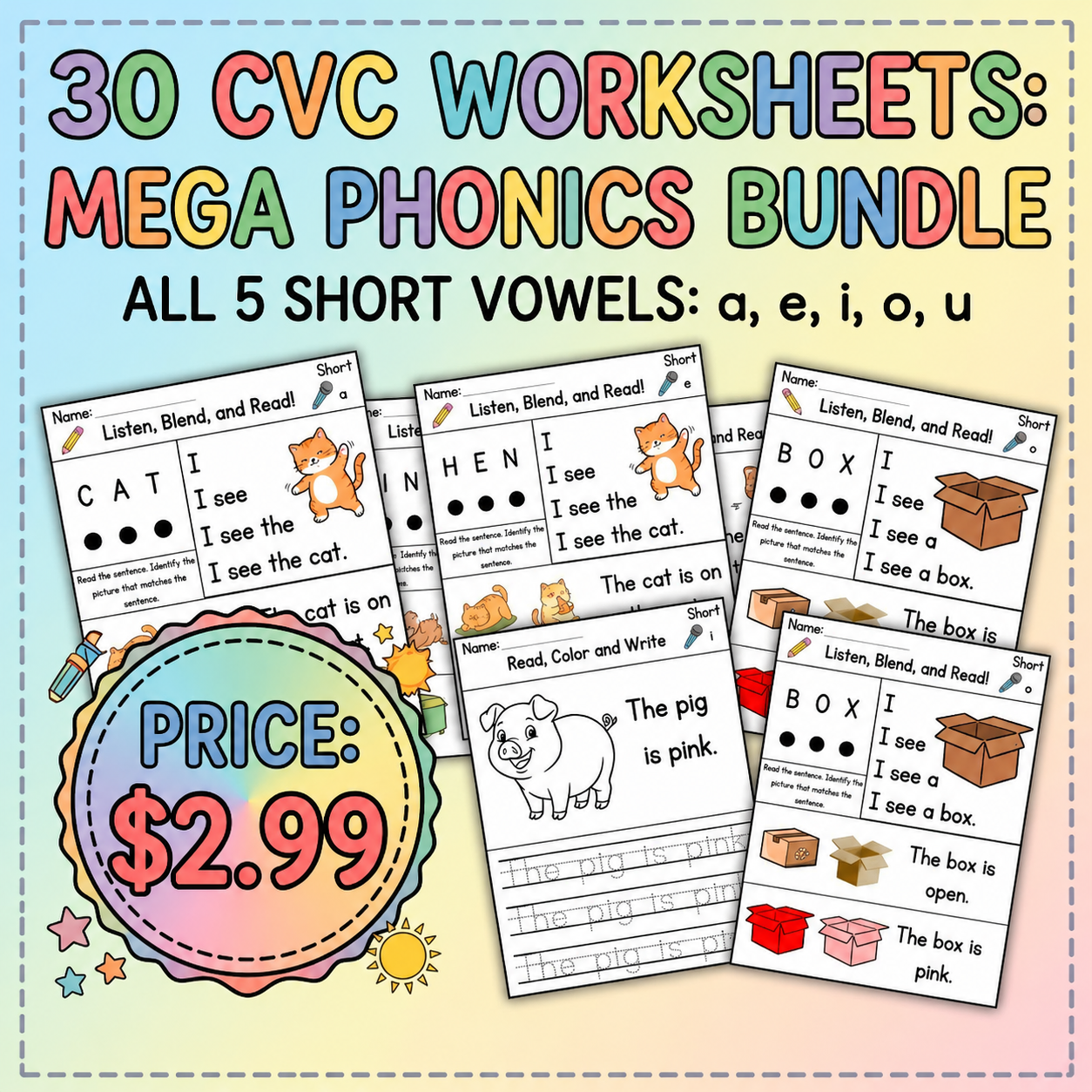
Our 30 CVC Phonics Worksheets: Read, Trace & Color ($2.99) covers all five short-vowel families with read, trace and colour activities that make repetition feel like play — perfect for morning work or independent centres.
Games That Make CVC Practice Irresistible
Worksheets build automaticity, but games build enthusiasm. Try these between practice sessions:
- Word family sort: Write five rime cards and a pile of onset cards (b, c, f, h, m, r). Take turns flipping onsets and deciding which rime fits.
- I Spy CVC: Look around the room and find objects whose names fit a target family — hat, mat, cat.
- Flip books: Cut a small notebook so the left page flips independently. Write onsets on the left and a rime on the right, then flip to create new words.
For more hands-on strategies, see Cut and Paste Printables That Build Multiple Skills, which pairs beautifully with word-family work.
How to Know When to Move On
A child is ready for the next word family when they can read any word in the current family within two seconds without counting sounds on their fingers. Speed matters because fluent word recognition frees up working memory for comprehension — the real goal of reading. Also explore The Connection Between Letter Knowledge and Spelling Success as your child progresses beyond basic CVC patterns.
Frequently Asked Questions
At what age should children start CVC words?
Most children are ready between ages four and five, once they know the sounds of most consonants and at least one short vowel. Start with the vowel your child knows best.
How many CVC words should a kindergartner know?
By the end of kindergarten, most curricula expect children to read at least 20–30 CVC words automatically. Mastering one complete word family (8–10 words) puts them firmly on track.
My child can identify sounds but cannot blend them into a word. What should I do?
Practise oral blending first — say sounds aloud without print and ask what word they make. Most children catch up within a week or two of daily oral practice before reintroducing letters.
Start Your Child's Reading Journey Today
CVC mastery is one of the highest-return investments you can make in early literacy. Consistent, playful practice with the right materials makes all the difference. Explore our full phonics worksheet collection or grab a free sample to see the quality for yourself.