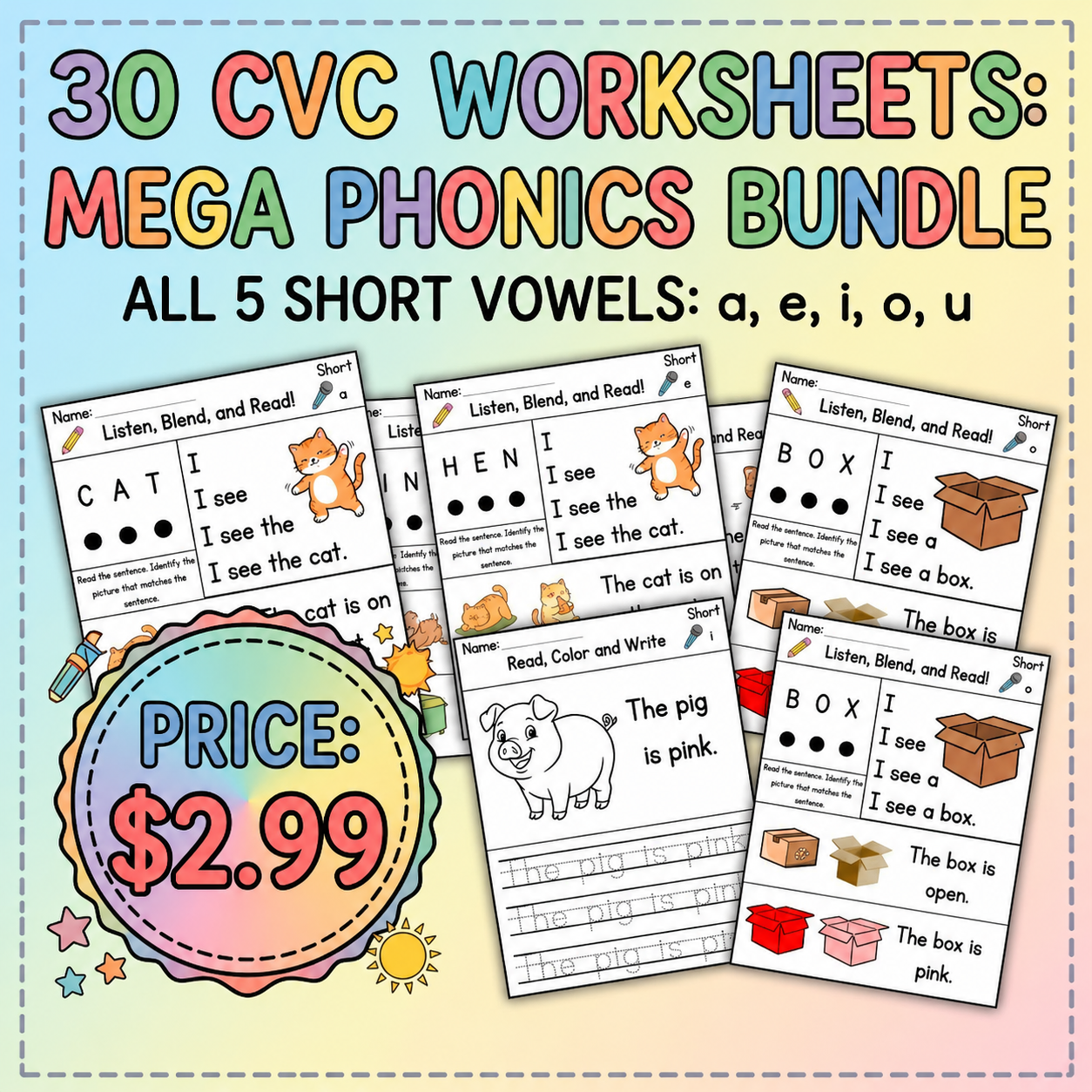
Blending is the ability to push individual sounds together into a word — hearing /k/, /a/, /t/ and arriving at cat. It sounds simple, but for many beginning readers it is genuinely difficult. A child who cannot blend cannot read independently regardless of how many letter sounds they know. Explicit, systematic blending instruction solves this, usually within a few weeks of daily practice.
Why Blending Is Hard
When we say individual sounds in sequence, we add a small vowel sound after stop consonants — /b/ becomes "buh," /t/ becomes "tuh." Concatenating "buh-a-tuh" does not produce bat. The brain must learn to suppress these trailing vowels and merge sounds seamlessly — a cognitive skill that requires practice, not just instruction. Children who struggle with blending usually need to step back to oral blending (no print at all) before reintroducing letters.
Start with Oral Blending
Oral blending games require no materials and can happen anywhere. Say a word in its individual phonemes and ask the child what word it is: "/d/... /o/... /g/ — what word?" Progress from CVC words to four-phoneme words as skill increases. When oral blending is reliable — any CVC word blended within three seconds of hearing the sounds — introduce print blending.
Our Phonics CVC Words & Missing Middle Sound Bundle ($2.98) moves from whole-word reading to phoneme manipulation — the natural progression from blending through to spelling and back again, in one coherent sequence.
The Continuous Blending Technique
The most effective print blending method is continuous blending: running sounds together without stopping between them, while sliding a finger under the word from left to right. Unlike stop-and-say blending (saying each sound separately then guessing), continuous blending produces the word in one fluid motion. Demonstrate: run your finger under sat and say "/sssaaaat/" — s, a and t merge into each other as the finger moves. Teach children to put their finger at the left edge before the letters begin, then slide as they say the sounds.
Common Blending Problems and How to Fix Them
The child sounds out correctly but cannot produce the word: The blending step has not yet developed. Return to oral blending for a week, then reintroduce print.
The child blends but guesses a different word: They are decoding the first sound and guessing from context. Cover all but the first letter and insist on reading every sound before guessing.
The child blends slowly but accurately: This is normal early blending. Celebrate accuracy and let speed develop naturally with practice.
Also see Short Vowel Mastery: The Foundation Every Early Reader Needs — solid short vowel knowledge is the prerequisite that makes blending practice effective rather than frustrating.
Frequently Asked Questions
My child sounds out every letter correctly but then says a completely wrong word. What is happening?
This is a blending deficit, not a letter sound problem. Oral blending practice without print for one to two weeks resolves this in the vast majority of cases.
At what age should blending be established?
Most children with good phonics instruction can blend simple CVC words by the end of kindergarten. If blending is not established by mid-grade 1, consider a consultation with a reading specialist.
From Sounds to Words to Stories
Blending is the moment phonics becomes reading. Get it solid and your child's reading world expands almost immediately. Browse our full phonics collection for the structured resources that make this progression smooth and successful.