Visual charts — structured displays that organise information spatially to make relationships, patterns and rules immediately visible — are among the most powerful tools in an early childhood educator's environment. Unlike verbal instruction, which is transient (spoken and gone), visual charts persist in the environment, allowing children to return to them repeatedly, consult them independently, and absorb them incidentally during transition times. A well-designed chart does a portion of the teaching without any teacher effort after it is posted.
What Makes a Visual Chart Actually Work
Not all visual displays are equally effective. The difference between a chart that gets used and one that becomes invisible wallpaper lies in four qualities: clarity (the information is immediately readable at child eye level), relevance (the chart addresses something children are actively working on), accessibility (the vocabulary and visual style match the children's developmental level), and intentional introduction (the chart was explicitly taught, not just posted).
Charts that children help create — even partially — are used more than those that arrive pre-made. A maths chart where children contributed the examples ("What is another way to make 7?") is more likely to be consulted than one filled out entirely by the teacher. Ownership drives use. Also read: How to Use Math Anchor Charts to Build Independent Learners for the specific strategies that turn displayed charts into tools children actually use.
Types of Visual Charts for Early Childhood
Mathematics charts that work well in early childhood settings include: number lines (horizontal and vertical), hundred charts, ten-frames showing decomposition, place value charts, and concept-specific rule charts (addition, subtraction, number bonds, shapes, greater/less than). Each serves a different purpose and supports a different aspect of mathematical thinking.
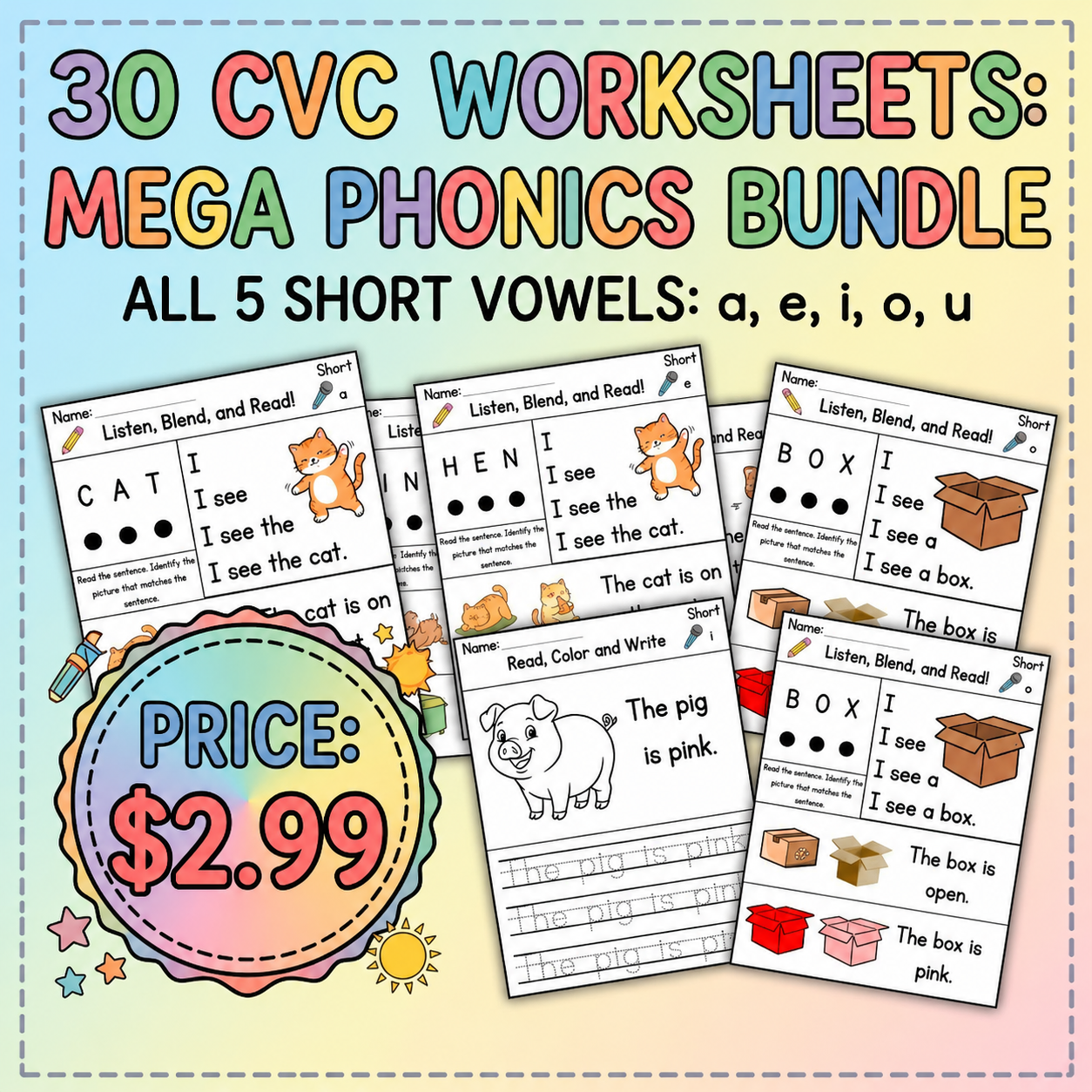
Literacy charts include: alphabet charts with picture cues, word family charts, phonics sound charts, high-frequency word walls, vowel team reference charts, and story structure maps. The most effective literacy charts are those that directly support the decoding and encoding work children are currently doing — not comprehensive charts that cover future skills. Also read: Letter Sounds Before Letter Names: Why the Sequence Matters for how the phonics sequence should inform which charts are displayed at which point in the year.
Maths Visual Charts: The Ten Essentials
For a complete kindergarten mathematics visual reference environment, the ten most valuable charts are: addition rules, subtraction rules, number bonds, greater than and less than, odd and even numbers, basic 2D and 3D shapes, tens and ones (place value), mathematical symbols, number tracing and counting, and time-telling basics. These ten charts span the entire kindergarten mathematics curriculum and provide the reference support children need to work more independently and confidently.
Our Kindergarten Math Rules Posters Bundle ($2.49) provides all ten of these essential mathematics visual charts in a cohesive, hand-drawn classroom style with large visuals and readable text. Each poster is print-ready in high-quality PDF format — designed to be the visual reference environment your learners consult independently, not just decoration on a wall. Building a complete maths reference environment for just $2.49 is one of the best-value decisions any early childhood educator or homeschool parent can make.
Literacy Visual Charts: What to Display and When
Resist the temptation to display every phonics chart from the start of the year. A wall covered with vowel team charts before children have mastered short vowels is noise, not support. Display charts in sequence — beginning of year: alphabet and basic sound charts; mid-year: short vowel and CVC pattern charts; late year: digraph, blend and vowel team charts as these concepts are taught.
Word walls deserve special mention. A well-maintained word wall — organised alphabetically, updated weekly with new high-frequency words, and actively referenced during reading and writing — is one of the highest-return literacy displays possible. A neglected or cluttered word wall is background noise. The investment is in the maintenance, not just the initial creation.
Frequently Asked Questions
How many charts should I display at once?
Five to eight for a dedicated learning space is the practical maximum before visual clutter reduces the effectiveness of each individual chart. For home learning corners, three to five is ideal. Rotate as topics change rather than accumulating indefinitely.
Should charts be laminated?
Yes, for any chart that will be used long-term. Laminated charts can be annotated with dry-erase markers, survive spills, and are reusable across multiple years. The lamination investment pays for itself quickly.
How do I get children to actually use the charts?
Model use constantly ("I am not sure — let me check our chart"), create the expectation of independent checking ("Before you ask me, have you checked our chart?"), and celebrate when you observe a child using a chart unprompted. Habits of independent reference-seeking take weeks to establish but last for years.
The Environment as the Third Teacher
In Reggio Emilia pedagogy, the environment is described as the "third teacher" — alongside the child and the educator. Visual charts are the most deliberate expression of this idea: intentionally designed, carefully placed supports that teach passively through presence. Build your chart environment thoughtfully and it will do a portion of your teaching every single day.