The alphabet song is one of the first things most children learn, and it is a brilliant mnemonic for letter names. But it creates a subtle problem: children who know that B is called "bee" but do not know that B says /b/ cannot yet use that knowledge to read. Letter sounds — not letter names — are the gateway to reading, and the sequence in which you teach them matters more than most parents realise.
The Difference Between Letter Names and Letter Sounds
A letter name is the conventional label: A is "ay," B is "bee," C is "see." A letter sound is the phoneme it represents in words: A says /a/ as in apple, B says /b/ as in bat, C says /k/ as in cat. These are entirely different pieces of knowledge, and only one of them directly enables reading. When a child sees the word bat and thinks "bee, ay, tee," they cannot decode it. When they think "/b/… /a/… /t/," they can.
Which Letter Sounds to Teach First
The most effective sequence introduces sounds that are acoustically distinct from each other. A common starting set: S, A, T, P, I, N. With just these six sounds, children can read dozens of words: sit, pan, nap, tan, tip, snip. Experiencing real reading early confirms that the effort of learning sounds has an immediate, tangible payoff — which is one of the most powerful motivators available.
Avoid introducing visually similar letters (b/d, p/q) or acoustically similar letters (m/n, f/v) in the same week. Spacing them out reduces the confusion that causes most early letter sound errors.
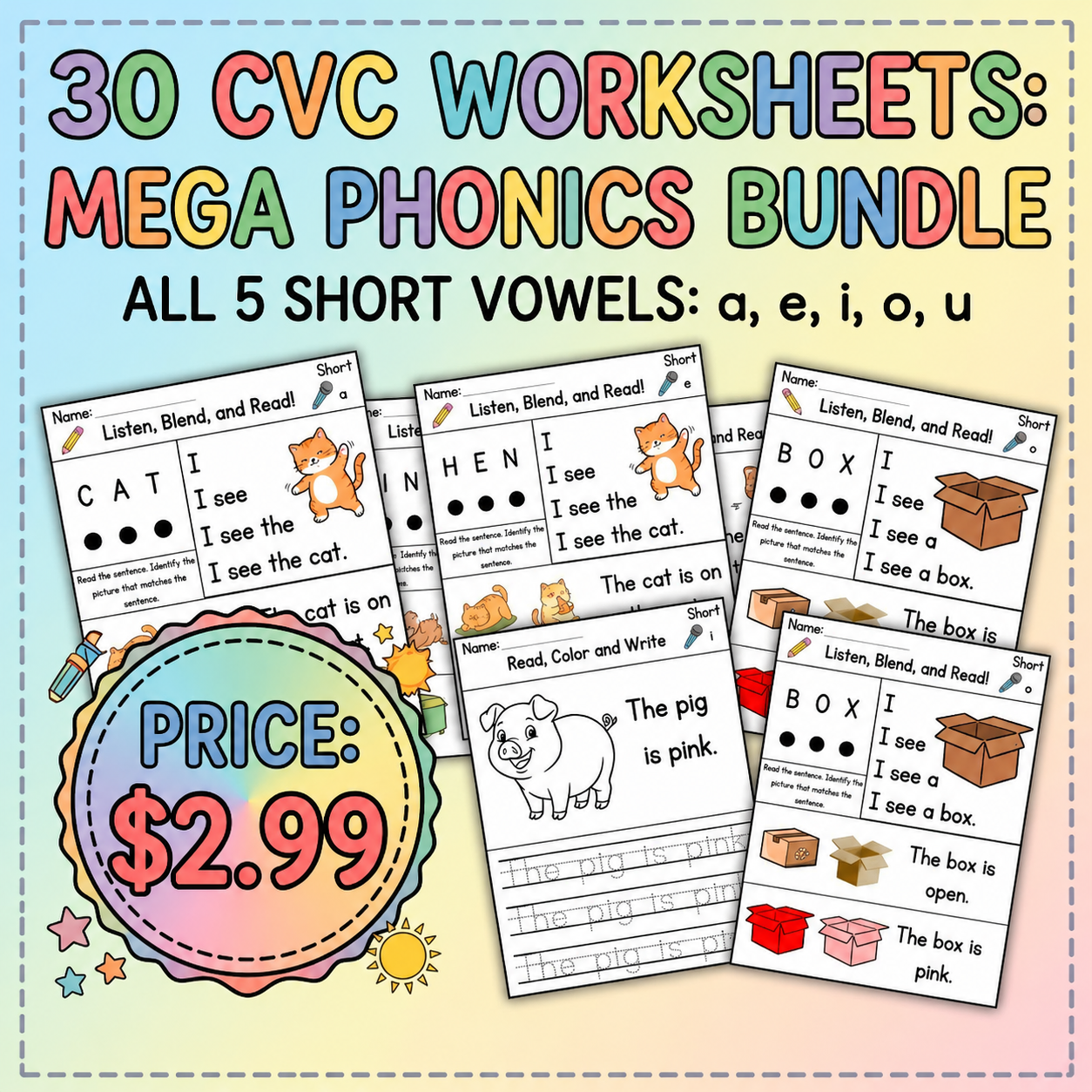
Our Phonics CVC Words & Missing Middle Sound Bundle ($2.98) puts letter sound knowledge to immediate use — children apply individual sounds in word-reading and word-building contexts, exactly the practice that makes sounds stick for good.
When to Introduce Letter Names
Letter names become important when children need to communicate about reading and spelling: "That word starts with a B," "How do you spell your name?" Introduce names deliberately once the corresponding sound is automatic — usually after two to three weeks of solid sound practice. Most children pick up names quickly once sounds are in place, because the name often contains the sound as a hint (B is "bee," containing /b/). The exception is vowels: A, E, I, O, U are called "ay, ee, eye, oh, you" — none of which contain the short vowel sound — so introduce vowel names with extra care. Also see Digraph Sounds Made Simple — the logical next step once individual letter sounds are secure.
Frequently Asked Questions
My child has known letter names for a year but still cannot read. Is something wrong?
This is very common and not a cause for concern in itself. Letter name knowledge does not transfer automatically to letter sound knowledge. Begin explicit, systematic sound instruction starting with S, A, T, P, I, N and expect rapid progress within weeks.
Should I stop teaching the alphabet song?
No — it is a useful anchor for the full set of letters. Just make sure letter sound practice is happening alongside it, not subordinated to it.
Unlock Reading with the Right Foundation
Letter sounds are the key that opens reading. Teach them systematically, prioritise them over names, and connect them to real word reading as quickly as possible. Browse our alphabet and phonics resources for structured tools that make this progression straightforward.