One of the most common frustrations in early phonics teaching is the child who can identify every individual letter sound correctly but cannot blend them into a word. They say c... a... t... and then look at you blankly. This is not a reading problem — it is a blending problem, and it has a clear, teachable solution.
Why Blending Is a Separate Skill
Blending — the ability to merge a sequence of sounds into a recognisable word — is a distinct cognitive operation from sound recognition. It requires working memory (holding earlier sounds in mind while processing later ones) and phonemic synthesis (merging discrete sounds into a continuous stream). Children who struggle with blending often have intact sound knowledge; what they lack is practice with the blending operation itself.
Blending responds very quickly to targeted practice. Most children who struggle show significant improvement within two to three weeks of structured daily practice. Also read: CVC Word Families: The Fastest Path to Early Reading for how word families reduce the blending load and build fluency.
The Three-Stage Blending Sequence
Start with physical blending using sound buttons. Place letter cards on a surface. Point under each sound as you say it (c... a... t...), then slide your finger under all letters while saying the word continuously. The physical action of sliding models the mental action of merging. Let children take over the sliding as soon as possible.
Progress to oral blending without visual support. Say the sounds aloud with a brief pause between each: "What word is this? /d/ /o/ /g/?" This builds phonemic synthesis in working memory. Start with two-sound words (at, up, in) before moving to three-sound CVC words.
Finally, apply blending to print. Children should encounter the words they have been blending orally in printed form, with a clear expectation that they decode them — not guess or memorise. This step transfers the skill to actual reading.
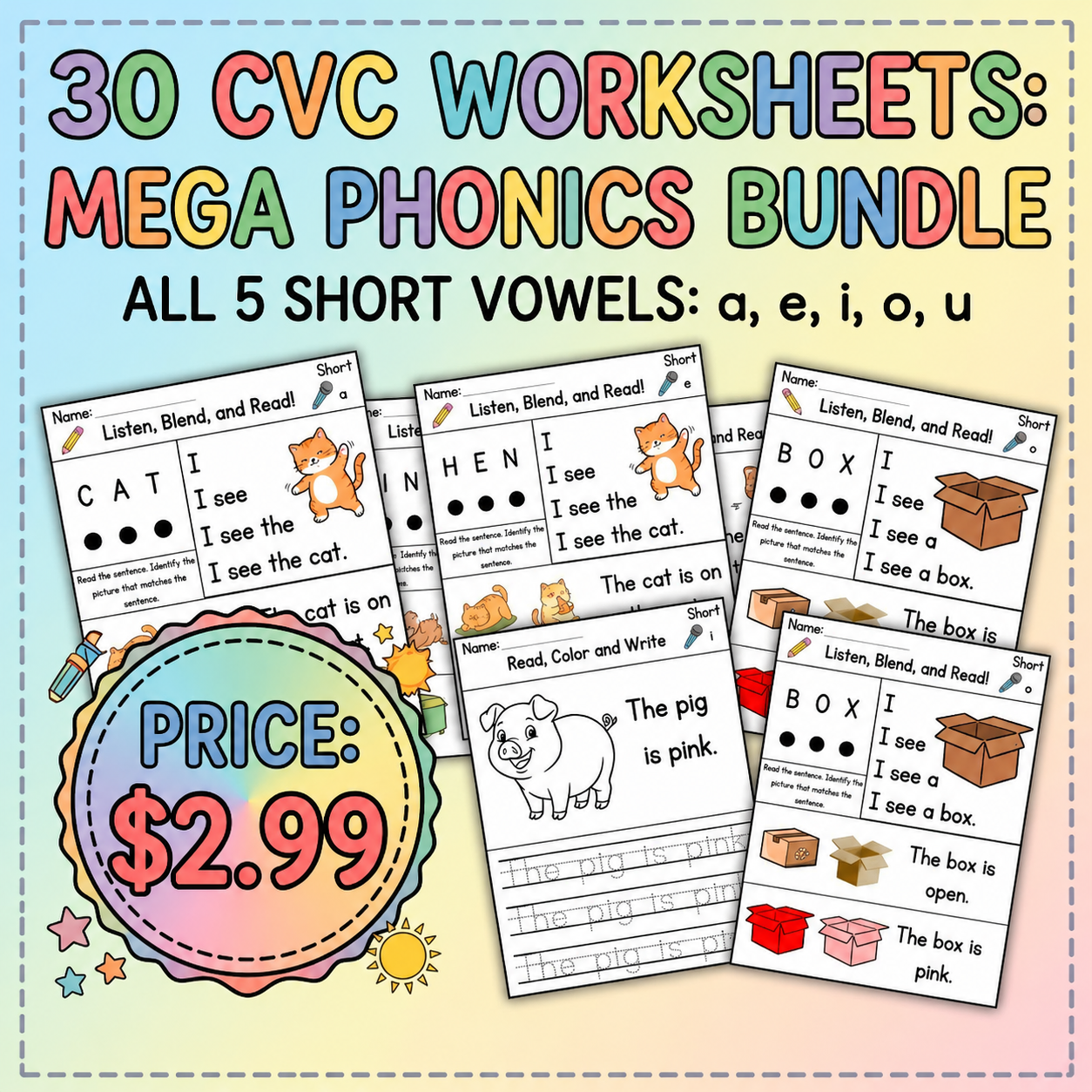
Our Science of Reading Aligned CVC Blending Worksheets — gmdock Phonics Pack ($2.49) provides structured blending practice through Sound Blending Trains, Build the Word Puzzle activities, and Read and Match tasks that take children through all three stages in a format they find engaging. The varied activity types prevent boredom while maintaining the systematic repetition that blending mastery requires.
Common Blending Mistakes to Watch For
The most common error is adding a schwa sound to consonants — saying "cuh-a-tuh" instead of "c-a-t". Model pure consonant sounds from the start. Another common issue is guessing from the first letter only — children hear "c" and say "can" without processing the remaining sounds. Requiring children to point to each sound before blending prevents this shortcut.
Frequently Asked Questions
My child blends in practice but not in actual reading. Why?
Reading introduces additional demands — meaning-making, fluency, memory — that compete for the cognitive space blending requires. Build blending automaticity through repeated practice until it requires no conscious effort.
At what age should blending be established?
Most children in structured phonics programmes begin blending two- and three-phoneme words between ages four and five. By the end of kindergarten, confident blending of CVC words is a standard expectation.
What if oral blending is fine but written blending is not?
This usually indicates that sound-to-letter mapping is incomplete. Revisit individual letter sounds and ensure the child can identify letters by their sound, not just recognise them visually.
Keep Blending Practice Positive
Short, successful sessions beat long, frustrating ones. Aim for five to ten minutes of blending practice daily with a high success rate — if a child is getting more than 20% of attempts wrong, the words are too hard. Confidence and competence grow together in early reading.