Picture books and phonics instruction are not opposites — when chosen and used well, picture books are among the most powerful phonics tools available. A story that repeats the same sound pattern dozens of times, wrapped in an engaging narrative children want to hear again and again, creates more sound-symbol connections per minute than almost any worksheet. Here is how to make picture books work for phonics alongside your structured programme.
What to Look for in a Phonics-Rich Picture Book
The most phonics-useful picture books share several features: they have clear, repetitive language patterns (rhyming, alliteration or repeated sentence structures), they use simple, decodable vocabulary that children can attempt independently, and they have an engaging story that motivates multiple rereads. Multiple rereads are where the phonics benefit accumulates — a book read ten times exposes a child to its sound patterns ten times, each time slightly more consciously than the last.
Classic examples: Hop on Pop (Dr Seuss) for CVC word families, Each Peach Pear Plum (Ahlberg) for rhyme awareness, Chicka Chicka Boom Boom for letter recognition in a memorable narrative context.
How to Read a Picture Book for Phonics Benefit
The first read is always for enjoyment — do not interrupt it with phonics instruction. The second read is where you can pause and draw attention to sound patterns: "Did you notice that cat, hat and sat all end the same way? What sound do they share?" This approach keeps the story pleasurable while making the phonics explicit enough to teach. The third read, let the child predict rhyming words before you say them — this develops phonemic awareness without it feeling like a lesson at all.
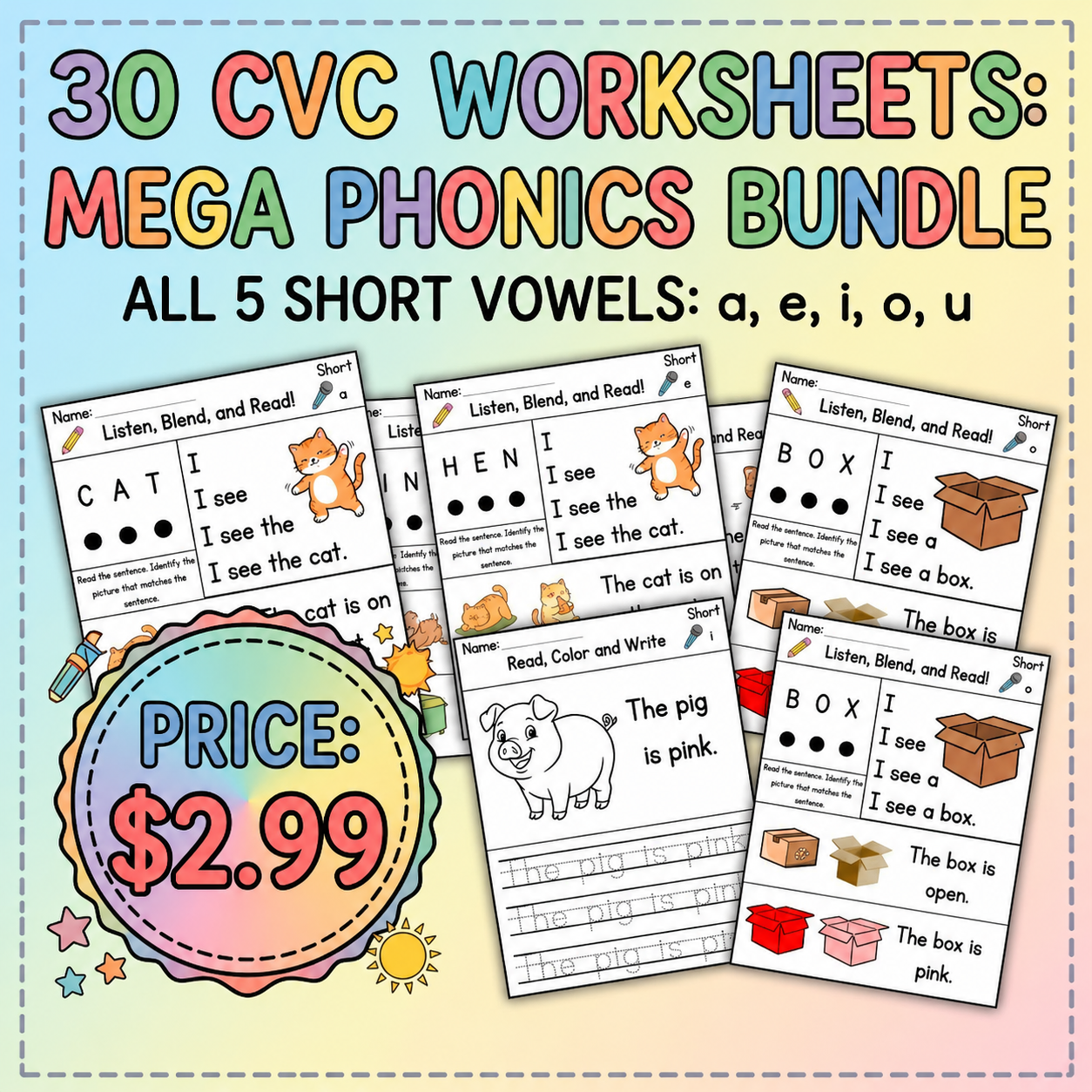
When picture book exposure needs to become structured phonics practice, our 30 CVC Phonics Worksheets: Read, Trace & Color ($2.99) picks up exactly where the storybooks leave off — providing systematic practice with the same word families children have been hearing in their favourite stories.
Using Wordless Picture Books for Comprehension
Wordless picture books — where the story is told entirely through illustrations — are exceptional for comprehension development. Children must narrate the story themselves, generating the language that picture books normally provide. This develops: vocabulary (they must find words for what they see), story grammar (beginning, middle, end), inference skills (what is happening off the page?) and oral storytelling ability that directly transfers to written composition. The Lion and the Mouse (Pinkney) and Journey (Becker) are excellent starting points.
Also read: Reading Comprehension at Age 5: What to Expect and How to Help for more on building comprehension skills alongside phonics.
Frequently Asked Questions
Should I stop reading complex books aloud because my child can't read them independently?
Absolutely not. Read-aloud complexity should always be significantly above the child's independent reading level. This is where vocabulary and comprehension grow fastest — in the gap between what children can read alone and what they can understand when an adult reads to them.
How many times should I reread the same book?
As many times as the child requests. Research consistently shows that rereading the same text produces greater learning gains than always reading new material, particularly for vocabulary and phonological awareness.
Build a Reading Life Alongside Reading Skills
Phonics teaches children how to read. Picture books give them a reason to want to. Both are necessary and they work best together. Explore our complete phonics collection for structured resources that complement the reading life you are building at home.