Why Rhyming Is a Building Block of Reading
Rhyming is one of the earliest phonological awareness skills children develop, and it plays a critical role in learning to read. When a child understands that cat, hat, and bat share the same ending sound, they're beginning to recognize sound patterns in language. This awareness makes it much easier to decode new words later on.
The good news is that rhyming is one of the most naturally playful skills to teach. Children love the silliness of rhyming words, and you can weave practice into everyday moments without it ever feeling like a lesson.
Playful Activities to Teach Rhyming
1. Rhyming Read-Alouds
Books by authors like Dr. Seuss and Julia Donaldson are packed with rhyme. As you read, pause before the rhyming word and let your child fill it in. For example: "One fish, two fish, red fish..." — they'll shout "blue fish!" with delight. Over time, this trains their ears to anticipate and produce rhyming sounds.
2. Rhyme Basket
Fill a small basket with objects that form rhyming pairs: a sock and a rock, a car and a star (cutout), a bug and a mug. Ask your child to match the pairs by finding the two things that rhyme. This hands-on sorting activity makes abstract sound patterns concrete and touchable.
3. Silly Rhyming Names
Kids think it's hilarious when you rhyme their name. "Emma Bemma, Lucas Bucas, Sofia Bofia." Take turns making up silly rhyming names for family members, pets, and stuffed animals. The sillier, the better — laughter helps learning stick.
4. Rhyme Jump
Say two words aloud. If they rhyme, your child jumps. If they don't, your child stays still. Start with obvious pairs like dog/log (jump!) and cat/fish (freeze!). This game works perfectly as a gross motor warm-up before any seated learning time.
5. Rhyming Word Families Worksheets
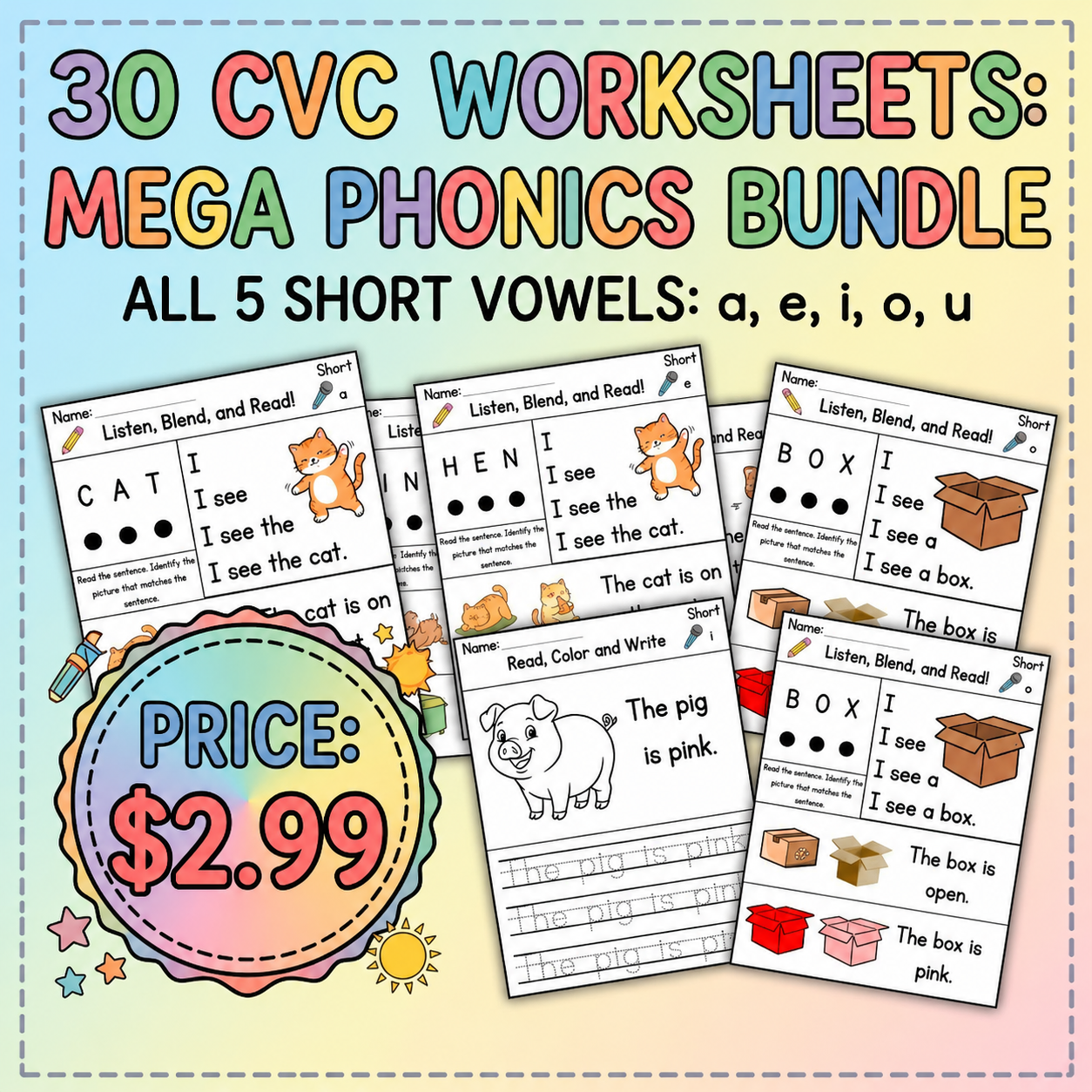
Once your child can identify rhymes orally, move to printed practice. Word family worksheets group words by their ending sound — the -at family (cat, bat, mat, sat), the -ig family (big, dig, pig, wig), and so on. Our kindergarten worksheets include word family sorting pages that bridge the gap between oral rhyming and early reading.
Tips for Success
- Start with listening before producing. Ask "Do these rhyme: hat and cat?" before asking "Tell me a word that rhymes with hat."
- Accept nonsense words. If your child says "dat" rhymes with "cat," celebrate it. Nonsense rhymes still demonstrate sound awareness.
- Practice daily in small moments. Rhyme while driving, during bath time, or waiting in line. No materials needed.
- Connect rhyming to reading. When your child encounters a new word while reading, prompt them: "This word ends like 'make.' What does it say?"
When to Expect Rhyming Skills to Develop
Most children begin recognizing rhymes around age 3 and can produce their own rhymes by age 4 or 5. If your child is struggling past age 5, consider extra practice with a word search generator focused on rhyming word families, or consult a speech-language professional for guidance.
Rhyming doesn't have to be a formal lesson. Keep it playful, keep it silly, and your child will absorb these essential pre-reading skills without even realizing they're learning.
Looking for a structured way to practise this at home or in the classroom? Our Phonics Mastery Bundle: Blends, Passages & Short Vowels ($2.50) gives you everything you need in one ready-to-use printable pack.