What Is a Sight Word Wall?
A sight word wall is a display of high-frequency words posted in your home where your child sees them every day. Sight words — words like the, is, and, was, said, have — make up a huge portion of everyday text. Research shows that the 100 most common English words account for roughly 50% of all printed material. When children can recognize these words instantly, without sounding them out, their reading fluency skyrockets.
A classroom word wall is standard in kindergarten and first grade, but having one at home gives your child daily exposure outside school hours, which accelerates mastery significantly.
Setting Up Your Word Wall
Choose the Right Location
Pick a wall or section of wall at your child's eye level in a high-traffic area. The kitchen, playroom, or hallway near their bedroom are great choices. The words need to be somewhere your child naturally looks every day. A word wall hidden in a corner of a guest room won't get the exposure it needs.
Start Small
Don't put up 50 words on day one. Start with five to eight words your child encounters most often. A good starting set includes: I, a, the, is, it, and, to, my. Add two to three new words per week. By the end of a few months, your wall will grow to 30-50 words organically.
Make the Words Large and Clear
Write each word on an index card or piece of cardstock using large, clear lowercase letters (since that's how children encounter them in books). Use a thick black marker for maximum visibility. Some parents color-code by word pattern — all CVC words in blue, irregular words in red — but this is optional.
Organize Alphabetically or by Category
The most common approach is organizing words under their first letter, similar to classroom word walls. Another option is grouping by pattern: words with -th, words with -ing, words that rhyme. Choose whatever system helps your child find and reference words most easily.
Using the Word Wall Daily
A word wall only works if you actually use it. Here are daily activities that take just two to five minutes:
- Point and read: Point to five random words and have your child read each one as fast as they can.
- Word hunt: "Find the word 'the' on the wall." Speed it up: "Find it before I count to five!"
- Spell and chant: Point to a word, chant the spelling together: "T-H-E spells THE!" Clap with each letter.
- Use it in writing: When your child is writing and asks how to spell a word, point to the wall: "Can you find it up there?"
- Mystery word: Give clues: "I'm thinking of a word that starts with /w/ and means the opposite of 'wasn't.'"
Choosing Which Words to Add
Use a recognized list like the Dolch Sight Word List or the Fry Word List, which organize words by frequency and grade level. Start with the pre-primer and primer lists, then progress. Here's a suggested order for the first 20 words:
- Week 1: I, a, the, is, it
- Week 2: and, to, in, my, we
- Week 3: can, see, like, go, he
- Week 4: she, was, you, are, do
Adjust the pace based on your child. If they haven't mastered week 1's words, don't rush to week 2. Solid mastery of fewer words beats shaky recognition of many.
Combining the Word Wall with Other Tools
Reinforce word wall words with printable practice. Our flashcard maker creates sight word flashcards you can use for car rides and waiting rooms. Our word tracing generator produces custom tracing sheets for each new word added to the wall. And our kindergarten worksheets include sight word activities like find-and-color, sentence building, and read-and-draw exercises.
A sight word wall is one of the simplest, most cost-effective tools for boosting your child's reading ability. Set it up this weekend, use it daily, and watch those high-frequency words go from hesitation to instant recognition.
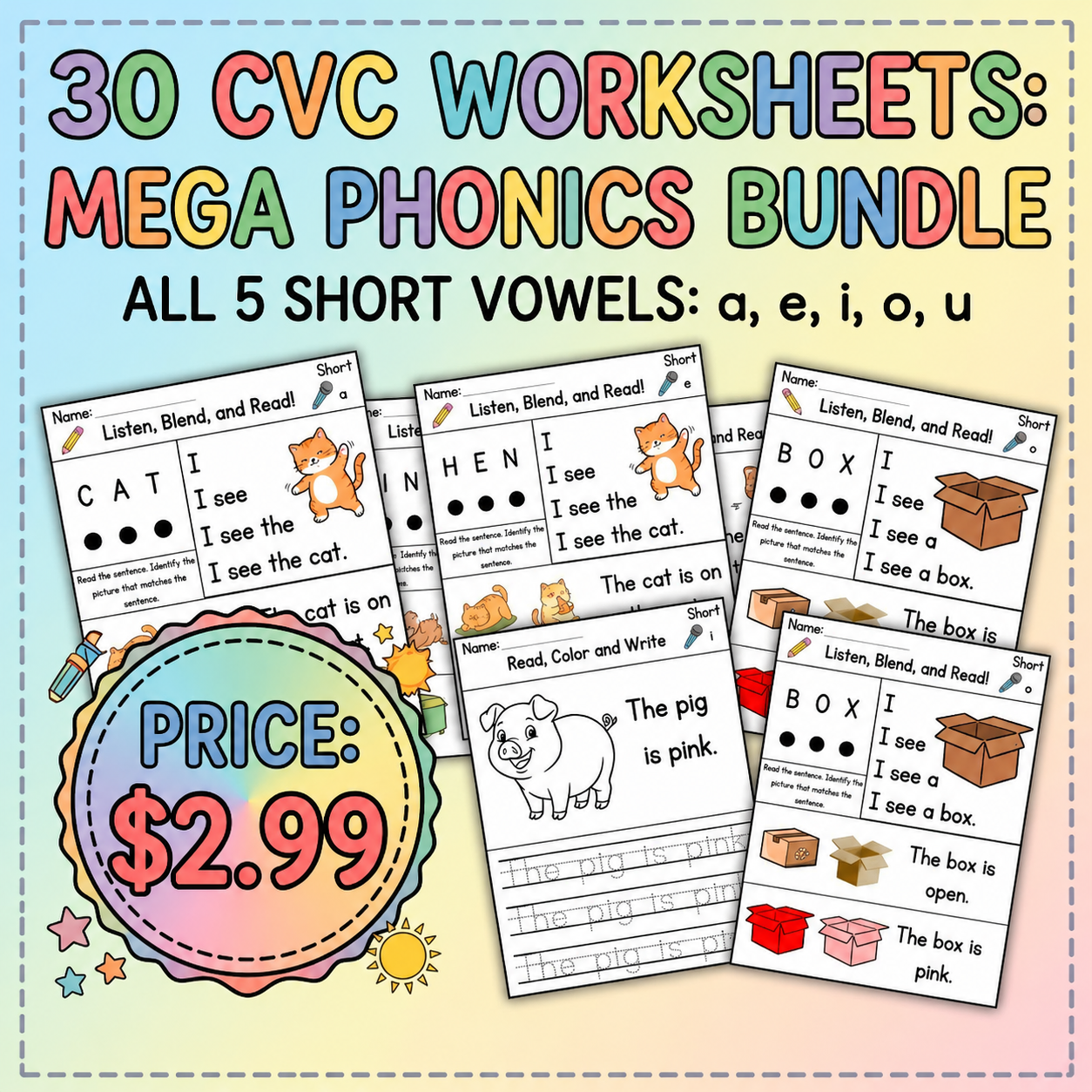
Looking for a structured way to practise this at home or in the classroom? Our Phonics Mastery Bundle: Blends, Passages & Short Vowels ($2.50) gives you everything you need in one ready-to-use printable pack.