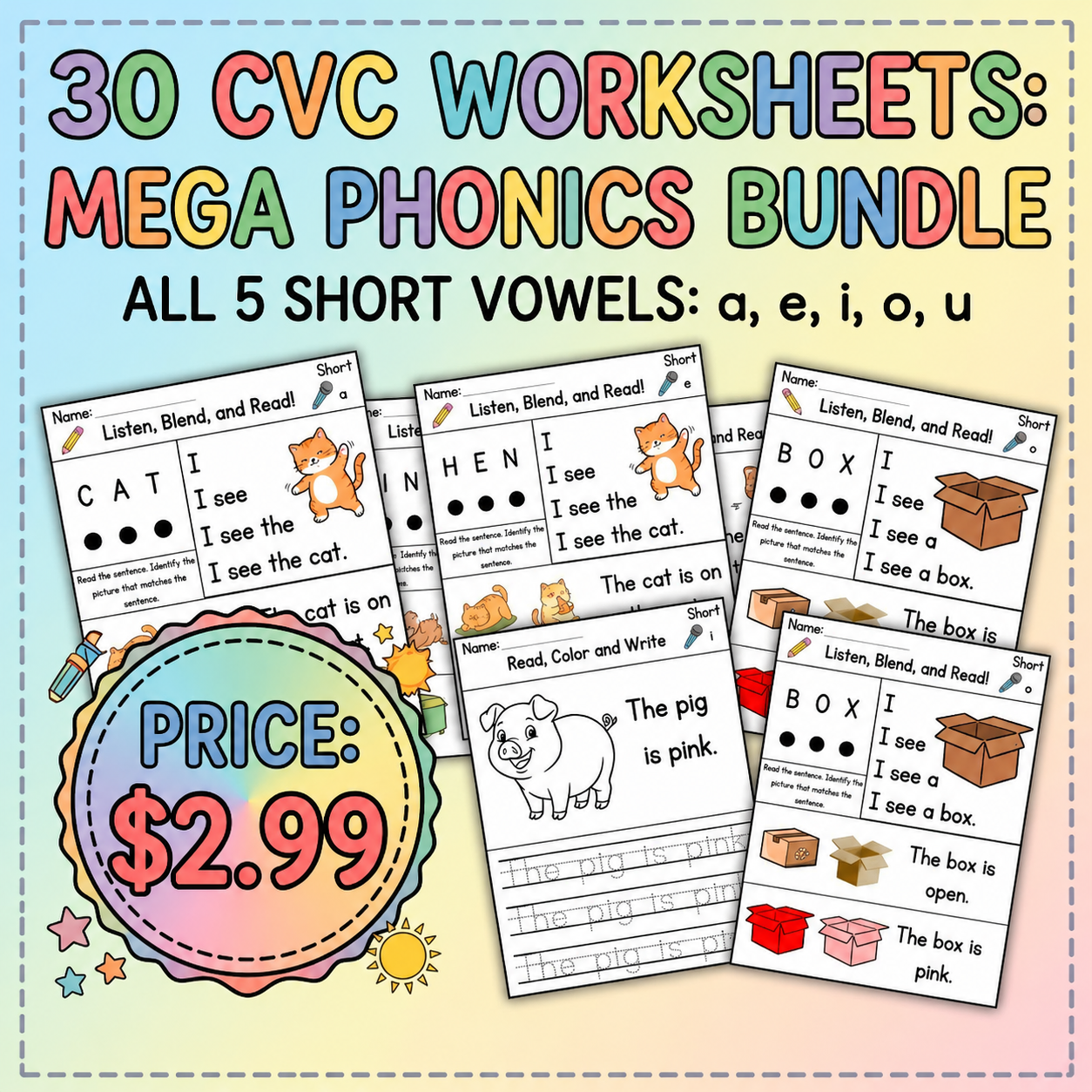
Want to see real progress in your child's skills? The strategies around cvc word families that we'll cover in this post have been tested by educators and loved by parents.
Tips for Getting Started
Start with just 10-15 minutes of focused practice per day. Young children have short attention spans, and pushing too hard can create negative associations with learning.
Follow your child's lead. If they show interest in letters, lean into that. If numbers fascinate them, build on that enthusiasm. The most effective learning happens when children are intrinsically motivated.
Create a dedicated learning space — even a small corner of a table — where your child knows it's time to focus. Having materials organized and ready reduces transition time and keeps engagement high.
Setting Realistic Expectations
Every child develops at their own pace. Some children will pick up reading at age 4, while others won't be ready until 6 or 7 — and both timelines are perfectly normal.
Focus on progress, not comparison. The child who needs more practice isn't behind — they're building a deeper foundation that will serve them well in the long run.
Looking for ready-made resources? The My First Words: CVC Spelling & Letter Tracing Worksheets is packed with activities that reinforce exactly these skills. Grab it for just $2.49 — instant download, print as many times as you need.
Common Mistakes to Avoid
One of the biggest mistakes parents and teachers make is moving too quickly. Mastery takes time, and children need repeated exposure to concepts before they truly internalize them. If a child hasn't mastered a skill, repeating the practice is not failure — it's smart teaching.
Another common pitfall is relying on a single type of activity. Children learn best through variety: tracing one day, cutting and pasting the next, oral practice after that. Mix up your approach to keep things fresh.
For a hands-on approach, use our free Word Tracing Generator to generate custom activities your child will love.
Creating Consistency Without Burnout
The secret to effective early education isn't marathon study sessions — it's consistent, brief daily practice. Even 10 minutes of focused work each day adds up to over 60 hours of practice per year.
Build learning into your existing routine. Worksheet time after breakfast, flashcard review before bed, or letter identification during grocery shopping — these small moments compound into significant learning gains.
Ready to put these ideas into practice? Our My First CVC Words Activity Pack gives your child structured, engaging worksheets designed by educators. Starting at just $1.49.
Frequently Asked Questions
What is the difference between phonics and phonemic awareness?
Phonemic awareness is the ability to hear and manipulate individual sounds in words (purely auditory). Phonics connects those sounds to written letters and letter patterns. Both are essential for reading.
How do I know which worksheets are right for my child's level?
Choose worksheets where your child can complete about 80% independently. If everything is too easy, move to more challenging material. If they struggle with more than half, step back to an easier level.
How much time should young children spend on worksheets each day?
For children ages 3-6, 10-20 minutes of focused worksheet time is ideal. Keep sessions short and positive, and always stop before frustration sets in. Consistency matters more than duration.
You Might Also Enjoy
- Reading Comprehension Strategies for Pre-K Students — Best Practices
- How to Teach Sight Words Alongside Phonics
- Self-Regulation Skills: Helping 5-Year-Olds Stay Focused — Easy Activities
Start Your Child's Learning Journey Today
Every great reader, writer, and problem-solver started with the basics. The activities and strategies we've discussed today are your roadmap to building a strong educational foundation.
Browse our complete collection of printable worksheets and find the perfect resources for your child's learning level. With instant digital downloads starting under $2, there's no reason to wait.