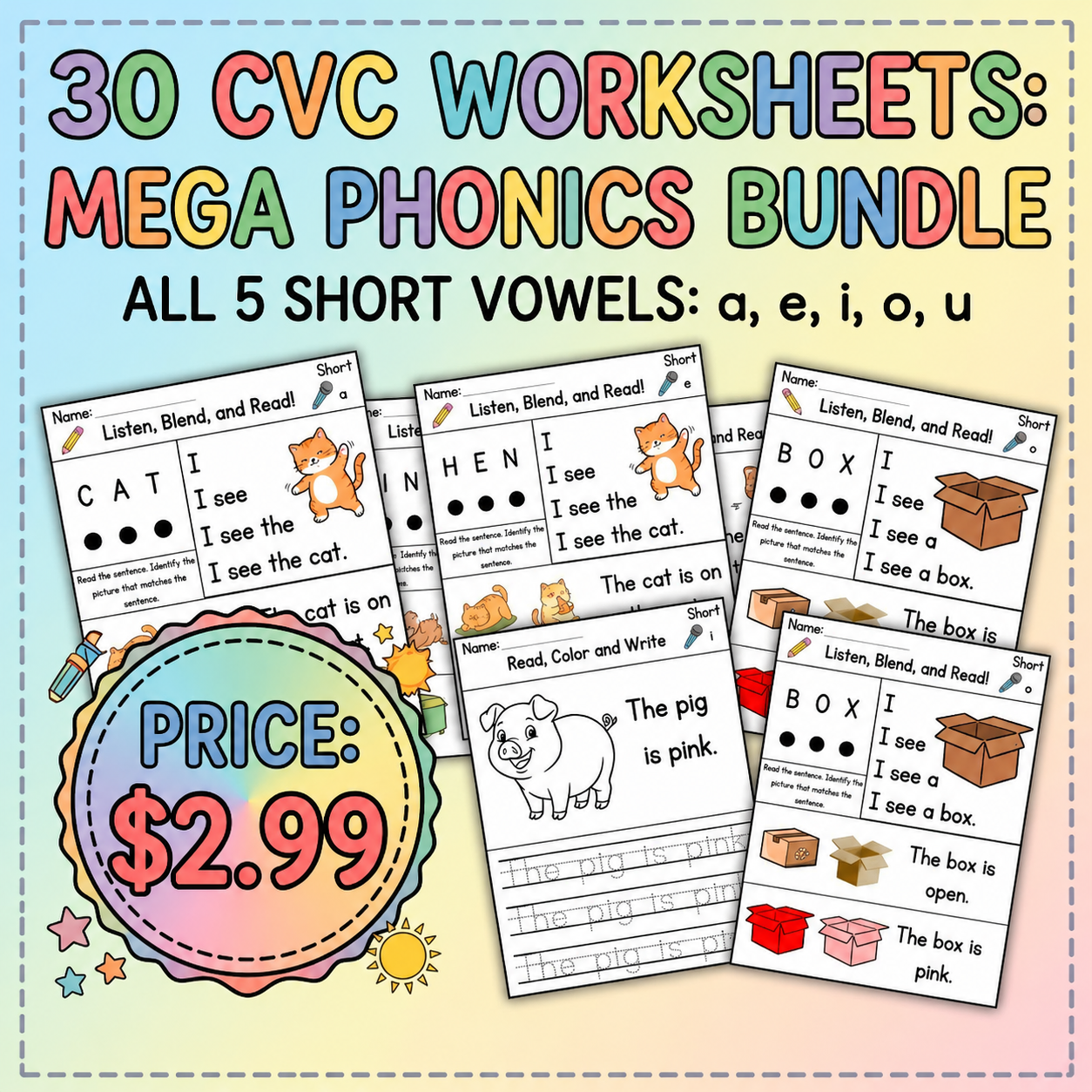
One of the most common questions we hear from parents is about sight words phonics. In this comprehensive guide, we'll address the key concepts, share proven strategies, and point you to resources that actually work.
The Role of Repetition
Neuroscience tells us that repetition strengthens neural connections. When a child traces the same letter multiple times across different worksheets, they're not just practicing — they're literally building stronger brain pathways for that skill.
The key is to vary the format while keeping the core skill the same. Tracing, writing from memory, identifying in text, and forming with playdough all reinforce letter knowledge through different modalities.
Common Mistakes to Avoid
One of the biggest mistakes parents and teachers make is moving too quickly. Mastery takes time, and children need repeated exposure to concepts before they truly internalize them. If a child hasn't mastered a skill, repeating the practice is not failure — it's smart teaching.
Another common pitfall is relying on a single type of activity. Children learn best through variety: tracing one day, cutting and pasting the next, oral practice after that. Mix up your approach to keep things fresh.
Looking for ready-made resources? The Digraph Sounds Worksheets PH, WH, TH, SH, CH, CK is packed with activities that reinforce exactly these skills. Grab it for just $2.99 — instant download, print as many times as you need.
Understanding Phonics: The Building Blocks of Reading
Phonics is the relationship between letters and sounds. When children understand that the letter "b" makes the /b/ sound, they've taken the first step toward reading independently.
Systematic phonics instruction — teaching sounds in a logical, sequential order — is the most effective approach according to decades of reading research. Start with single consonant sounds, move to short vowels, then blend them into simple CVC (consonant-vowel-consonant) words.
Quick tip: Try our free Flashcard Maker to create custom practice sheets tailored to your child's needs — no signup required.
How to Measure Progress
Track your child's development by keeping a simple portfolio of their work over time. Looking back at worksheets from a few weeks or months ago can reveal dramatic improvement that daily observation might miss.
Focus on effort and progress, not perfection. A child who traces wobbly letters today but smoother ones next week is making excellent progress, even if the letters aren't perfect yet.
Need something quick? Our free Word Tracing Generator lets you create and print personalized worksheets in seconds.
Creating Consistency Without Burnout
The secret to effective early education isn't marathon study sessions — it's consistent, brief daily practice. Even 10 minutes of focused work each day adds up to over 60 hours of practice per year.
Build learning into your existing routine. Worksheet time after breakfast, flashcard review before bed, or letter identification during grocery shopping — these small moments compound into significant learning gains.
Comprehension: Reading with Understanding
Decoding is only half of reading — comprehension is the other half. Even at the earliest levels, ask children questions about what they've read: "What happened in the story?" "How did the character feel?"
Simple activities like drawing a picture about a story, retelling it in their own words, or answering who/what/where questions build comprehension skills alongside decoding ability.
Save yourself hours of prep time. The Phonics & Reading Mastery Bundle includes everything you need, professionally designed and classroom-tested. Only $2.49.
Want to try before you buy? Download our free worksheet samples and see the quality for yourself.
Frequently Asked Questions
How can I help my struggling reader at home?
Focus on phonics-based practice with decodable texts at your child's level. Keep sessions short (10-15 minutes), celebrate small wins, and avoid frustration. Consistent daily practice matters more than session length.
At what age should a child start learning phonics?
Most children are ready for basic phonics instruction around age 4-5, starting with letter sounds and simple CVC words. However, informal exposure through reading aloud and singing alphabet songs can begin much earlier.
How many sight words should a kindergartener know?
By the end of kindergarten, most children can recognize 20-50 sight words. However, the exact number varies, and it's more important that children can decode phonetically regular words than memorize sight words.
What is the difference between phonics and phonemic awareness?
Phonemic awareness is the ability to hear and manipulate individual sounds in words (purely auditory). Phonics connects those sounds to written letters and letter patterns. Both are essential for reading.
Can I use the same worksheets multiple times?
Absolutely! Print-and-use PDF worksheets can be printed as many times as needed. Repetition is actually beneficial — children build mastery through repeated practice with familiar materials.
You Might Also Enjoy
- 8 Simple Science Activities for Early Learners
- Reading Comprehension Strategies for Pre-K Students
- 12 Phonics Worksheets Every Pre-K Teacher Needs
- When Should Your Child Start Learning the Alphabet? — Practical Ideas
Take the Next Step
The best time to start is now. Whether you print one worksheet today or build a complete learning routine, every small step counts toward your child's success.
Explore our full range of educational printables — designed by teachers, loved by kids, and trusted by parents worldwide.