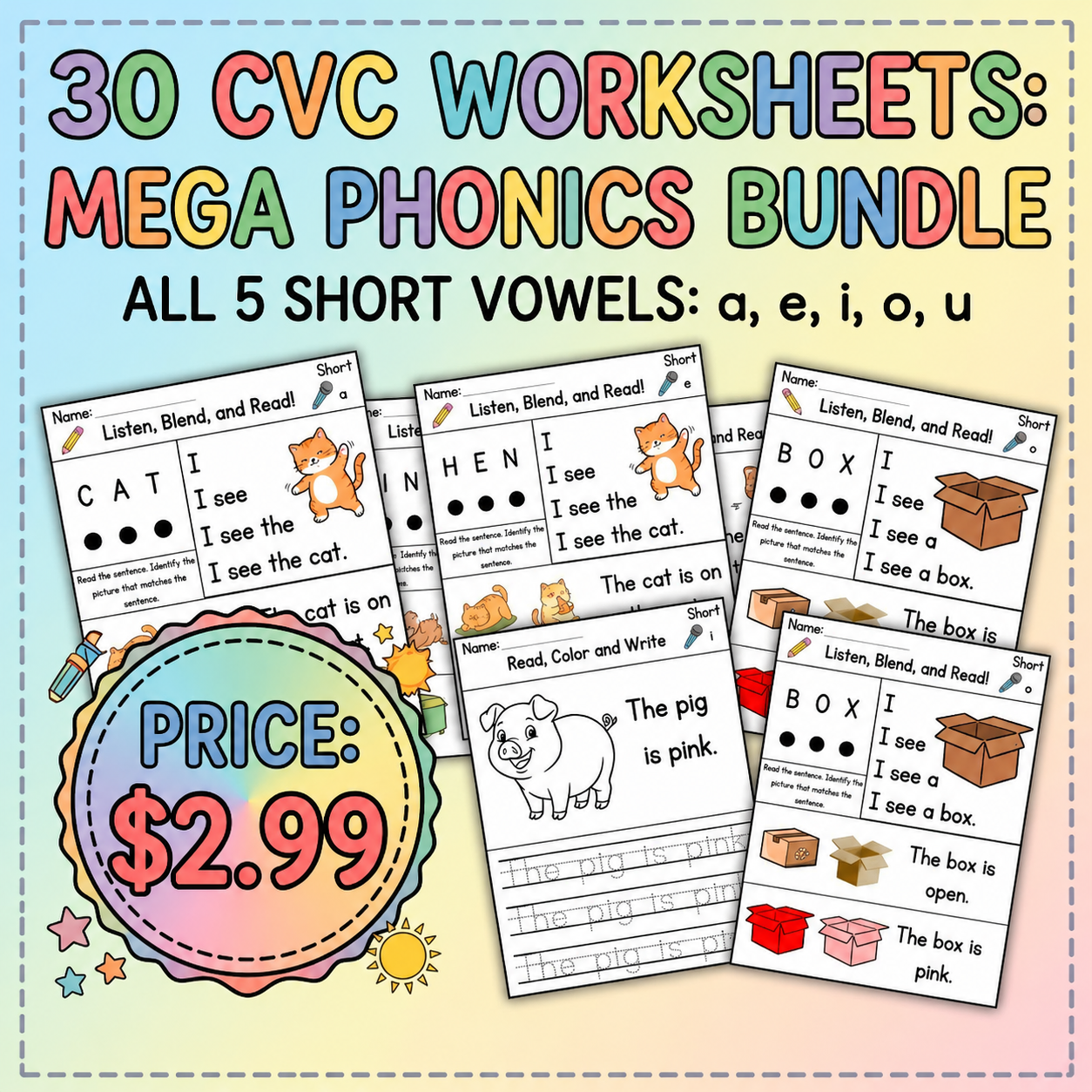
Teaching young children can feel overwhelming, but it doesn't have to be. When you understand the principles behind teaching blending readers, everything becomes more manageable — and more fun for everyone involved.
Why This Matters for Young Learners
Research consistently shows that children who receive quality early education are more likely to succeed academically and socially in later years. The skills developed during ages 3-7 form the foundation for all future learning.
When children engage with structured activities — whether worksheets, hands-on projects, or guided play — they build neural pathways that support reading, math, and critical thinking. The key is consistency and making learning enjoyable.
Creating Consistency Without Burnout
The secret to effective early education isn't marathon study sessions — it's consistent, brief daily practice. Even 10 minutes of focused work each day adds up to over 60 hours of practice per year.
Build learning into your existing routine. Worksheet time after breakfast, flashcard review before bed, or letter identification during grocery shopping — these small moments compound into significant learning gains.
Save yourself hours of prep time. The Short Vowel Phonics: Read and Color Sentences includes everything you need, professionally designed and classroom-tested. Only $1.99.
How to Measure Progress
Track your child's development by keeping a simple portfolio of their work over time. Looking back at worksheets from a few weeks or months ago can reveal dramatic improvement that daily observation might miss.
Focus on effort and progress, not perfection. A child who traces wobbly letters today but smoother ones next week is making excellent progress, even if the letters aren't perfect yet.
Need something quick? Our free Alphabet Tracing Tool lets you create and print personalized worksheets in seconds.
Common Mistakes to Avoid
One of the biggest mistakes parents and teachers make is moving too quickly. Mastery takes time, and children need repeated exposure to concepts before they truly internalize them. If a child hasn't mastered a skill, repeating the practice is not failure — it's smart teaching.
Another common pitfall is relying on a single type of activity. Children learn best through variety: tracing one day, cutting and pasting the next, oral practice after that. Mix up your approach to keep things fresh.
Quick tip: Try our free Alphabet Tracing Tool to create custom practice sheets tailored to your child's needs — no signup required.
Understanding Phonics: The Building Blocks of Reading
Phonics is the relationship between letters and sounds. When children understand that the letter "b" makes the /b/ sound, they've taken the first step toward reading independently.
Systematic phonics instruction — teaching sounds in a logical, sequential order — is the most effective approach according to decades of reading research. Start with single consonant sounds, move to short vowels, then blend them into simple CVC (consonant-vowel-consonant) words.
When to Seek Extra Support
If your child consistently struggles with age-appropriate tasks despite regular practice, it may be worth consulting with their teacher or a developmental specialist. Early intervention is incredibly effective — the sooner challenges are identified, the more options are available.
Remember that needing extra support is not a reflection of your parenting or teaching. Some children simply need different approaches, and there's no shame in seeking guidance from professionals who specialize in early learning.
Looking for ready-made resources? The My First CVC Words Activity Pack is packed with activities that reinforce exactly these skills. Grab it for just $1.49 — instant download, print as many times as you need.
Browse our full collection of Preschool Worksheets for more resources like these.
Frequently Asked Questions
How many sight words should a kindergartener know?
By the end of kindergarten, most children can recognize 20-50 sight words. However, the exact number varies, and it's more important that children can decode phonetically regular words than memorize sight words.
What are CVC words and why are they important?
CVC stands for Consonant-Vowel-Consonant. Words like "cat," "dog," and "sun" follow this pattern. They're the simplest decodable words and serve as the foundation for all early reading development.
How much time should young children spend on worksheets each day?
For children ages 3-6, 10-20 minutes of focused worksheet time is ideal. Keep sessions short and positive, and always stop before frustration sets in. Consistency matters more than duration.
You Might Also Enjoy
- How to Build Reading Fluency in Pre-K Students
- How to Teach Sight Words Alongside Phonics
- How to Teach Proper Letter Spacing to Young Writers — Step By Step
- Reading Comprehension Strategies for Pre-K Students
Ready to See Real Progress?
Consistent practice with quality materials makes all the difference. Our worksheets are designed to be engaging, effective, and easy to use — so you can spend less time preparing and more time teaching.
Shop all worksheets or try our free samples to get started.