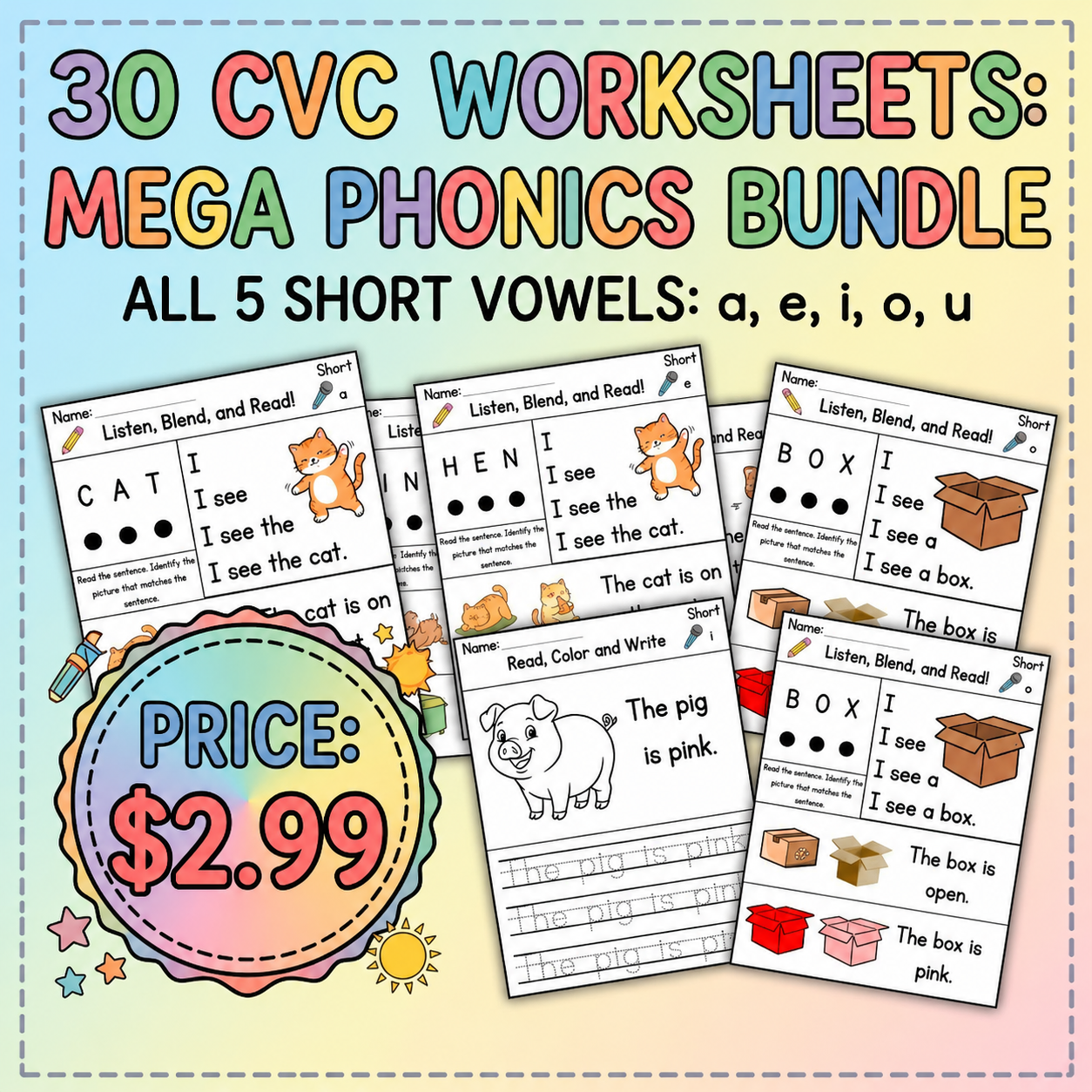
Early childhood education lays the groundwork for a lifetime of learning. Whether you're a parent, teacher, or homeschooler, mastering play-based learning will make a meaningful difference in your child's development.
Creating Consistency Without Burnout
The secret to effective early education isn't marathon study sessions — it's consistent, brief daily practice. Even 10 minutes of focused work each day adds up to over 60 hours of practice per year.
Build learning into your existing routine. Worksheet time after breakfast, flashcard review before bed, or letter identification during grocery shopping — these small moments compound into significant learning gains.
Adapting for Different Learning Styles
Some children learn best through seeing (visual learners), others through hearing (auditory learners), and many through doing (kinesthetic learners). The best activities engage multiple senses simultaneously.
Printable worksheets can be adapted for all learning styles: visual learners benefit from colorful, illustrated pages; auditory learners can read instructions aloud; kinesthetic learners can trace, cut, and paste.
Save yourself hours of prep time. The My First Words: CVC Spelling & Letter Tracing Worksheets includes everything you need, professionally designed and classroom-tested. Only $2.49.
The Role of Repetition
Neuroscience tells us that repetition strengthens neural connections. When a child traces the same letter multiple times across different worksheets, they're not just practicing — they're literally building stronger brain pathways for that skill.
The key is to vary the format while keeping the core skill the same. Tracing, writing from memory, identifying in text, and forming with playdough all reinforce letter knowledge through different modalities.
For a hands-on approach, use our free Shape Tracing Worksheets to generate custom activities your child will love.
Setting Realistic Expectations
Every child develops at their own pace. Some children will pick up reading at age 4, while others won't be ready until 6 or 7 — and both timelines are perfectly normal.
Focus on progress, not comparison. The child who needs more practice isn't behind — they're building a deeper foundation that will serve them well in the long run.
Quick tip: Try our free Shape Tracing Worksheets to create custom practice sheets tailored to your child's needs — no signup required.
Looking for ready-made resources? The Phonics CVC Words & Missing Middle Sound Worksheet Bundle is packed with activities that reinforce exactly these skills. Grab it for just $1.49 — instant download, print as many times as you need.
Frequently Asked Questions
How do I know which worksheets are right for my child's level?
Choose worksheets where your child can complete about 80% independently. If everything is too easy, move to more challenging material. If they struggle with more than half, step back to an easier level.
Are printable worksheets effective for early learning?
Yes, when used as part of a balanced approach that includes hands-on activities, play, and real-world experiences. Worksheets provide structured practice that reinforces skills taught through other methods.
How much time should young children spend on worksheets each day?
For children ages 3-6, 10-20 minutes of focused worksheet time is ideal. Keep sessions short and positive, and always stop before frustration sets in. Consistency matters more than duration.
You Might Also Enjoy
- Transition Activities That Save Time in the Classroom — Easy Activities
- Why Repetition Matters in Early Education — Home Edition
- Why Repetition Matters in Early Education — Best Practices
- 10 Screen-Free Learning Activities for Toddlers
Start Your Child's Learning Journey Today
Every great reader, writer, and problem-solver started with the basics. The activities and strategies we've discussed today are your roadmap to building a strong educational foundation.
Browse our complete collection of printable worksheets and find the perfect resources for your child's learning level. With instant digital downloads starting under $2, there's no reason to wait.