As parents and teachers, we all want to give young learners the best possible start. Understanding play-based learning is a crucial piece of that puzzle. Let's dive into actionable strategies you can use today.
Making It Fun: Practical Ideas
Turn learning into a game whenever possible. Use timers for friendly challenges ("Can you trace all the letters before the timer goes off?"), offer sticker rewards for completed worksheets, or create a simple chart to track achievements.
Involve your child in choosing activities. When children have a say in what they work on, they're more engaged and more likely to persevere through challenging tasks.
Building Independence
The ultimate goal of early education is to build independent learners. Start by modeling the activity, then do it together, then let your child try with minimal help, and finally step back completely.
This gradual release of responsibility — often called "I do, we do, you do" — is one of the most effective teaching frameworks for young children.
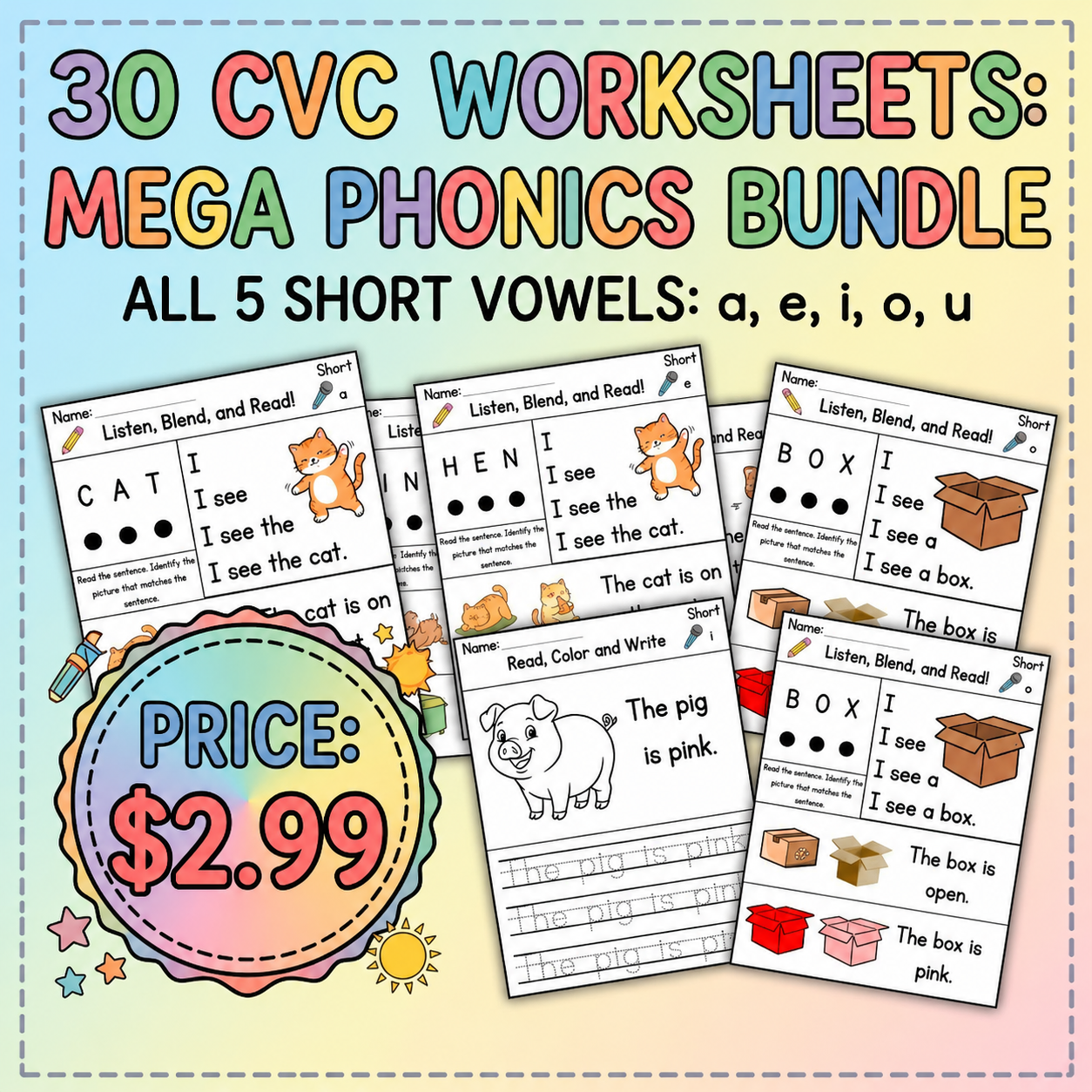
Looking for ready-made resources? The Short Vowel CVC Words Practice Pack is packed with activities that reinforce exactly these skills. Grab it for just $1.99 — instant download, print as many times as you need.
How to Measure Progress
Track your child's development by keeping a simple portfolio of their work over time. Looking back at worksheets from a few weeks or months ago can reveal dramatic improvement that daily observation might miss.
Focus on effort and progress, not perfection. A child who traces wobbly letters today but smoother ones next week is making excellent progress, even if the letters aren't perfect yet.
Quick tip: Try our free Shape Tracing Worksheets to create custom practice sheets tailored to your child's needs — no signup required.
Adapting for Different Learning Styles
Some children learn best through seeing (visual learners), others through hearing (auditory learners), and many through doing (kinesthetic learners). The best activities engage multiple senses simultaneously.
Printable worksheets can be adapted for all learning styles: visual learners benefit from colorful, illustrated pages; auditory learners can read instructions aloud; kinesthetic learners can trace, cut, and paste.
Putting Theory into Practice
Understanding concepts is important, but the real learning happens when children apply what they know through hands-on practice. Worksheets, activities, and real-world applications all help cement new skills.
Aim for a balance of guided practice (where you work alongside your child) and independent practice (where they work alone). Both are essential for building competence and confidence.
Creating Consistency Without Burnout
The secret to effective early education isn't marathon study sessions — it's consistent, brief daily practice. Even 10 minutes of focused work each day adds up to over 60 hours of practice per year.
Build learning into your existing routine. Worksheet time after breakfast, flashcard review before bed, or letter identification during grocery shopping — these small moments compound into significant learning gains.
Looking for ready-made resources? The My First Words: CVC Spelling & Letter Tracing Worksheets is packed with activities that reinforce exactly these skills. Grab it for just $2.49 — instant download, print as many times as you need.
Frequently Asked Questions
Can I use the same worksheets multiple times?
Absolutely! Print-and-use PDF worksheets can be printed as many times as needed. Repetition is actually beneficial — children build mastery through repeated practice with familiar materials.
What's the best way to motivate a reluctant learner?
Offer choices (let them pick which worksheet to do), use a reward system (stickers, stamps), keep sessions short, and always end on a positive note. Making learning feel like play rather than work is the most effective motivator.
How much time should young children spend on worksheets each day?
For children ages 3-6, 10-20 minutes of focused worksheet time is ideal. Keep sessions short and positive, and always stop before frustration sets in. Consistency matters more than duration.
You Might Also Enjoy
- 10 Screen-Free Learning Activities for Toddlers
- Unschooling vs. Structured Homeschooling for Early Learners
- Understanding Developmental Milestones: Ages 3-6 — Expert Advice
Start Your Child's Learning Journey Today
Every great reader, writer, and problem-solver started with the basics. The activities and strategies we've discussed today are your roadmap to building a strong educational foundation.
Browse our complete collection of printable worksheets and find the perfect resources for your child's learning level. With instant digital downloads starting under $2, there's no reason to wait.