Understanding that stories have a beginning, middle, and end is one of the first reading comprehension skills children develop. Story sequencing, putting events in the correct order, strengthens logical thinking, narrative understanding, and the ability to retell what they've read or heard. These skills directly support success in reading, writing, and even math.
Why Sequencing Matters
When children understand sequence, they can:
- Follow plots: Track what's happening in a story and predict what might come next
- Retell stories: Summarize what they've read using orderly, logical structure
- Write narratives: Organize their own stories with a clear beginning, middle, and end
- Follow instructions: Understand that steps happen in a specific order
Start Simple: Three-Step Sequences
Before tackling full stories, practice with three-picture sequences showing everyday events:
- A child holding a toothbrush, brushing teeth, smiling with clean teeth
- An egg, a cracked egg in a pan, a plate of scrambled eggs
- A seed, a sprouting plant, a flower
Print or draw these sequences, cut them apart, and have your child arrange them in order. Ask: "What happened first? What happened next? What happened last?"
Story Sequencing Activities
Read and Retell
After reading a picture book, ask your child to tell you what happened. Guide them with sequencing words: "First, what happened? Then what? And at the end?" Using words like first, next, then, and finally teaches the language of sequence.
Cut and Paste Sequencing
Provide four pictures from a familiar story (mixed up) and have your child cut them out, put them in order, and paste them onto paper. They can then dictate or write a sentence for each picture. This combines sequencing with fine motor skills and writing practice.
Story Map
Create a simple story map with three boxes labeled Beginning, Middle, and End. After reading a story, your child draws or writes what happened in each section. This visual organizer makes abstract story structure concrete.
Sentence Strips
Write 3-4 sentences from a familiar story on separate strips of paper. Mix them up and challenge your child to put them in the correct order. This works especially well for children who are beginning to read independently.
Extend with Writing
Once your child can sequence existing stories, have them create their own. Provide a simple three-box template and let them draw a beginning, middle, and end for an original story. Then help them write or dictate sentences for each part.
Use our handwriting paper generator to create writing pages where children can write their sequenced stories. For practice with the vocabulary of sequencing (first, next, then, finally), our word tracing tool generates custom tracing sheets for these important transition words.
Picture Books Perfect for Sequencing
- The Very Hungry Caterpillar by Eric Carle - clear daily sequence
- If You Give a Mouse a Cookie by Laura Numeroff - circular cause-and-effect sequence
- Goldilocks and the Three Bears - repetitive, predictable sequence
Explore our kindergarten worksheets for printable story sequencing activities that build comprehension skills progressively. Strong sequencing skills today mean strong readers and writers tomorrow.
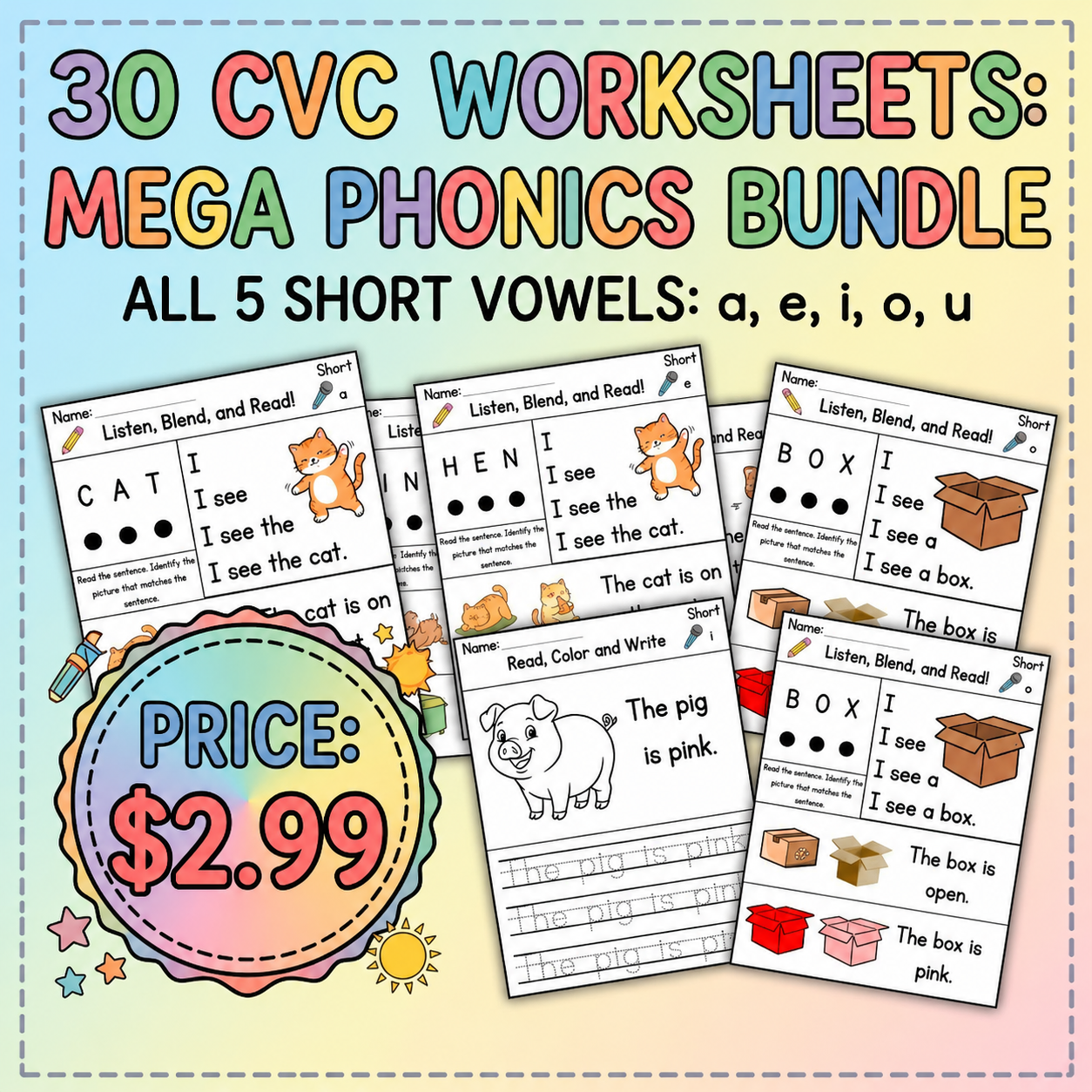
Looking for a structured way to practise this at home or in the classroom? Our Phonics Mastery Bundle: Blends, Passages & Short Vowels ($2.50) gives you everything you need in one ready-to-use printable pack.