Whether your child has outgrown naps or you just need thirty minutes to recharge, quiet time is a daily necessity. The good news? It doesn't have to be screen time. With a little setup, quiet time can become one of the most productive learning periods of your child's day.
Why Quiet Independent Time Matters
Beyond giving caregivers a break, quiet time builds critical skills: self-regulation, independent problem-solving, sustained attention, and the ability to entertain oneself — a skill that serves children well through school and beyond. The trick is providing activities that are engaging enough to hold attention but calm enough to keep the peace.
Literacy-Building Quiet Activities
- Letter tracing books: A simple clipboard with tracing worksheets and a chunky pencil keeps little hands busy while building handwriting foundations. Laminate the pages and use dry-erase markers for reusable practice.
- Magnetic letter boards: Provide a cookie sheet and magnetic letters. Leave a simple word card nearby for children to copy.
- Book browsing bins: Rotate five to seven books into a special bin that only appears during quiet time. The novelty keeps interest high.
- Sticker phonics: Print letter worksheets and provide dot stickers. Children place stickers on each letter as they say its sound.
Math and Logic Quiet Activities
- Pattern block puzzles: Provide pattern blocks and printed templates. Children match shapes to outlines, building spatial reasoning.
- Counting clip cards: Print cards with sets of objects. Children clip a clothespin to the correct numeral — fine motor and math combined.
- Simple puzzles: Rotate age-appropriate puzzles weekly. Puzzles develop spatial awareness, persistence, and problem-solving.
- Lacing cards: These build fine motor control and hand-eye coordination while keeping children focused and calm.
Setting Up a Quiet Time Routine
Consistency is everything. Start with just ten minutes and gradually extend to 30-45 minutes. Use a visual timer so your child knows how long quiet time lasts. Provide a designated spot — a play mat, a special chair, or a small table — and rotate the activities weekly to maintain novelty.
Prepare a quiet time bin the night before. Include three to four activities so your child has choices. Our free alphabet tracing generator lets you print fresh tracing pages each week, so the bin always feels new.
Pro Tips from Educators
- Introduce each activity during regular play first, so your child knows how to use it independently.
- Keep all supplies in a caddy your child can manage alone.
- Praise the effort afterward: "You worked so quietly and finished your whole tracing page!"
- Don't worry if they only engage for ten minutes initially. Building stamina takes time.
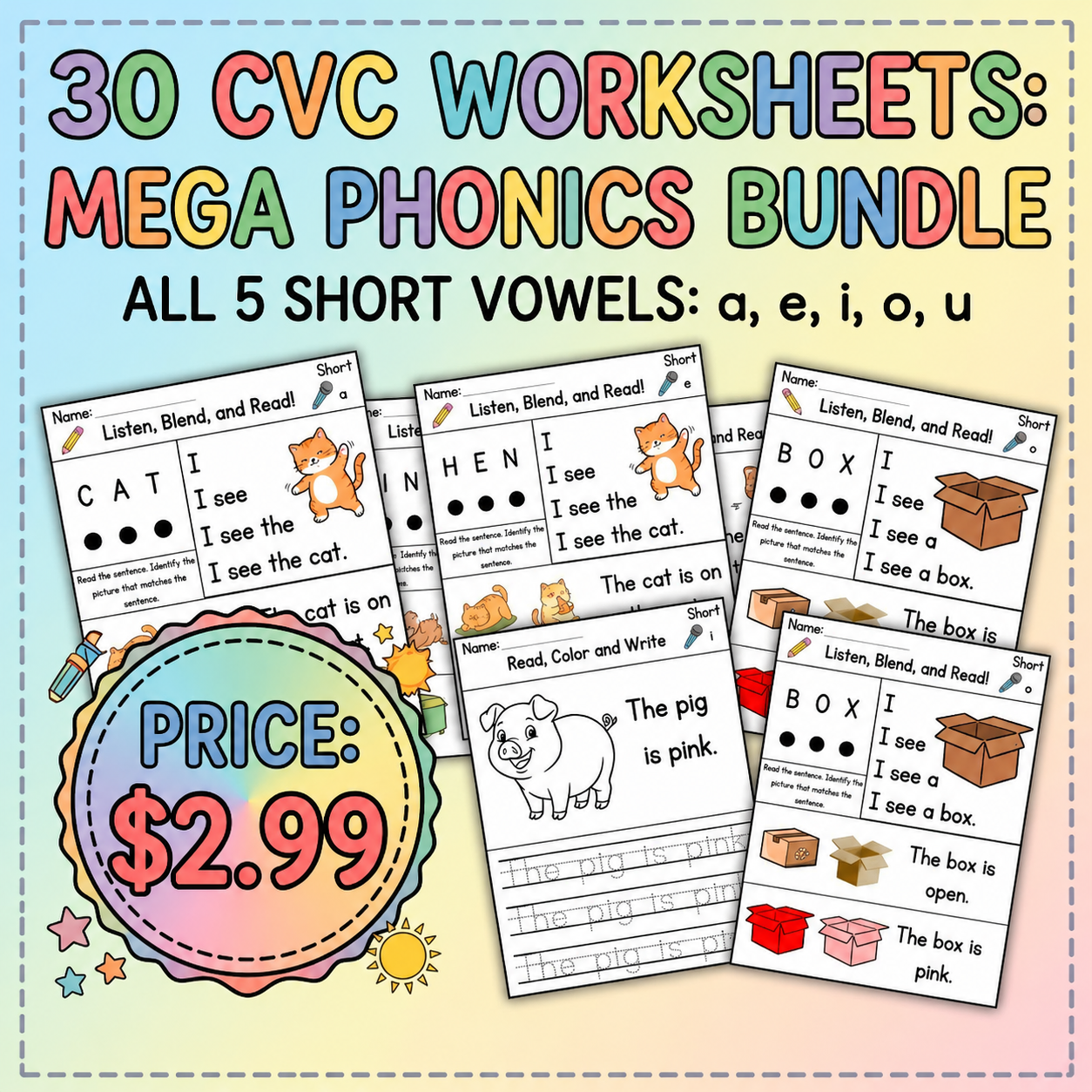
For a ready-made collection of quiet time printables spanning letters, numbers, and fine motor practice, explore our full worksheet library. Every printable is designed for independent use by children ages 2-6, making quiet time truly hands-off for you.
Looking for a structured way to practise this at home or in the classroom? Our My First Words: 4-in-1 Activity Workbook ($1.99) gives you everything you need in one ready-to-use printable pack.