The Great Debate: Sounds or Names?
It's one of the most common questions parents ask when starting early literacy instruction: Should I teach my child that this letter is called "bee" or that it makes the sound /b/? The answer, backed by decades of reading research, is clear: teach letter sounds first. Here's why, and how to do it effectively.
Why Letter Sounds Should Come First
Letter sounds are what children use to actually read words. When your child encounters the word "cat" on a page, they need to know that C says /k/, A says /a/, and T says /t/. Knowing that the letters are called "see," "ay," and "tee" doesn't help them decode the word at all.
Research from the National Reading Panel and numerous studies since has consistently shown that children who learn letter sounds early become stronger decoders and more fluent readers than those who learn letter names first. Letter names can actually create confusion — a child who knows B is called "bee" might try to read "bat" as "bee-ay-tee."
When Do Letter Names Matter?
Letter names are not useless. They serve important purposes:
- Communication: Letter names help children talk about letters. When spelling their name aloud, they use letter names.
- Alphabetical order: The ABC song teaches letter names, which helps with dictionary skills and organizational concepts later.
- Some letters contain their sound in their name: B ("bee" contains /b/), D ("dee" contains /d/), and most consonants give a clue to their sound through their name.
The issue isn't that letter names are bad — it's that they shouldn't come before sounds. Teach sounds as the primary skill, and introduce names alongside or shortly after.
How to Teach Letter Sounds Effectively
1. Introduce 3-4 Sounds Per Week
Start with the most useful consonants and one or two vowels. A popular first group is S, A, T, P — because you can immediately build real words (sat, pat, tap, sap). Follow with I, N, M, D so your word-building options expand rapidly.
2. Use Multi-Sensory Methods
Say the sound, show the letter, and have your child trace it simultaneously. Our alphabet tracing tool generates sheets perfect for this purpose. While tracing, have your child repeat the letter sound aloud. The combination of seeing, hearing, and feeling creates stronger memory pathways.
3. Connect Sounds to Real Objects
For each new sound, identify objects your child can see and touch. The letter M says /m/ — what starts with /m/? Mommy, milk, mouse, mango. Anchor each abstract sound to concrete, familiar things.
4. Practice Blending Quickly
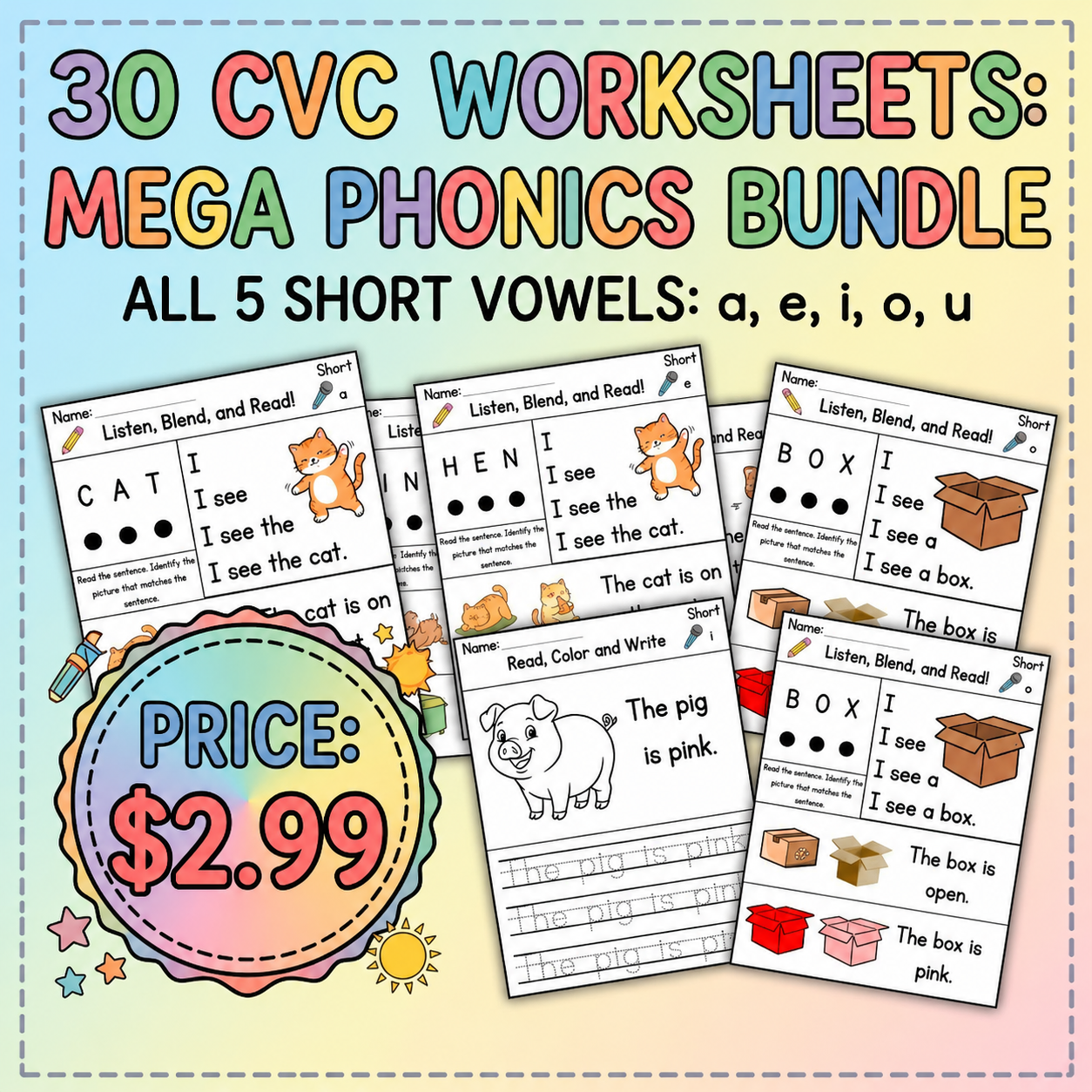
As soon as your child knows four or five sounds, start blending them into CVC words. The faster children move from isolated sounds to real words, the more motivated they become. Use our flashcard maker to create custom word cards with only the letters your child has learned so far.
Addressing the ABC Song
Your child will inevitably learn the ABC song from TV, daycare, or older siblings. That's perfectly fine. Simply supplement it with a "sounds version" where you sing the sounds instead of the names. Many early literacy programs have sound songs set to familiar tunes that children enjoy.
The Bottom Line
Teach letter sounds first, use them to build words as quickly as possible, and introduce letter names as a secondary skill. This approach gives your child the tools they need to start reading real words, which is the ultimate goal. Explore our kindergarten worksheets for letter sound practice pages that reinforce this sound-first approach with engaging activities your child will love.
Looking for a structured way to practise this at home or in the classroom? Our Digraph Sounds Worksheets: PH, WH, TH, SH, CH, CK ($2.99) gives you everything you need in one ready-to-use printable pack.