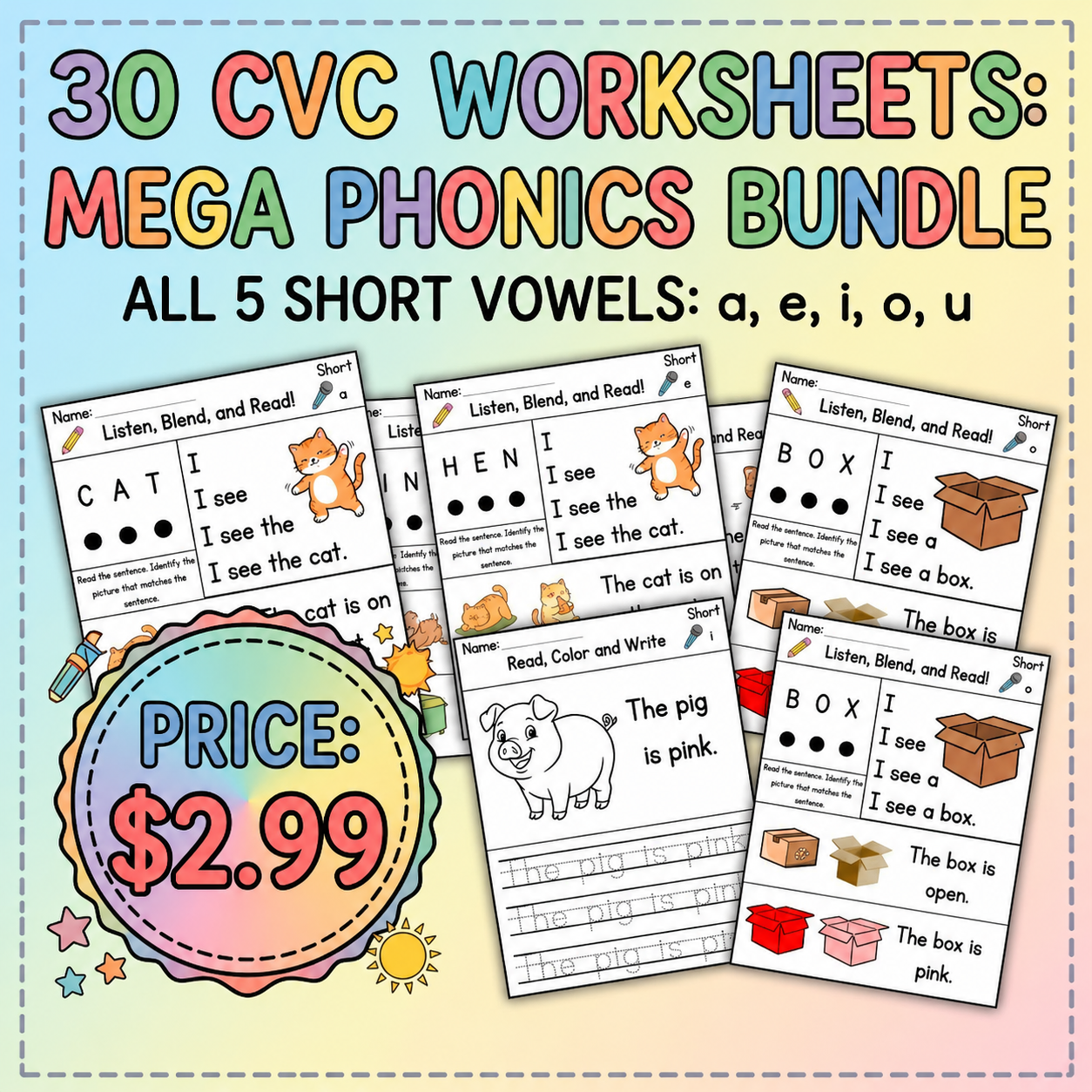
Early childhood education lays the groundwork for a lifetime of learning. Whether you're a parent, teacher, or homeschooler, mastering worksheets early childhood will make a meaningful difference in your child's development.
What the Research Says
Studies from the National Institute for Early Education Research confirm that children who engage in regular, structured learning activities show measurable improvements in literacy and numeracy by the time they enter first grade.
The most effective approaches combine explicit instruction with playful practice. This means short, focused teaching moments followed by hands-on activities where children apply what they've learned.
Putting Theory into Practice
Understanding concepts is important, but the real learning happens when children apply what they know through hands-on practice. Worksheets, activities, and real-world applications all help cement new skills.
Aim for a balance of guided practice (where you work alongside your child) and independent practice (where they work alone). Both are essential for building competence and confidence.
Save yourself hours of prep time. The My First CVC Words Activity Pack includes everything you need, professionally designed and classroom-tested. Only $1.49.
Making It Fun: Practical Ideas
Turn learning into a game whenever possible. Use timers for friendly challenges ("Can you trace all the letters before the timer goes off?"), offer sticker rewards for completed worksheets, or create a simple chart to track achievements.
Involve your child in choosing activities. When children have a say in what they work on, they're more engaged and more likely to persevere through challenging tasks.
For a hands-on approach, use our free Alphabet Tracing Tool to generate custom activities your child will love.
Adapting for Different Learning Styles
Some children learn best through seeing (visual learners), others through hearing (auditory learners), and many through doing (kinesthetic learners). The best activities engage multiple senses simultaneously.
Printable worksheets can be adapted for all learning styles: visual learners benefit from colorful, illustrated pages; auditory learners can read instructions aloud; kinesthetic learners can trace, cut, and paste.
The Role of Repetition
Neuroscience tells us that repetition strengthens neural connections. When a child traces the same letter multiple times across different worksheets, they're not just practicing — they're literally building stronger brain pathways for that skill.
The key is to vary the format while keeping the core skill the same. Tracing, writing from memory, identifying in text, and forming with playdough all reinforce letter knowledge through different modalities.
Why This Matters for Young Learners
Research consistently shows that children who receive quality early education are more likely to succeed academically and socially in later years. The skills developed during ages 3-7 form the foundation for all future learning.
When children engage with structured activities — whether worksheets, hands-on projects, or guided play — they build neural pathways that support reading, math, and critical thinking. The key is consistency and making learning enjoyable.
Ready to put these ideas into practice? Our Short Vowel CVC Words Practice Pack gives your child structured, engaging worksheets designed by educators. Starting at just $1.99.
Frequently Asked Questions
How do I know which worksheets are right for my child's level?
Choose worksheets where your child can complete about 80% independently. If everything is too easy, move to more challenging material. If they struggle with more than half, step back to an easier level.
How much time should young children spend on worksheets each day?
For children ages 3-6, 10-20 minutes of focused worksheet time is ideal. Keep sessions short and positive, and always stop before frustration sets in. Consistency matters more than duration.
Can I use the same worksheets multiple times?
Absolutely! Print-and-use PDF worksheets can be printed as many times as needed. Repetition is actually beneficial — children build mastery through repeated practice with familiar materials.
Are printable worksheets effective for early learning?
Yes, when used as part of a balanced approach that includes hands-on activities, play, and real-world experiences. Worksheets provide structured practice that reinforces skills taught through other methods.
What's the best way to motivate a reluctant learner?
Offer choices (let them pick which worksheet to do), use a reward system (stickers, stamps), keep sessions short, and always end on a positive note. Making learning feel like play rather than work is the most effective motivator.
You Might Also Enjoy
- Beginning Blends: A Step-by-Step Teaching Guide (BL, CL, FL, GL) — Hands On Activities
- Creating a Growth Mindset Culture in Your Kindergarten Classroom
- 5 Classroom Management Strategies for Early Childhood Teachers
Start Your Child's Learning Journey Today
Every great reader, writer, and problem-solver started with the basics. The activities and strategies we've discussed today are your roadmap to building a strong educational foundation.
Browse our complete collection of printable worksheets and find the perfect resources for your child's learning level. With instant digital downloads starting under $2, there's no reason to wait.