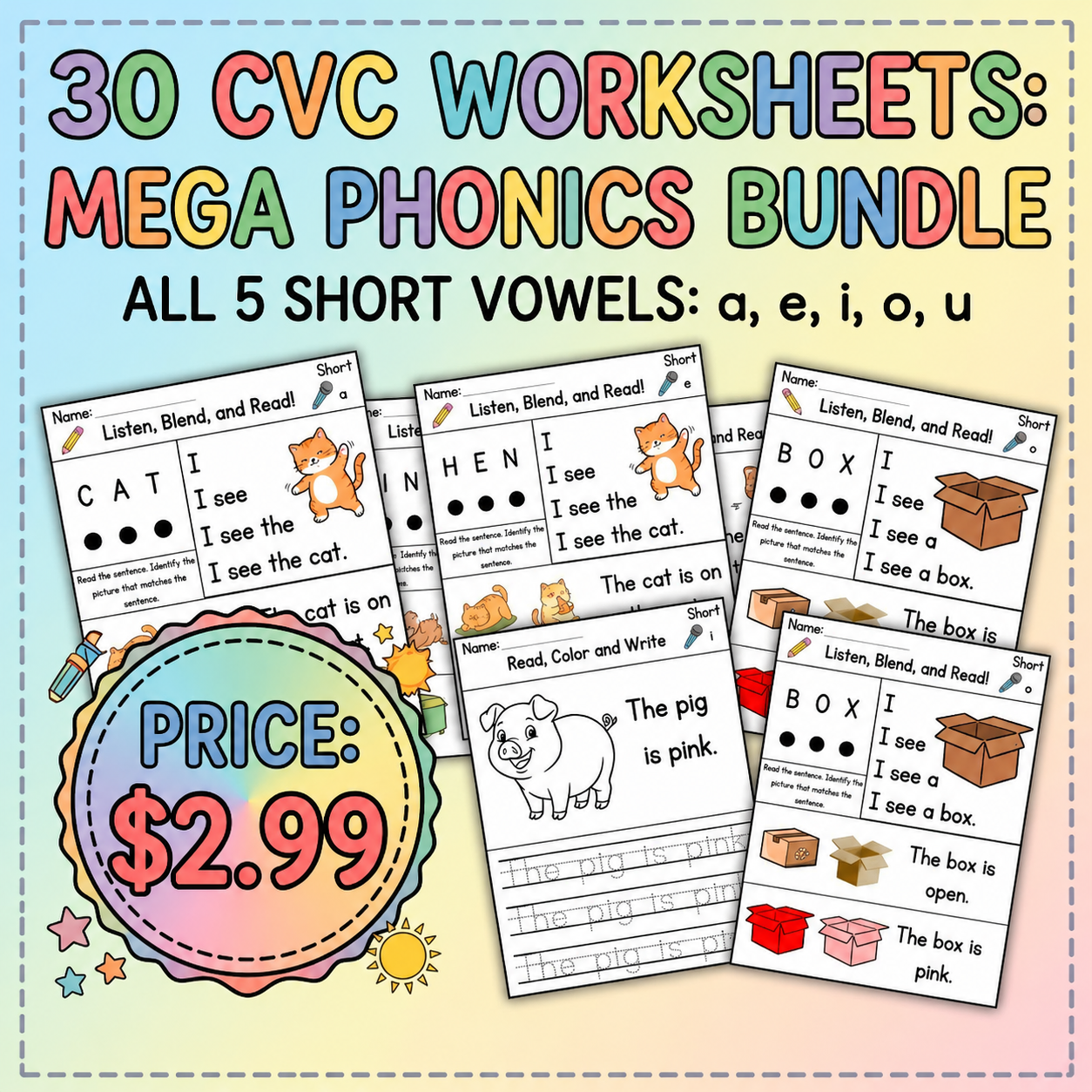
Blending is the magic moment in reading: when a child takes individual sounds — /k/ /a/ /t/ — and pushes them together to say "cat." It's the skill that turns letter knowledge into actual reading. Many children find blending challenging at first, but with the right approach, it clicks beautifully.
What Blending Sounds Like
Before teaching blending with letters, practice it purely with sounds. Say three sounds slowly: "/m/ ... /o/ ... /p/." Then ask, "What word is that?" If your child can push those sounds together and say "mop," they're blending. If they repeat the individual sounds back to you or guess randomly, they need more oral blending practice before connecting sounds to letters.
Oral Blending Activities
Start with these spoken-word games that require no materials:
- Robot talk: Speak like a robot by segmenting words into sounds. "I want a /k/ /u/ /p/." Your child decodes: "Cup!" Make it a game during meals and daily routines.
- Slow-motion words: Say a word very slowly, stretching it out: "Sssssuuuunnn." Gradually increase the spaces between sounds until they're separated. Your child reassembles them.
- Mystery bag: Put small objects in a bag. Describe each one using segmented sounds. "I'm pulling out a /p/ /e/ /n/." Your child guesses before you reveal the object.
Connecting Blending to Letters
Once oral blending is comfortable, bring in letters. Use these progressive steps:
Step 1: Continuous Sounds First
Start with letters whose sounds can be stretched: S, M, F, L, N, R, A, E, I, O, U. Words like "man," "sun," and "fin" are easier to blend because each sound flows into the next. Avoid starting with stop sounds like /b/, /d/, /t/ — they're harder to blend smoothly.
Step 2: Successive Blending
Instead of saying all three sounds and then blending, teach "successive blending":
- Say the first sound: /s/
- Add the second sound immediately: /sa/
- Add the third sound: /sat/
This "sound by sound" approach is much easier for beginners than holding three separate sounds in memory.
Step 3: Finger Tapping
Have your child tap one finger per sound on the table, then sweep all fingers together as they blend. The physical motion supports the mental process of combining sounds.
Practice with CVC Words
CVC (consonant-vowel-consonant) words are the ideal practice ground for blending. Start with word families: -at words (cat, hat, sat, mat), then -an words, then -ig words. Our printable phonics worksheets organize CVC words by family, giving children structured blending practice with clear progression.
When Blending Is Difficult
If your child struggles, don't push harder — go back to oral blending. Play robot talk games for another week or two. Also check that your child actually knows their letter sounds automatically. If they have to think about what sound a letter makes, they don't have enough mental energy left for blending.
Our free flashcard maker helps build letter-sound automaticity. Print a set, practice daily for two minutes, and watch blending become easier as letter sounds become second nature.
From Blending to Reading
Once your child can blend CVC words confidently, they are reading. Celebrate this milestone! Then gradually introduce consonant blends (stop, frog), digraphs (ship, chat), and longer words. Each step builds on the same blending skill — it just applies to more complex sound patterns. Browse our kindergarten worksheets for phonics activities that carry children through each stage of this journey.
Looking for a structured way to practise this at home or in the classroom? Our Phonics Mastery Bundle: Blends, Passages & Short Vowels ($2.50) gives you everything you need in one ready-to-use printable pack.