If your child can't sit still for more than five minutes during a worksheet or learning activity, you're not alone. Short attention spans are completely normal in early childhood. A general guideline is that children can focus for roughly 2-5 minutes per year of age, so expecting a 4-year-old to concentrate for 20 minutes straight is simply unrealistic.
Set Realistic Expectations
Understanding what's developmentally appropriate takes enormous pressure off both you and your child:
- Age 3: 6-10 minutes of focused activity
- Age 4: 8-15 minutes of focused activity
- Age 5: 10-20 minutes of focused activity
- Age 6: 12-25 minutes of focused activity
These are averages, not rules. Some children naturally focus longer; others need more breaks. Both are normal.
Strategies That Actually Work
1. Break Tasks into Small Chunks
Instead of handing your child a full worksheet, fold it in half or cover the bottom portion. Completing a "small" task feels achievable and gives them a quick sense of accomplishment. Then reveal the next section.
2. Use a Timer (Visually)
Visual timers help children understand how long they need to focus. Set a timer for 5-8 minutes and tell your child they can take a movement break when it goes off. Gradually increase the time as their stamina builds.
3. Alternate Activity Types
Don't stack three writing worksheets in a row. Instead, rotate between different types of activities: a tracing page, then a counting game, then a coloring activity. Our full worksheet collection offers variety across subjects so you can mix and match easily.
4. Remove Distractions
This sounds obvious but makes a dramatic difference. Turn off screens, clear the table of toys, and work in a quiet space. Some children focus better with soft background music, so experiment to find what works for yours.
5. Incorporate Movement
Let your child stand at the table, sit on a wobble cushion, or take jumping-jack breaks between activities. Movement feeds the brain and actually improves focus rather than disrupting it.
Make Learning Engaging
Children focus longest on activities they find interesting. Interactive tools like our dot-to-dot generator and word search maker turn learning into a game, which naturally holds attention longer than traditional drill-style worksheets.
When to Seek Help
If your child's attention span seems significantly shorter than peers, if they cannot focus on anything (including play and preferred activities), or if focus issues are causing major daily difficulties, talk to your pediatrician. These could be signs of attention-related conditions that benefit from early support.
For most children, though, attention span grows naturally with age and practice. Be patient, keep sessions short and varied, and celebrate small wins along the way.
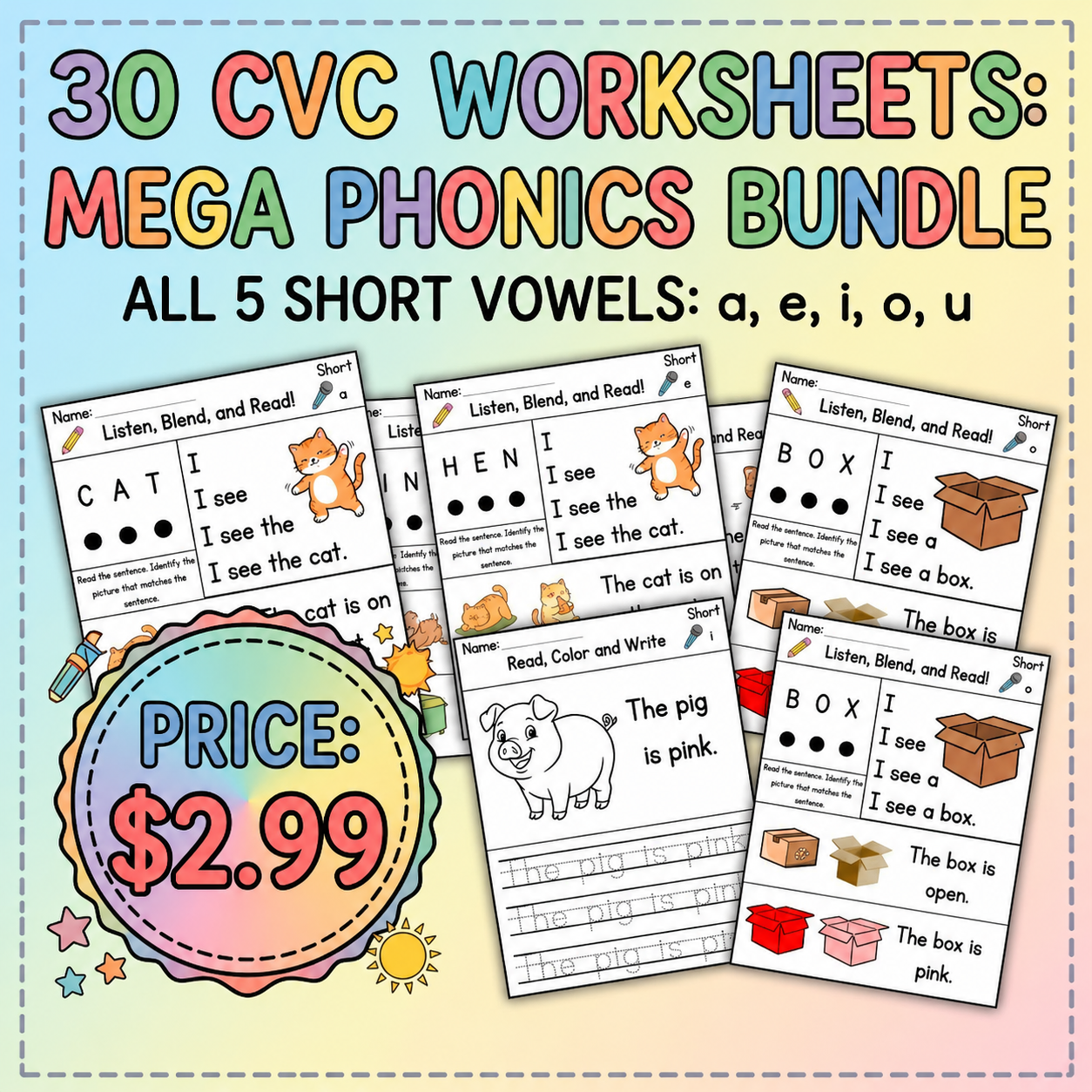
Looking for a structured way to practise this at home or in the classroom? Our Reading Comprehension Worksheets Bundle ($2.49) gives you everything you need in one ready-to-use printable pack.