If "homework time" triggers groans or outright refusal, you are not alone — but homework battles are not inevitable. They are usually a sign that the routine needs redesigning, not that the child needs more discipline. Here is how to build an after-school practice routine that children genuinely buy into.
What the Research Says About Homework at This Age
For kindergarten-age children, the evidence is clear: large amounts of homework produce no measurable academic benefit. What does benefit children is brief, low-stakes daily review — ten to fifteen minutes of reading or light maths practice — that reinforces classroom learning without adding stress. The goal is building a habit of daily practice, not coverage of new content.
Designing the Right Environment
Environment precedes behaviour. Set up a dedicated homework spot — not necessarily a desk, just a consistent place — with all needed materials already there. A small bin containing pencils, crayons and an eraser eliminates the "I can't find my pencil" delay that triggers so many meltdowns before a single question is answered.
Timing matters enormously. Most children need thirty to sixty minutes of unstructured downtime after school before they can settle to focused work. Post-snack, after some active outdoor play, is the sweet spot for most five and six-year-olds.
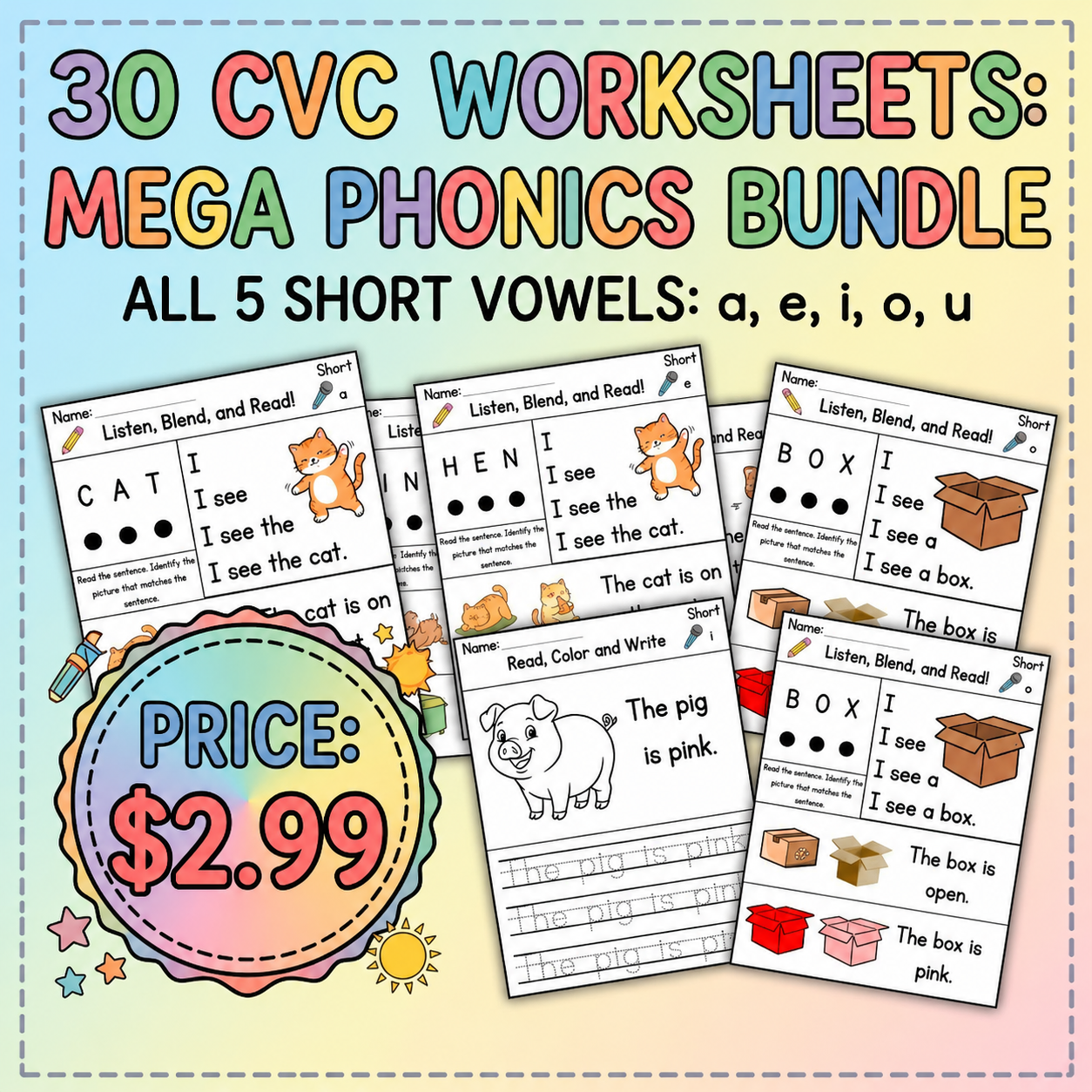
Short, achievable practice sheets work best for kindergarten homework. Our Kindergarten Addition and Subtraction Worksheets ($1.99) are designed for exactly this — one focused page, clear instructions, satisfying to complete in under ten minutes.
Making the Routine Consistent
Schedule the order of activities, not the clock times: snack → outdoor play → homework spot → homework → reward. When the sequence is predictable, children are not deciding whether to do homework — they are just doing the next thing in their day. A visual chart at child height with pictures of each step allows children to monitor their own progress, and checking off steps provides a small reward that motivates continued engagement.
Also worth reading: Morning Routine Ideas That Set Kids Up to Learn All Day — the same principles that make morning routines work apply equally well to after-school routines.
What to Do When Refusal Happens
Refusal is information. If it happens consistently at the same point in the homework, the task is probably too hard or too long. If it happens every single day, the routine itself needs redesigning. Never make homework a power struggle — a "do it or else" approach activates the stress response and makes the next session harder. Instead, offer a genuine choice within the non-negotiable: "We need to do five minutes of reading. Do you want to start with the story or the worksheets?"
Frequently Asked Questions
How much homework is appropriate for kindergarten?
Ten to fifteen minutes maximum. If the school assigns more, advocate for a reduction or simply stop when the time is up and write a brief note to the teacher explaining the decision.
Should I sit with my child during homework?
For kindergarteners, yes — nearby, not hovering. Your calm presence and occasional encouragement are the biggest motivational factors available to you. Independent homework is a goal for grade 2 and beyond.
Make Practice a Positive Daily Habit
The homework routine you build in kindergarten sets the template for the next twelve years of schooling. Build it well — low stress, high success — and you give your child a habit that compounds annually. Browse our full worksheet collection for the right difficulty level for your child's current stage.