The most common mistake new homeschooling families make is trying to replicate the school timetable at home. Eight-period days with rigid start times and formal lessons for every subject quickly burn out both parent and child. A homeschool schedule that genuinely works looks very different — and it produces better outcomes for most families than the school model it is trying to copy.
Start with Your Child's Natural Energy Pattern
Every child has a daily energy curve. Most young children (ages four to eight) are sharpest in the late morning — after the initial excitement of waking and before the post-lunch energy dip. Demanding academic work belongs in this window. Creative, hands-on and movement-based activities fit the afternoon. Spend one week simply observing before building your schedule. When does your child initiate learning? When do they resist? When are they most focused? Your schedule should work with this natural rhythm, not fight against it.
The Rule of Thumb for Seat Work Duration
A useful guideline from occupational therapy: a child can sustain focused seat work for roughly their age in minutes before needing a movement break. A five-year-old: five to six minutes. A seven-year-old: seven to eight minutes. Build movement breaks into your schedule explicitly — short, frequent sessions of focused work consistently outperform longer sessions in both learning outcomes and compliance.
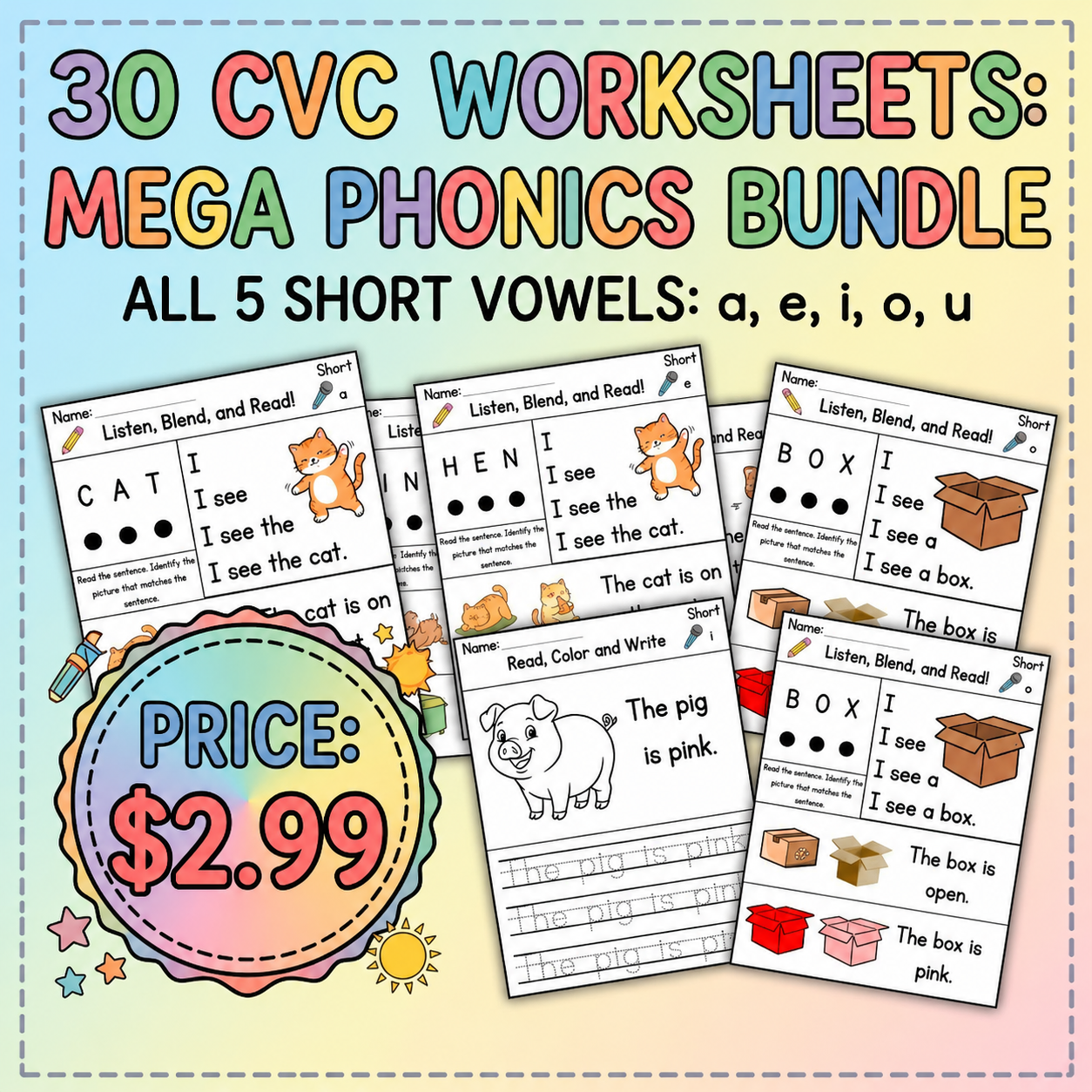
Having structured materials ready transforms homeschool sessions. Our Phonics Mastery Bundle: Blends, Passages & Short Vowels ($2.50) gives you a complete, sequenced phonics programme you can pick up and run without any prep — ideal for homeschool families who want structure without the complexity of building a curriculum from scratch.
The Three-Block Homeschool Day
For children ages four to eight, a three-block day works remarkably well:
- Block 1 (Morning, 45–90 min): Core academics — reading, phonics, writing, maths. Short sessions with movement breaks between subjects.
- Block 2 (Mid-day, 60–90 min): Science, art, history stories, nature study. Lower cognitive demand, higher engagement and creativity.
- Block 3 (Afternoon, 60+ min): Independent reading, outdoor play, building projects. Child-directed with minimal parent involvement.
Total structured time: two to three hours. This is sufficient for young children and produces excellent results when the quality of engagement is high.
Building in Flexibility Without Losing Structure
Schedule the order of activities rather than clock times: "We always do reading before maths before art." This is predictable and followable even on days when you start late or are interrupted. Build one or two "flex slots" per week — sessions that can be filled with whatever most needs attention: a deep dive into something a child is fascinated by, catch-up on a struggling subject, or a field trip when opportunity arises. Also read: Morning Routine Ideas That Set Kids Up to Learn All Day for how to structure the opening of the learning day so the rest flows smoothly.
Frequently Asked Questions
How many days per week should we do formal homeschooling?
Four days of structured learning plus one day of projects, field trips or catch-up works well for most families. Year-round schooling with shorter, more frequent breaks prevents summer slide and reduces back-to-routine friction.
My child refuses all formal work. What do I do?
Start with ten minutes of the subject they find easiest and most enjoyable. Build trust before building structure. Many children who resist formal work in the first weeks become enthusiastic learners once they realise homeschool genuinely feels different from a classroom they may have found stressful.
Build a Homeschool Day You Both Enjoy
The best homeschool schedule is one you will actually use tomorrow. Keep it simple, follow your child's energy, and have quality materials ready so you are never improvising. Explore our complete worksheet and activity library for ready-to-use resources across every subject.