Teaching young children can feel overwhelming, but it doesn't have to be. When you understand the principles behind reading fluency, everything becomes more manageable — and more fun for everyone involved.
Making It Fun: Practical Ideas
Turn learning into a game whenever possible. Use timers for friendly challenges ("Can you trace all the letters before the timer goes off?"), offer sticker rewards for completed worksheets, or create a simple chart to track achievements.
Involve your child in choosing activities. When children have a say in what they work on, they're more engaged and more likely to persevere through challenging tasks.
CVC Words: The Gateway to Reading
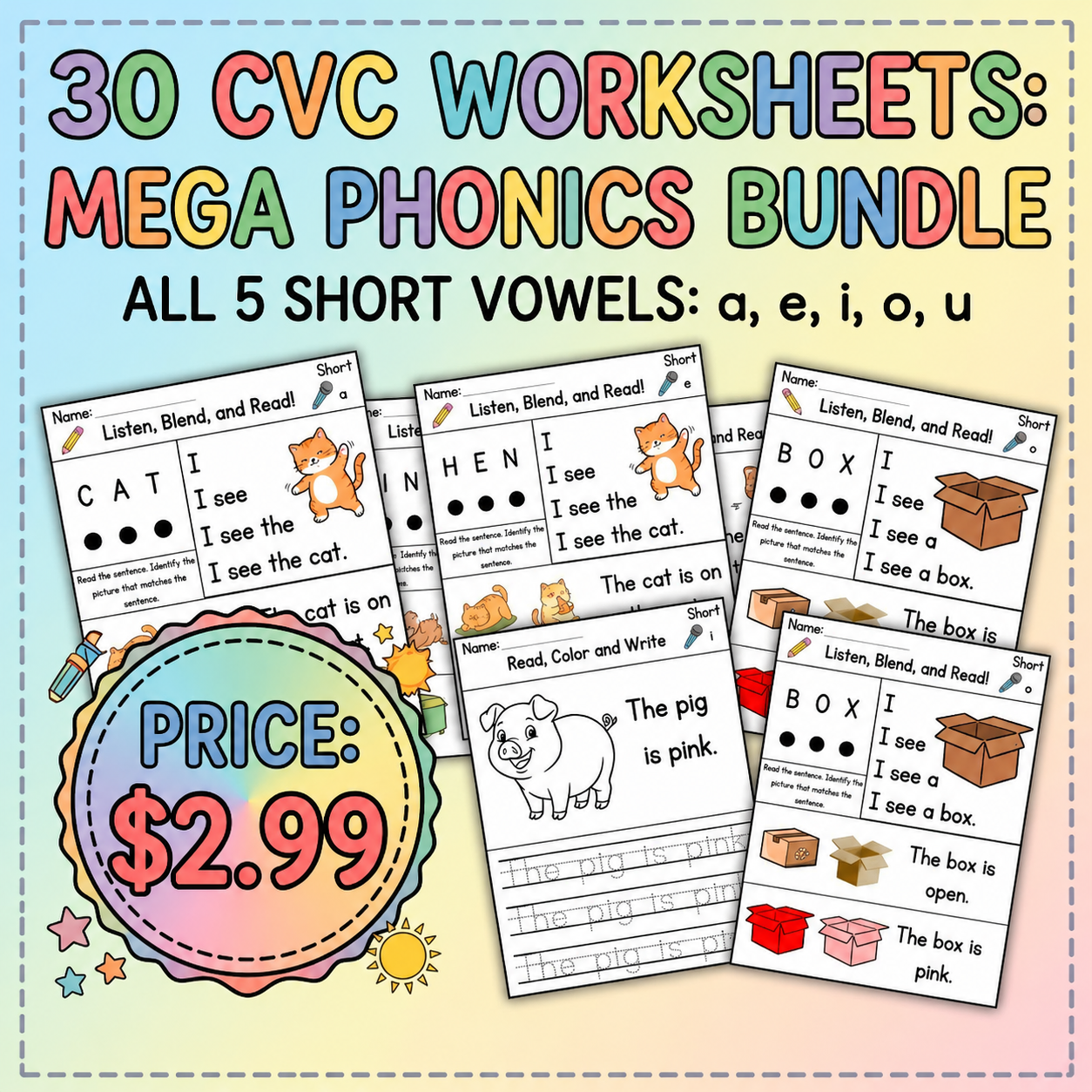
CVC words like "cat," "dog," and "sun" are typically the first words children learn to read independently. These simple three-letter words follow predictable patterns that help children understand how sounds blend together.
Practice CVC words through multiple activities: reading them aloud, writing them, identifying them in text, sorting them by word family, and using them in simple sentences. The more exposure, the faster fluency develops.
Save yourself hours of prep time. The Phonics & Reading Mastery Bundle includes everything you need, professionally designed and classroom-tested. Only $2.49.
Comprehension: Reading with Understanding
Decoding is only half of reading — comprehension is the other half. Even at the earliest levels, ask children questions about what they've read: "What happened in the story?" "How did the character feel?"
Simple activities like drawing a picture about a story, retelling it in their own words, or answering who/what/where questions build comprehension skills alongside decoding ability.
Need something quick? Our free Alphabet Tracing Tool lets you create and print personalized worksheets in seconds.
How to Measure Progress
Track your child's development by keeping a simple portfolio of their work over time. Looking back at worksheets from a few weeks or months ago can reveal dramatic improvement that daily observation might miss.
Focus on effort and progress, not perfection. A child who traces wobbly letters today but smoother ones next week is making excellent progress, even if the letters aren't perfect yet.
Quick tip: Try our free Alphabet Tracing Tool to create custom practice sheets tailored to your child's needs — no signup required.
Common Mistakes to Avoid
One of the biggest mistakes parents and teachers make is moving too quickly. Mastery takes time, and children need repeated exposure to concepts before they truly internalize them. If a child hasn't mastered a skill, repeating the practice is not failure — it's smart teaching.
Another common pitfall is relying on a single type of activity. Children learn best through variety: tracing one day, cutting and pasting the next, oral practice after that. Mix up your approach to keep things fresh.
Creating Consistency Without Burnout
The secret to effective early education isn't marathon study sessions — it's consistent, brief daily practice. Even 10 minutes of focused work each day adds up to over 60 hours of practice per year.
Build learning into your existing routine. Worksheet time after breakfast, flashcard review before bed, or letter identification during grocery shopping — these small moments compound into significant learning gains.
Save yourself hours of prep time. The Short U Phonics Worksheet: Read and Match Sentences includes everything you need, professionally designed and classroom-tested. Only $1.49.
Frequently Asked Questions
How can I help my struggling reader at home?
Focus on phonics-based practice with decodable texts at your child's level. Keep sessions short (10-15 minutes), celebrate small wins, and avoid frustration. Consistent daily practice matters more than session length.
At what age should a child start learning phonics?
Most children are ready for basic phonics instruction around age 4-5, starting with letter sounds and simple CVC words. However, informal exposure through reading aloud and singing alphabet songs can begin much earlier.
How many sight words should a kindergartener know?
By the end of kindergarten, most children can recognize 20-50 sight words. However, the exact number varies, and it's more important that children can decode phonetically regular words than memorize sight words.
You Might Also Enjoy
- How to Use Word Walls in a Grade 1 Classroom — Classroom Edition
- Reading Comprehension Strategies for Pre-K Students — Best Practices
Start Your Child's Learning Journey Today
Every great reader, writer, and problem-solver started with the basics. The activities and strategies we've discussed today are your roadmap to building a strong educational foundation.
Browse our complete collection of printable worksheets and find the perfect resources for your child's learning level. With instant digital downloads starting under $2, there's no reason to wait.