One of the most common questions we hear from parents is about teaching digraphs. In this comprehensive guide, we'll address the key concepts, share proven strategies, and point you to resources that actually work.
Understanding Phonics: The Building Blocks of Reading
Phonics is the relationship between letters and sounds. When children understand that the letter "b" makes the /b/ sound, they've taken the first step toward reading independently.
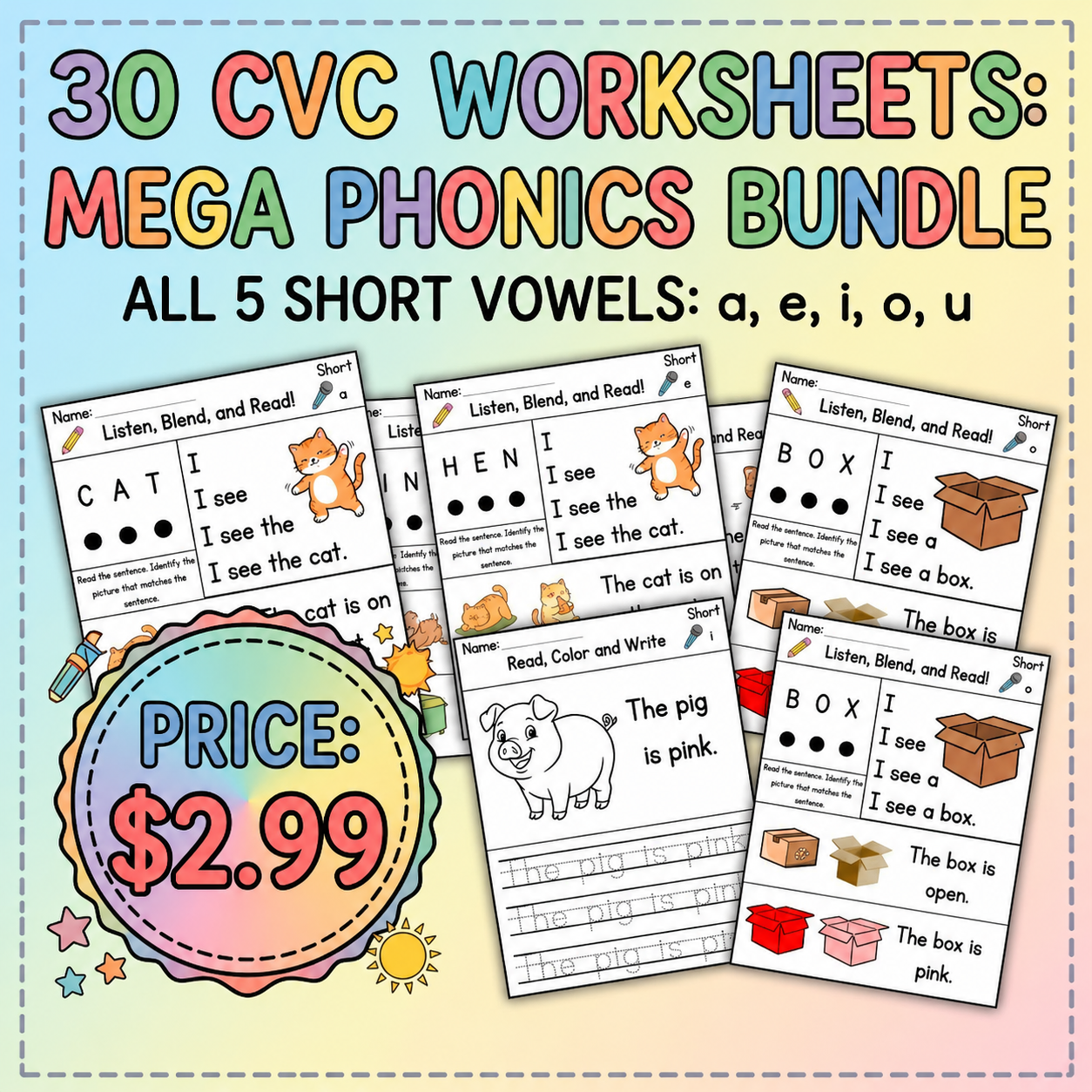
Systematic phonics instruction — teaching sounds in a logical, sequential order — is the most effective approach according to decades of reading research. Start with single consonant sounds, move to short vowels, then blend them into simple CVC (consonant-vowel-consonant) words.
Common Mistakes to Avoid
One of the biggest mistakes parents and teachers make is moving too quickly. Mastery takes time, and children need repeated exposure to concepts before they truly internalize them. If a child hasn't mastered a skill, repeating the practice is not failure — it's smart teaching.
Another common pitfall is relying on a single type of activity. Children learn best through variety: tracing one day, cutting and pasting the next, oral practice after that. Mix up your approach to keep things fresh.
Looking for ready-made resources? The Digraph Sounds Worksheets PH, WH, TH, SH, CH, CK is packed with activities that reinforce exactly these skills. Grab it for just $2.99 — instant download, print as many times as you need.
What the Research Says
Studies from the National Institute for Early Education Research confirm that children who engage in regular, structured learning activities show measurable improvements in literacy and numeracy by the time they enter first grade.
The most effective approaches combine explicit instruction with playful practice. This means short, focused teaching moments followed by hands-on activities where children apply what they've learned.
Need something quick? Our free Alphabet Tracing Tool lets you create and print personalized worksheets in seconds.
Tips for Getting Started
Start with just 10-15 minutes of focused practice per day. Young children have short attention spans, and pushing too hard can create negative associations with learning.
Follow your child's lead. If they show interest in letters, lean into that. If numbers fascinate them, build on that enthusiasm. The most effective learning happens when children are intrinsically motivated.
Create a dedicated learning space — even a small corner of a table — where your child knows it's time to focus. Having materials organized and ready reduces transition time and keeps engagement high.
Need something quick? Our free Alphabet Tracing Tool lets you create and print personalized worksheets in seconds.
Building from Sounds to Stories
Once children can decode simple CVC words, they're ready to tackle short decodable sentences and stories. This progression from individual sounds to connected text is where the magic of reading really begins.
Choose reading materials that match your child's current phonics level. Frustration-free reading builds confidence, and confidence builds motivation to tackle more challenging texts.
Blends and Digraphs: The Next Step
After mastering CVC words, children are ready for consonant blends (bl, cr, st) and digraphs (sh, ch, th, wh). These combinations appear in thousands of English words, so mastering them opens up a huge vocabulary.
Introduce one blend or digraph at a time, and provide plenty of practice before moving on. Worksheets that focus on a single sound pattern help children build automaticity without overwhelm.
Ready to put these ideas into practice? Our Digraph Mastery Bundle: 20 Engaging Phonics Worksheets gives your child structured, engaging worksheets designed by educators. Starting at just $1.99.
Browse our full collection of Pre-K Worksheets for more resources like these.
Frequently Asked Questions
Can I use the same worksheets multiple times?
Absolutely! Print-and-use PDF worksheets can be printed as many times as needed. Repetition is actually beneficial — children build mastery through repeated practice with familiar materials.
Are printable worksheets effective for early learning?
Yes, when used as part of a balanced approach that includes hands-on activities, play, and real-world experiences. Worksheets provide structured practice that reinforces skills taught through other methods.
How many sight words should a kindergartener know?
By the end of kindergarten, most children can recognize 20-50 sight words. However, the exact number varies, and it's more important that children can decode phonetically regular words than memorize sight words.
How do I know which worksheets are right for my child's level?
Choose worksheets where your child can complete about 80% independently. If everything is too easy, move to more challenging material. If they struggle with more than half, step back to an easier level.
You Might Also Enjoy
- How Read-Aloud Sessions Build Phonics Skills in 4-Year-Olds
- Short Vowel Sounds: A Complete Teaching Guide — Essential Tips
Start Your Child's Learning Journey Today
Every great reader, writer, and problem-solver started with the basics. The activities and strategies we've discussed today are your roadmap to building a strong educational foundation.
Browse our complete collection of printable worksheets and find the perfect resources for your child's learning level. With instant digital downloads starting under $2, there's no reason to wait.