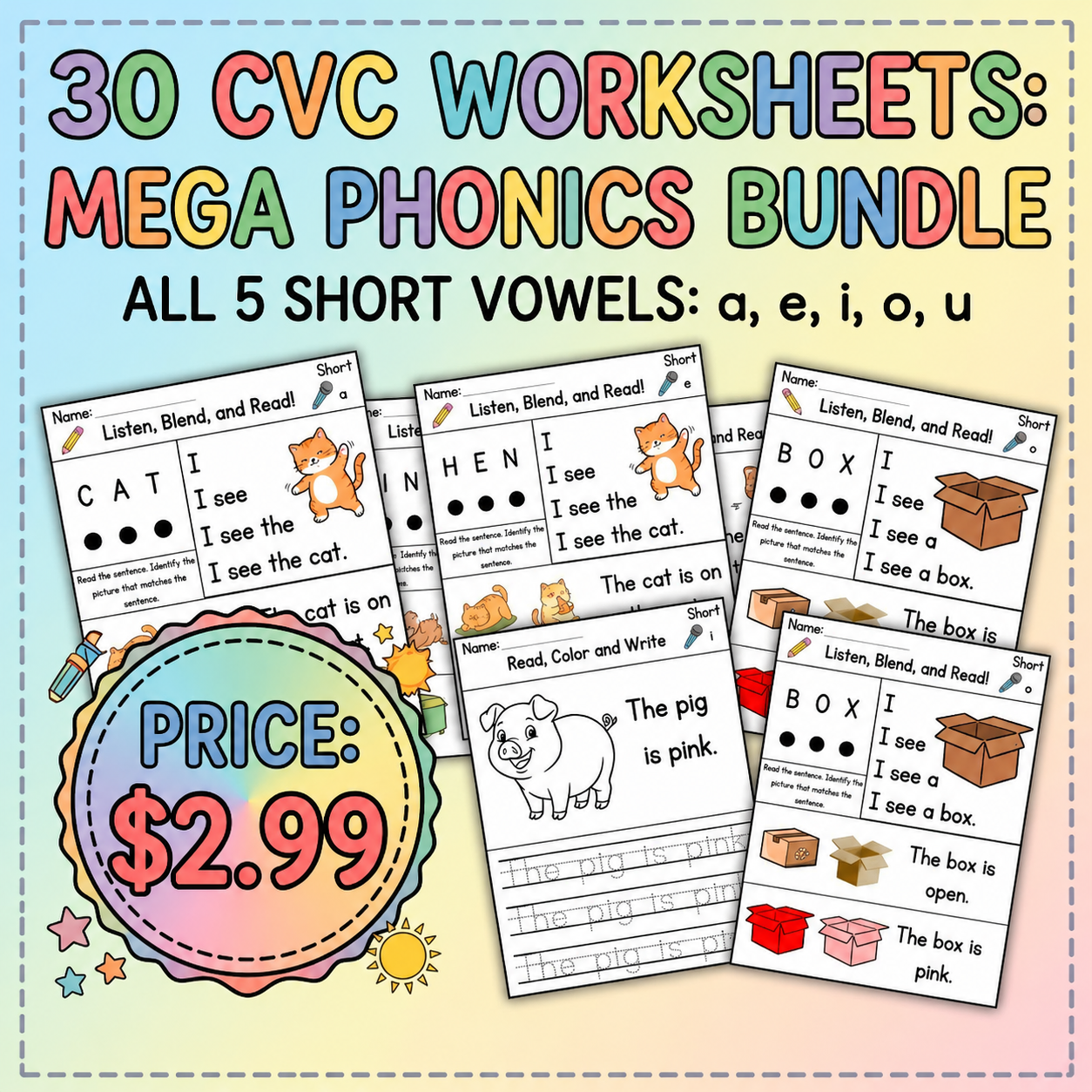
Every child learns differently, but the fundamentals remain the same. This article breaks down decodable vs leveled readers into clear, practical steps that any caregiver can follow.
How to Measure Progress
Track your child's development by keeping a simple portfolio of their work over time. Looking back at worksheets from a few weeks or months ago can reveal dramatic improvement that daily observation might miss.
Focus on effort and progress, not perfection. A child who traces wobbly letters today but smoother ones next week is making excellent progress, even if the letters aren't perfect yet.
Common Mistakes to Avoid
One of the biggest mistakes parents and teachers make is moving too quickly. Mastery takes time, and children need repeated exposure to concepts before they truly internalize them. If a child hasn't mastered a skill, repeating the practice is not failure — it's smart teaching.
Another common pitfall is relying on a single type of activity. Children learn best through variety: tracing one day, cutting and pasting the next, oral practice after that. Mix up your approach to keep things fresh.
Ready to put these ideas into practice? Our Phonics Activities Beginning L, R, & S Blends Worksheets gives your child structured, engaging worksheets designed by educators. Starting at just $1.99.
When to Seek Extra Support
If your child consistently struggles with age-appropriate tasks despite regular practice, it may be worth consulting with their teacher or a developmental specialist. Early intervention is incredibly effective — the sooner challenges are identified, the more options are available.
Remember that needing extra support is not a reflection of your parenting or teaching. Some children simply need different approaches, and there's no shame in seeking guidance from professionals who specialize in early learning.
For a hands-on approach, use our free Flashcard Maker to generate custom activities your child will love.
Comprehension: Reading with Understanding
Decoding is only half of reading — comprehension is the other half. Even at the earliest levels, ask children questions about what they've read: "What happened in the story?" "How did the character feel?"
Simple activities like drawing a picture about a story, retelling it in their own words, or answering who/what/where questions build comprehension skills alongside decoding ability.
For a hands-on approach, use our free Flashcard Maker to generate custom activities your child will love.
The Role of Repetition
Neuroscience tells us that repetition strengthens neural connections. When a child traces the same letter multiple times across different worksheets, they're not just practicing — they're literally building stronger brain pathways for that skill.
The key is to vary the format while keeping the core skill the same. Tracing, writing from memory, identifying in text, and forming with playdough all reinforce letter knowledge through different modalities.
Tips for Getting Started
Start with just 10-15 minutes of focused practice per day. Young children have short attention spans, and pushing too hard can create negative associations with learning.
Follow your child's lead. If they show interest in letters, lean into that. If numbers fascinate them, build on that enthusiasm. The most effective learning happens when children are intrinsically motivated.
Create a dedicated learning space — even a small corner of a table — where your child knows it's time to focus. Having materials organized and ready reduces transition time and keeps engagement high.
Looking for ready-made resources? The Master the Sounds: Beginning Blends Matching & Coloring Activity Pack is packed with activities that reinforce exactly these skills. Grab it for just $1.49 — instant download, print as many times as you need.
Frequently Asked Questions
How do I know which worksheets are right for my child's level?
Choose worksheets where your child can complete about 80% independently. If everything is too easy, move to more challenging material. If they struggle with more than half, step back to an easier level.
What is the difference between phonics and phonemic awareness?
Phonemic awareness is the ability to hear and manipulate individual sounds in words (purely auditory). Phonics connects those sounds to written letters and letter patterns. Both are essential for reading.
Are printable worksheets effective for early learning?
Yes, when used as part of a balanced approach that includes hands-on activities, play, and real-world experiences. Worksheets provide structured practice that reinforces skills taught through other methods.
At what age should a child start learning phonics?
Most children are ready for basic phonics instruction around age 4-5, starting with letter sounds and simple CVC words. However, informal exposure through reading aloud and singing alphabet songs can begin much earlier.
How many sight words should a kindergartener know?
By the end of kindergarten, most children can recognize 20-50 sight words. However, the exact number varies, and it's more important that children can decode phonetically regular words than memorize sight words.
You Might Also Enjoy
- How to Build Reading Fluency in Pre-K Students
- The Difference Between Phonics and Phonemic Awareness — Expert Advice
Ready to See Real Progress?
Consistent practice with quality materials makes all the difference. Our worksheets are designed to be engaging, effective, and easy to use — so you can spend less time preparing and more time teaching.
Shop all worksheets or try our free samples to get started.