Teaching young children can feel overwhelming, but it doesn't have to be. When you understand the principles behind beginning blends teaching, everything becomes more manageable — and more fun for everyone involved.
Creating Consistency Without Burnout
The secret to effective early education isn't marathon study sessions — it's consistent, brief daily practice. Even 10 minutes of focused work each day adds up to over 60 hours of practice per year.
Build learning into your existing routine. Worksheet time after breakfast, flashcard review before bed, or letter identification during grocery shopping — these small moments compound into significant learning gains.
Making It Fun: Practical Ideas
Turn learning into a game whenever possible. Use timers for friendly challenges ("Can you trace all the letters before the timer goes off?"), offer sticker rewards for completed worksheets, or create a simple chart to track achievements.
Involve your child in choosing activities. When children have a say in what they work on, they're more engaged and more likely to persevere through challenging tasks.
Ready to put these ideas into practice? Our Master the Sounds: Beginning Blends Matching & Coloring Activity Pack gives your child structured, engaging worksheets designed by educators. Starting at just $1.49.
CVC Words: The Gateway to Reading
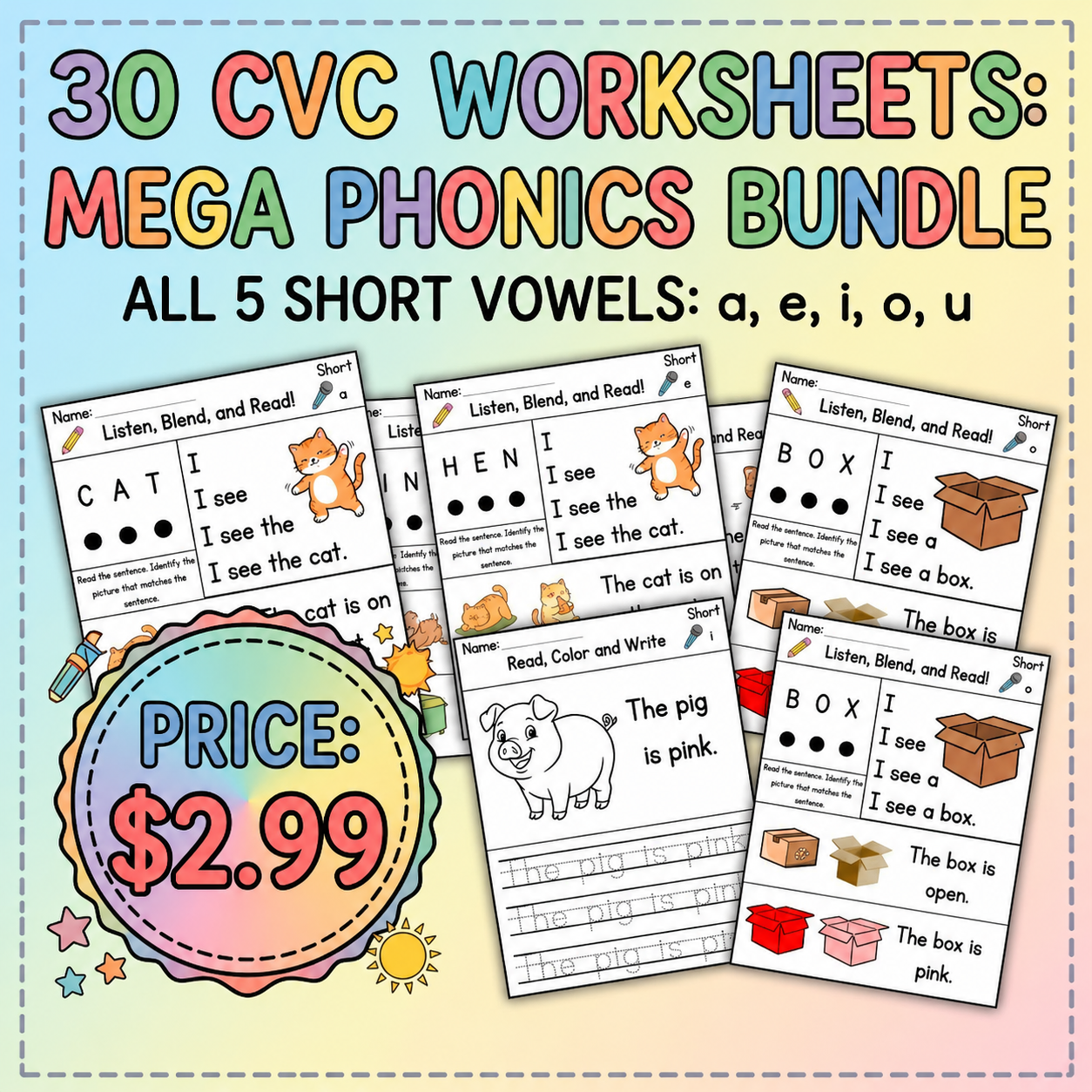
CVC words like "cat," "dog," and "sun" are typically the first words children learn to read independently. These simple three-letter words follow predictable patterns that help children understand how sounds blend together.
Practice CVC words through multiple activities: reading them aloud, writing them, identifying them in text, sorting them by word family, and using them in simple sentences. The more exposure, the faster fluency develops.
For a hands-on approach, use our free Alphabet Tracing Tool to generate custom activities your child will love.
When to Seek Extra Support
If your child consistently struggles with age-appropriate tasks despite regular practice, it may be worth consulting with their teacher or a developmental specialist. Early intervention is incredibly effective — the sooner challenges are identified, the more options are available.
Remember that needing extra support is not a reflection of your parenting or teaching. Some children simply need different approaches, and there's no shame in seeking guidance from professionals who specialize in early learning.
Understanding Phonics: The Building Blocks of Reading
Phonics is the relationship between letters and sounds. When children understand that the letter "b" makes the /b/ sound, they've taken the first step toward reading independently.
Systematic phonics instruction — teaching sounds in a logical, sequential order — is the most effective approach according to decades of reading research. Start with single consonant sounds, move to short vowels, then blend them into simple CVC (consonant-vowel-consonant) words.
Ready to put these ideas into practice? Our Digraph Mastery Bundle: 20 Engaging Phonics Worksheets gives your child structured, engaging worksheets designed by educators. Starting at just $1.99.
Browse our full collection of Pre-K Worksheets for more resources like these.
Frequently Asked Questions
What are CVC words and why are they important?
CVC stands for Consonant-Vowel-Consonant. Words like "cat," "dog," and "sun" follow this pattern. They're the simplest decodable words and serve as the foundation for all early reading development.
How many sight words should a kindergartener know?
By the end of kindergarten, most children can recognize 20-50 sight words. However, the exact number varies, and it's more important that children can decode phonetically regular words than memorize sight words.
Can I use the same worksheets multiple times?
Absolutely! Print-and-use PDF worksheets can be printed as many times as needed. Repetition is actually beneficial — children build mastery through repeated practice with familiar materials.
You Might Also Enjoy
- How Read-Aloud Sessions Build Phonics Skills in 3-Year-Olds
- 12 Must-Have Printable Activities for Preschool Classrooms
- Reading Comprehension Strategies for Kindergarten Students
Start Your Child's Learning Journey Today
Every great reader, writer, and problem-solver started with the basics. The activities and strategies we've discussed today are your roadmap to building a strong educational foundation.
Browse our complete collection of printable worksheets and find the perfect resources for your child's learning level. With instant digital downloads starting under $2, there's no reason to wait.