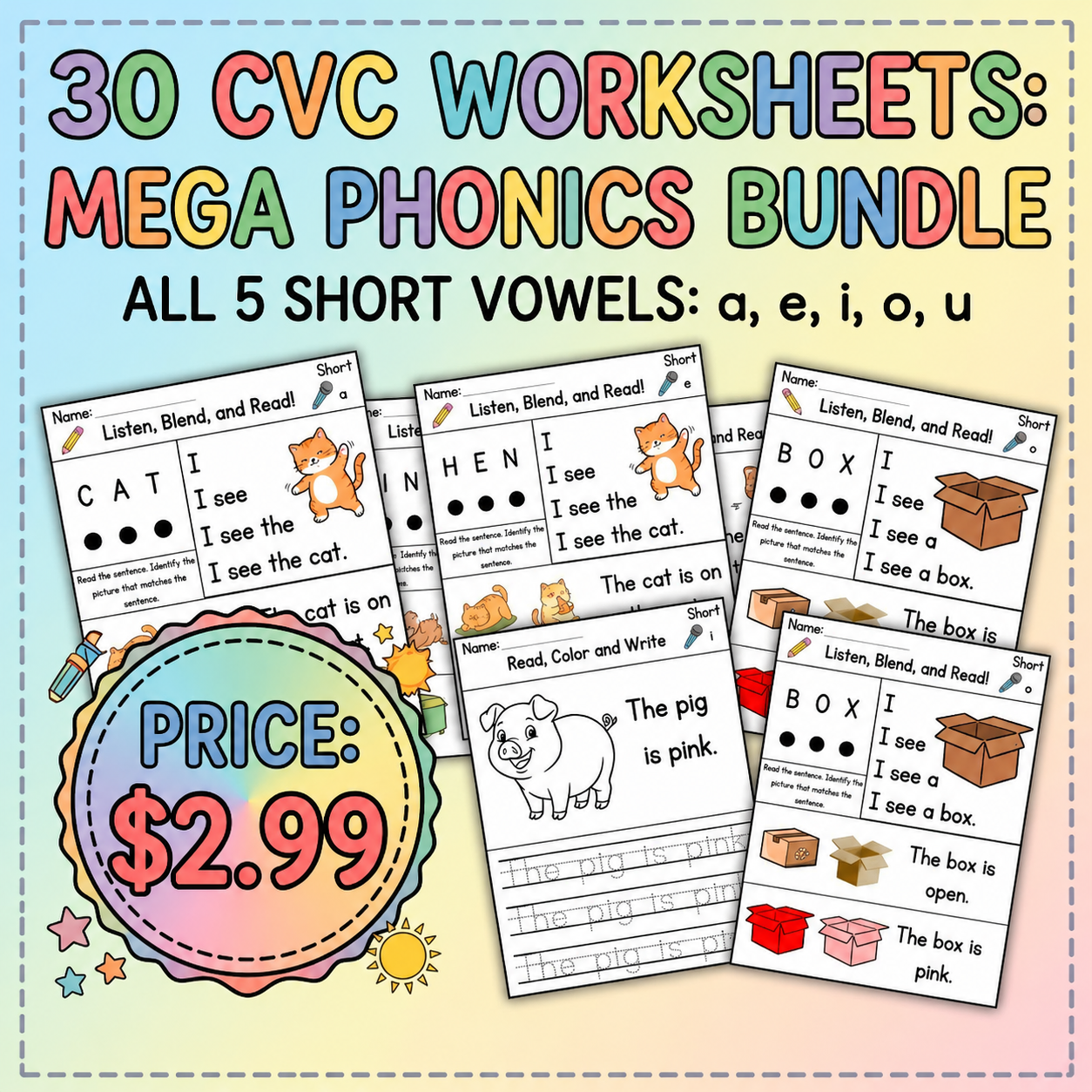
Want to see real progress in your child's skills? The strategies around phonics worksheets teacher that we'll cover in this post have been tested by educators and loved by parents.
Building from Sounds to Stories
Once children can decode simple CVC words, they're ready to tackle short decodable sentences and stories. This progression from individual sounds to connected text is where the magic of reading really begins.
Choose reading materials that match your child's current phonics level. Frustration-free reading builds confidence, and confidence builds motivation to tackle more challenging texts.
Making It Fun: Practical Ideas
Turn learning into a game whenever possible. Use timers for friendly challenges ("Can you trace all the letters before the timer goes off?"), offer sticker rewards for completed worksheets, or create a simple chart to track achievements.
Involve your child in choosing activities. When children have a say in what they work on, they're more engaged and more likely to persevere through challenging tasks.
Looking for ready-made resources? The Phonics Activities Beginning L, R, & S Blends Worksheets is packed with activities that reinforce exactly these skills. Grab it for just $1.99 — instant download, print as many times as you need.
Comprehension: Reading with Understanding
Decoding is only half of reading — comprehension is the other half. Even at the earliest levels, ask children questions about what they've read: "What happened in the story?" "How did the character feel?"
Simple activities like drawing a picture about a story, retelling it in their own words, or answering who/what/where questions build comprehension skills alongside decoding ability.
Quick tip: Try our free Alphabet Tracing Tool to create custom practice sheets tailored to your child's needs — no signup required.
Setting Realistic Expectations
Every child develops at their own pace. Some children will pick up reading at age 4, while others won't be ready until 6 or 7 — and both timelines are perfectly normal.
Focus on progress, not comparison. The child who needs more practice isn't behind — they're building a deeper foundation that will serve them well in the long run.
Save yourself hours of prep time. The Digraph Sounds Worksheets PH, WH, TH, SH, CH, CK includes everything you need, professionally designed and classroom-tested. Only $2.99.
Browse our full collection of Pre-K Worksheets for more resources like these.
Frequently Asked Questions
How much time should young children spend on worksheets each day?
For children ages 3-6, 10-20 minutes of focused worksheet time is ideal. Keep sessions short and positive, and always stop before frustration sets in. Consistency matters more than duration.
How many sight words should a kindergartener know?
By the end of kindergarten, most children can recognize 20-50 sight words. However, the exact number varies, and it's more important that children can decode phonetically regular words than memorize sight words.
At what age should a child start learning phonics?
Most children are ready for basic phonics instruction around age 4-5, starting with letter sounds and simple CVC words. However, informal exposure through reading aloud and singing alphabet songs can begin much earlier.
Are printable worksheets effective for early learning?
Yes, when used as part of a balanced approach that includes hands-on activities, play, and real-world experiences. Worksheets provide structured practice that reinforces skills taught through other methods.
You Might Also Enjoy
- How to Help a Child Who Confuses Similar Letters (b/d, p/q) — What Parents Need To Know
- CVC Word Families: Sorting and Building Words Together
- Reading Comprehension Strategies for Pre-K Students
Take the Next Step
The best time to start is now. Whether you print one worksheet today or build a complete learning routine, every small step counts toward your child's success.
Explore our full range of educational printables — designed by teachers, loved by kids, and trusted by parents worldwide.