One of the most common questions we hear from parents is about assessment strategies kindergarten. In this comprehensive guide, we'll address the key concepts, share proven strategies, and point you to resources that actually work.
The Role of Repetition
Neuroscience tells us that repetition strengthens neural connections. When a child traces the same letter multiple times across different worksheets, they're not just practicing — they're literally building stronger brain pathways for that skill.
The key is to vary the format while keeping the core skill the same. Tracing, writing from memory, identifying in text, and forming with playdough all reinforce letter knowledge through different modalities.
Building Independence
The ultimate goal of early education is to build independent learners. Start by modeling the activity, then do it together, then let your child try with minimal help, and finally step back completely.
This gradual release of responsibility — often called "I do, we do, you do" — is one of the most effective teaching frameworks for young children.
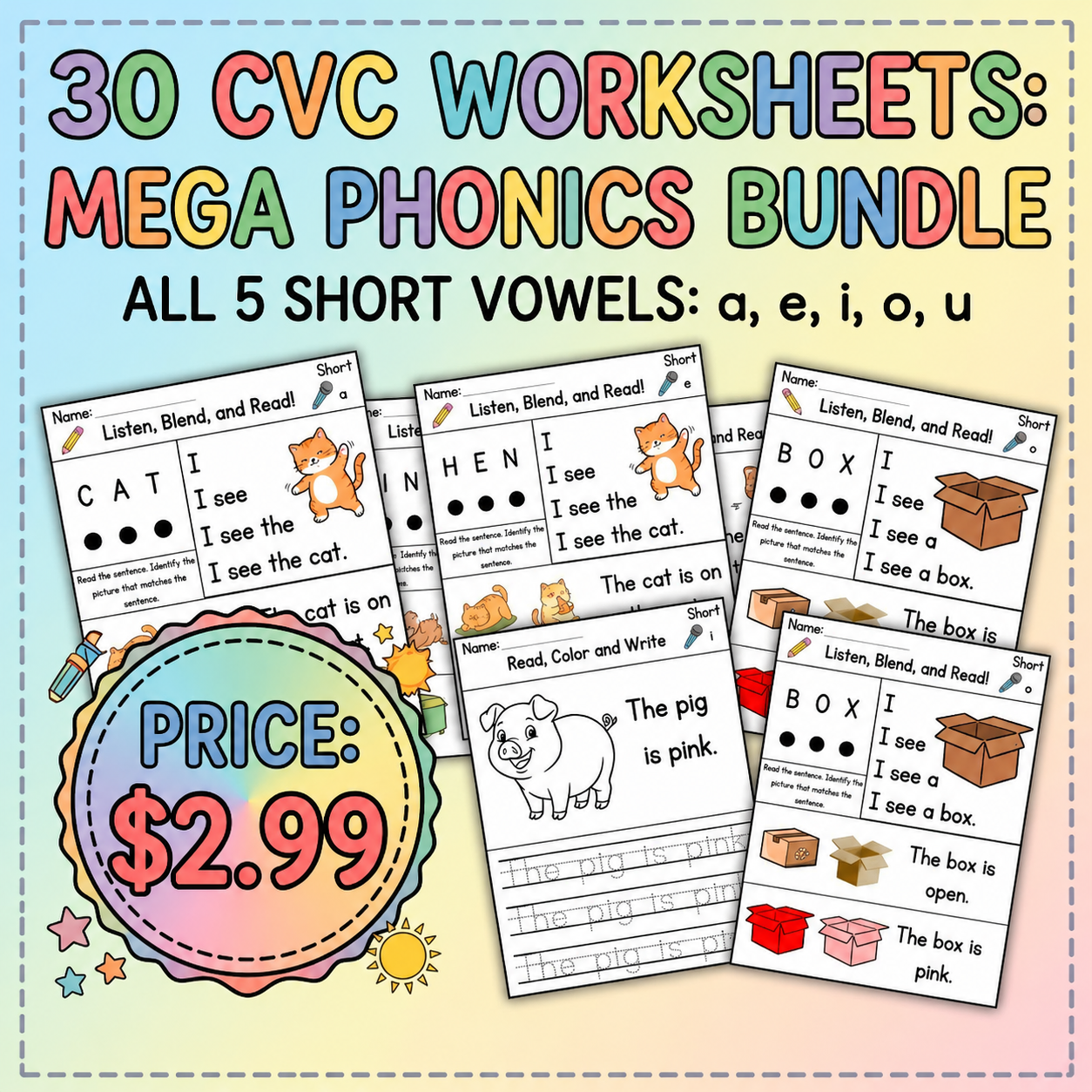
Save yourself hours of prep time. The 10 CVC Reading Stories: Fun Phonics & Comprehension Worksheets includes everything you need, professionally designed and classroom-tested. Only $1.99.
Putting Theory into Practice
Understanding concepts is important, but the real learning happens when children apply what they know through hands-on practice. Worksheets, activities, and real-world applications all help cement new skills.
Aim for a balance of guided practice (where you work alongside your child) and independent practice (where they work alone). Both are essential for building competence and confidence.
Quick tip: Try our free Spelling Test Template to create custom practice sheets tailored to your child's needs — no signup required.
When to Seek Extra Support
If your child consistently struggles with age-appropriate tasks despite regular practice, it may be worth consulting with their teacher or a developmental specialist. Early intervention is incredibly effective — the sooner challenges are identified, the more options are available.
Remember that needing extra support is not a reflection of your parenting or teaching. Some children simply need different approaches, and there's no shame in seeking guidance from professionals who specialize in early learning.
How to Measure Progress
Track your child's development by keeping a simple portfolio of their work over time. Looking back at worksheets from a few weeks or months ago can reveal dramatic improvement that daily observation might miss.
Focus on effort and progress, not perfection. A child who traces wobbly letters today but smoother ones next week is making excellent progress, even if the letters aren't perfect yet.
Looking for ready-made resources? The My First CVC Words Activity Pack is packed with activities that reinforce exactly these skills. Grab it for just $1.49 — instant download, print as many times as you need.
New here? Get our free sample worksheets and start your child's learning adventure today.
Browse our full collection of Math Worksheets for more resources like these.
Frequently Asked Questions
Are printable worksheets effective for early learning?
Yes, when used as part of a balanced approach that includes hands-on activities, play, and real-world experiences. Worksheets provide structured practice that reinforces skills taught through other methods.
Can I use the same worksheets multiple times?
Absolutely! Print-and-use PDF worksheets can be printed as many times as needed. Repetition is actually beneficial — children build mastery through repeated practice with familiar materials.
What's the best way to motivate a reluctant learner?
Offer choices (let them pick which worksheet to do), use a reward system (stickers, stamps), keep sessions short, and always end on a positive note. Making learning feel like play rather than work is the most effective motivator.
How much time should young children spend on worksheets each day?
For children ages 3-6, 10-20 minutes of focused worksheet time is ideal. Keep sessions short and positive, and always stop before frustration sets in. Consistency matters more than duration.
How do I know which worksheets are right for my child's level?
Choose worksheets where your child can complete about 80% independently. If everything is too easy, move to more challenging material. If they struggle with more than half, step back to an easier level.
You Might Also Enjoy
- How to Communicate Learning Progress to Parents — Teacher Approved Methods
- Feelings and Emotions Worksheets for Young Children — Tips And Strategies
- How to Communicate Learning Progress to Parents — Essential Tips
Start Your Child's Learning Journey Today
Every great reader, writer, and problem-solver started with the basics. The activities and strategies we've discussed today are your roadmap to building a strong educational foundation.
Browse our complete collection of printable worksheets and find the perfect resources for your child's learning level. With instant digital downloads starting under $2, there's no reason to wait.