Summer learning loss — also called the "summer slide" — is one of the most well-documented phenomena in education research. On average, children lose one to two months of reading and maths skills over a ten-week summer break. The encouraging news: even light, regular practice is enough to prevent it entirely. You do not need to recreate school at home.
How Much Practice Is Actually Needed?
Research consistently shows that four to five sessions of twenty minutes per week is sufficient to maintain — and even modestly advance — skills over summer. That is less than two hours per week. Consistency is the key: daily brief practice beats occasional marathon sessions every time. Summer learning should feel different from school — more relaxed, more child-directed, more connected to real-world experience.
Phonics and Reading: What to Focus On
For children who completed kindergarten, summer reading practice should cover: consolidating short vowel CVC words, practising digraphs if introduced, reading simple decodable texts for ten minutes daily, and being read to for fifteen minutes by an adult. For children entering kindergarten, focus on letter sounds (not just letter names), rhyming and beginning awareness of word boundaries.
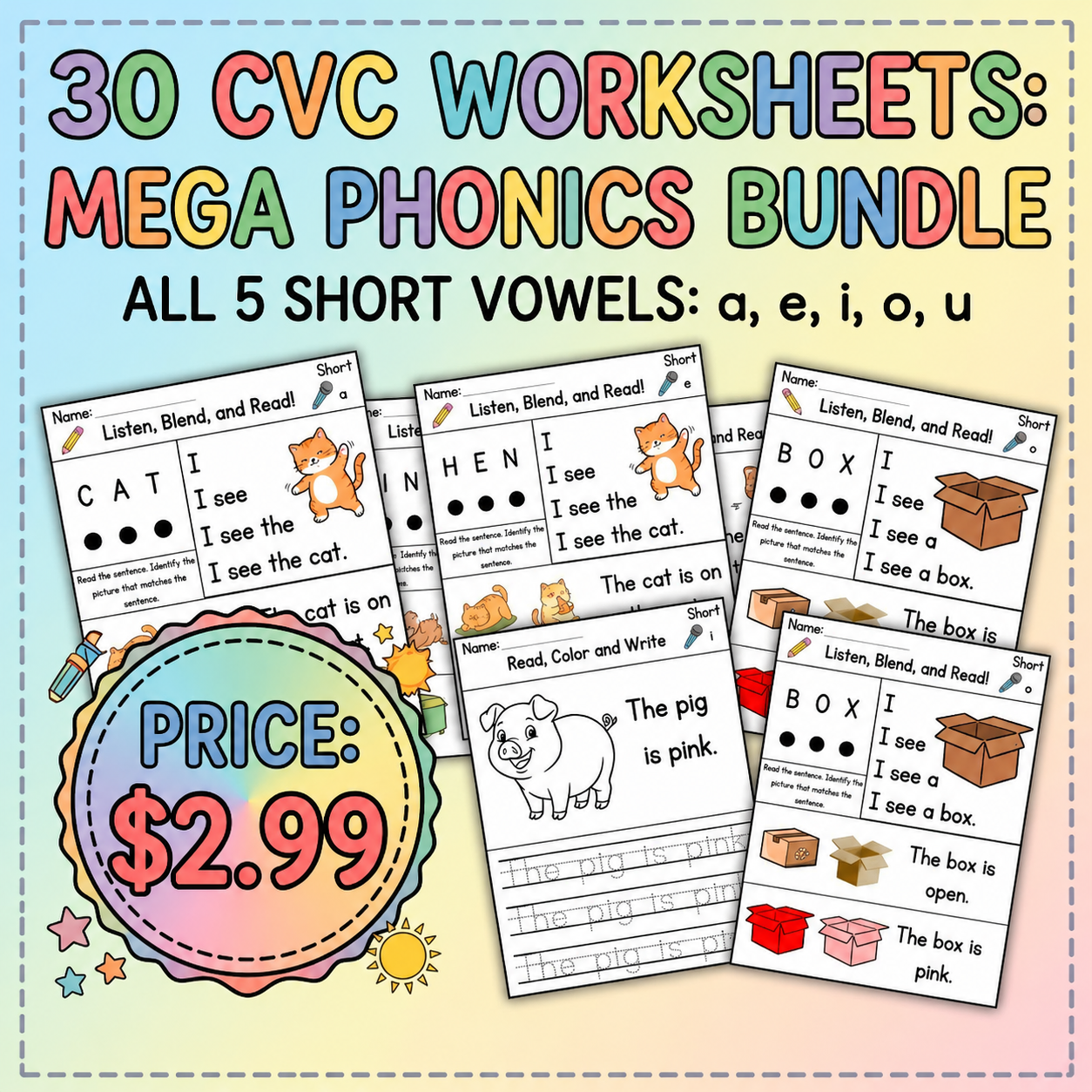
Our Phonics & Reading Mastery Bundle ($2.49) covers the full short-vowel and blend sequence in one organised pack — ideal as a standalone summer phonics programme that bridges wherever your child finished to wherever grade 1 begins.
Maths: Keeping Number Sense Sharp
For maths, the highest-return summer activities are: counting with real objects in everyday contexts (coins, baking measurements, steps walked), playing board games that involve number recognition and simple addition, and five to ten minutes of worksheet practice three to four times per week. Games like Snakes and Ladders, Uno and simple card games provide maths practice disguised as entertainment — the most sustainable form of summer learning available.
Making Printable Activities Work in Summer
The secret to sustainable summer printable practice is choice. Offer two or three different activity options and let the child pick which one to do today. Autonomy increases engagement dramatically, especially during months when children have been promised freedom from school-style demands.
Our My First Words: 4-in-1 Activity Workbook ($1.99) is ideal for a summer learning box — it covers animals, fruits and sight words across four activity types, giving meaningful variety within a single purchase. Also read: Math Readiness Skills Every Preschooler Needs for specific maths targets to aim for before the new school year starts.
Frequently Asked Questions
Should summer learning feel like school?
No. Keep it light, short and connected to things the child already enjoys. A child who associates summer learning with ten enjoyable minutes before going swimming will engage willingly; a child who associates it with stress will resist regardless of how good the materials are.
What if my child refuses all academic activities?
Start with games. Board games, cooking (measuring and counting) and building projects all provide genuine learning without a worksheet in sight. Introduce printables gradually once the child is in a positive learning mindset.
Keep the Summer Slide From Happening
Twenty minutes, four days a week. That is all it takes to walk into September ahead of where you left June. Browse our full worksheet library to build the perfect summer learning kit for your child.