If you're looking for practical ways to support your child's learning journey, you're in the right place. In this guide, we'll explore everything you need to know about adapting worksheets special needs and how to apply these ideas at home or in the classroom.
Building Independence
The ultimate goal of early education is to build independent learners. Start by modeling the activity, then do it together, then let your child try with minimal help, and finally step back completely.
This gradual release of responsibility — often called "I do, we do, you do" — is one of the most effective teaching frameworks for young children.
The Role of Repetition
Neuroscience tells us that repetition strengthens neural connections. When a child traces the same letter multiple times across different worksheets, they're not just practicing — they're literally building stronger brain pathways for that skill.
The key is to vary the format while keeping the core skill the same. Tracing, writing from memory, identifying in text, and forming with playdough all reinforce letter knowledge through different modalities.
Ready to put these ideas into practice? Our My First Words: 4-in-1 Activity Workbook gives your child structured, engaging worksheets designed by educators. Starting at just $1.99.
How to Measure Progress
Track your child's development by keeping a simple portfolio of their work over time. Looking back at worksheets from a few weeks or months ago can reveal dramatic improvement that daily observation might miss.
Focus on effort and progress, not perfection. A child who traces wobbly letters today but smoother ones next week is making excellent progress, even if the letters aren't perfect yet.
Quick tip: Try our free Name Tracing Generator to create custom practice sheets tailored to your child's needs — no signup required.
Tips for Getting Started
Start with just 10-15 minutes of focused practice per day. Young children have short attention spans, and pushing too hard can create negative associations with learning.
Follow your child's lead. If they show interest in letters, lean into that. If numbers fascinate them, build on that enthusiasm. The most effective learning happens when children are intrinsically motivated.
Create a dedicated learning space — even a small corner of a table — where your child knows it's time to focus. Having materials organized and ready reduces transition time and keeps engagement high.
Need something quick? Our free Handwriting Practice Paper Generator lets you create and print personalized worksheets in seconds.
Setting Realistic Expectations
Every child develops at their own pace. Some children will pick up reading at age 4, while others won't be ready until 6 or 7 — and both timelines are perfectly normal.
Focus on progress, not comparison. The child who needs more practice isn't behind — they're building a deeper foundation that will serve them well in the long run.
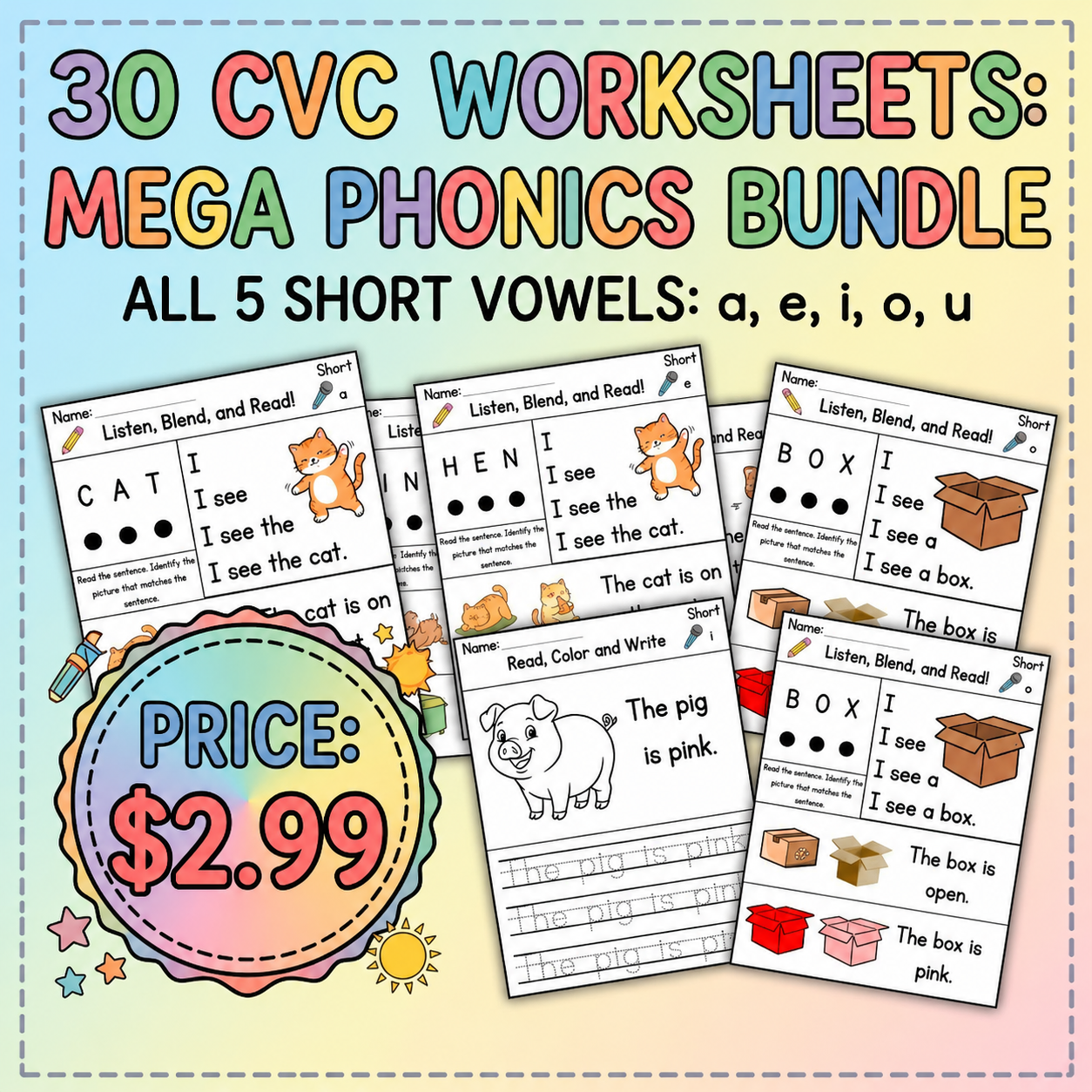
Looking for ready-made resources? The Phonics CVC Words & Missing Middle Sound Worksheet Bundle is packed with activities that reinforce exactly these skills. Grab it for just $1.49 — instant download, print as many times as you need.
Frequently Asked Questions
What's the best way to motivate a reluctant learner?
Offer choices (let them pick which worksheet to do), use a reward system (stickers, stamps), keep sessions short, and always end on a positive note. Making learning feel like play rather than work is the most effective motivator.
Can I use the same worksheets multiple times?
Absolutely! Print-and-use PDF worksheets can be printed as many times as needed. Repetition is actually beneficial — children build mastery through repeated practice with familiar materials.
How much time should young children spend on worksheets each day?
For children ages 3-6, 10-20 minutes of focused worksheet time is ideal. Keep sessions short and positive, and always stop before frustration sets in. Consistency matters more than duration.
You Might Also Enjoy
- How to Modify Phonics Instruction for Diverse Learners
- When Should Children Learn to Count? A Research-Based Guide — Advanced Tips
Ready to See Real Progress?
Consistent practice with quality materials makes all the difference. Our worksheets are designed to be engaging, effective, and easy to use — so you can spend less time preparing and more time teaching.
Shop all worksheets or try our free samples to get started.