Looking for evidence-based approaches to end of day routines? You've come to the right place. We've compiled insights from educators, child development experts, and parents who have seen real results.
How to Measure Progress
Track your child's development by keeping a simple portfolio of their work over time. Looking back at worksheets from a few weeks or months ago can reveal dramatic improvement that daily observation might miss.
Focus on effort and progress, not perfection. A child who traces wobbly letters today but smoother ones next week is making excellent progress, even if the letters aren't perfect yet.
Common Mistakes to Avoid
One of the biggest mistakes parents and teachers make is moving too quickly. Mastery takes time, and children need repeated exposure to concepts before they truly internalize them. If a child hasn't mastered a skill, repeating the practice is not failure — it's smart teaching.
Another common pitfall is relying on a single type of activity. Children learn best through variety: tracing one day, cutting and pasting the next, oral practice after that. Mix up your approach to keep things fresh.
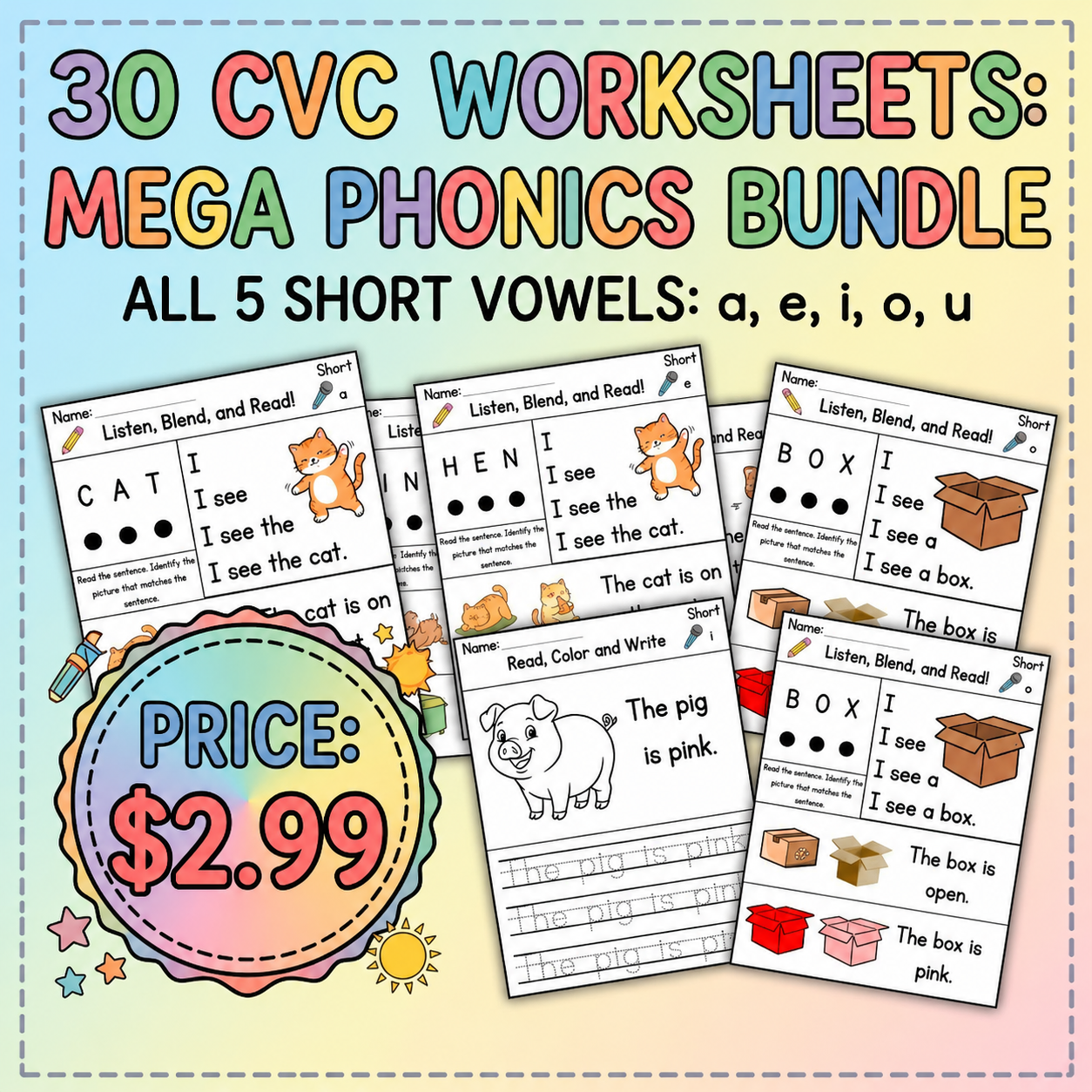
Ready to put these ideas into practice? Our Phonics CVC Words & Missing Middle Sound Worksheet Bundle gives your child structured, engaging worksheets designed by educators. Starting at just $1.49.
The Role of Repetition
Neuroscience tells us that repetition strengthens neural connections. When a child traces the same letter multiple times across different worksheets, they're not just practicing — they're literally building stronger brain pathways for that skill.
The key is to vary the format while keeping the core skill the same. Tracing, writing from memory, identifying in text, and forming with playdough all reinforce letter knowledge through different modalities.
Quick tip: Try our free Word Search Maker to create custom practice sheets tailored to your child's needs — no signup required.
Building Independence
The ultimate goal of early education is to build independent learners. Start by modeling the activity, then do it together, then let your child try with minimal help, and finally step back completely.
This gradual release of responsibility — often called "I do, we do, you do" — is one of the most effective teaching frameworks for young children.
For a hands-on approach, use our free Word Search Maker to generate custom activities your child will love.
Looking for ready-made resources? The Short Vowel CVC Words Practice Pack is packed with activities that reinforce exactly these skills. Grab it for just $1.99 — instant download, print as many times as you need.
Frequently Asked Questions
Can I use the same worksheets multiple times?
Absolutely! Print-and-use PDF worksheets can be printed as many times as needed. Repetition is actually beneficial — children build mastery through repeated practice with familiar materials.
How do I know which worksheets are right for my child's level?
Choose worksheets where your child can complete about 80% independently. If everything is too easy, move to more challenging material. If they struggle with more than half, step back to an easier level.
Are printable worksheets effective for early learning?
Yes, when used as part of a balanced approach that includes hands-on activities, play, and real-world experiences. Worksheets provide structured practice that reinforces skills taught through other methods.
You Might Also Enjoy
- How to Support Your Little Learners's Education Without Being Pushy — Step By Step
- 10 Must-Have Printable Activities for Pre-K Classrooms
Ready to See Real Progress?
Consistent practice with quality materials makes all the difference. Our worksheets are designed to be engaging, effective, and easy to use — so you can spend less time preparing and more time teaching.
Shop all worksheets or try our free samples to get started.