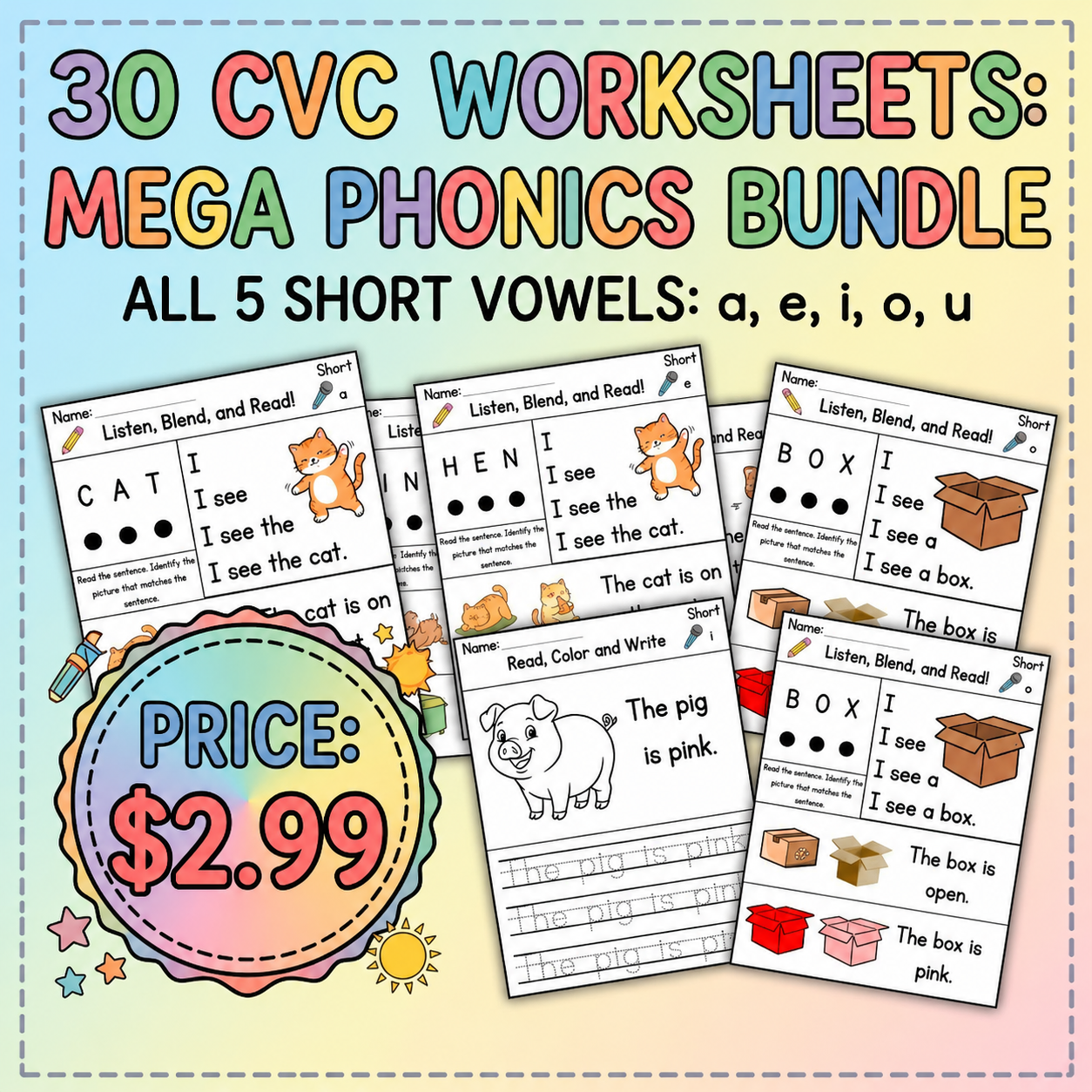
Phonics games — structured play activities that develop letter-sound knowledge, blending, segmenting and decoding skills — are one of the most effective tools available for early literacy instruction. Unlike worksheets, games embed phonics practice in a motivating context with immediate feedback, social interaction and an element of surprise. Children who play phonics games practise more repetitions with more focus than those working through equivalent worksheet content — and they enjoy it more.
What Makes a Good Phonics Game
Not every activity labelled a "phonics game" actually develops phonics skills. A good phonics game requires children to produce, hear or manipulate sounds — not just match colours, count spaces or roll dice without phonological content. The phonics demand should be central, not incidental. Also read: Why Phonemic Awareness Must Come Before Phonics Instruction for the oral foundation that makes all phonics games more effective.
10 Best Phonics Games for Kindergarten
1. Snap with Letter Sounds
Use a deck of alphabet cards (or letter tiles). Two players flip cards simultaneously — the first to say the sound (not the name) of the matching pair wins the pile. Speed-builds automaticity faster than any drill.
2. CVC Word Building Race
Each player has a set of letter cards. Call out a CVC word — the first player to build it correctly with their letters wins a point. Simple, fast, and highly effective for blending and segmenting practice simultaneously.
3. Sound Sorting Bingo
Create bingo cards with pictures rather than words. Call out initial sounds ("find something that starts with /m/") — children cover matching pictures. Reinforces initial sound identification in a social, low-stakes format.
4. Phoneme Segmentation Clapping
Call out a word — children clap once for each sound they can hear (not syllable — sound). "Cat" = three claps. "Ship" = three claps (sh-i-p). Competitive pairs or small group versions where children race to hold up the right number of fingers work well.
5. Word Family Towers
Use building blocks labelled with word families (-at, -in, -og). Children draw an onset card and must read the resulting word before stacking the block. The tower gets taller — until it falls and they rebuild. Combines physical play with genuine phonics demand.
6. CVC Detective
Hide CVC word cards around the room. Children search, find a card, decode the word, and collect it. At the end, each child reads their collected words. Active, engaging, and produces a high repetition count across varied words. Also read: CVC Word Families: The Fastest Path to Early Reading for how CVC words underpin early decoding.
7. Elbow-to-Elbow Blending
Two children sit back to back. One child selects a letter card (onset), the other selects a rime card (-at, -in, etc.) without seeing each other's cards. They count down and simultaneously turn to face each other — reading the resulting CVC word together. The surprise element dramatically increases engagement.
8. Sound Relay Race
Teams line up. Teacher calls a sound. First child runs to the board and writes or places a letter making that sound, then runs back to tag the next player who must write a word containing that sound. Fast-paced, physical and genuinely phonics-demanding.
9. Beginning, Middle, End
Show a picture card. Children hold up a coloured counter in three positions to show whether the target sound is at the beginning, middle or end of the word. Develops phoneme position awareness, which is critical for spelling.
10. Missing Sound Mystery
Write a CVC word on the board with one letter replaced by a question mark (c_t, _og, ma_). Children write the missing sound on individual whiteboards and reveal simultaneously. Targets medial vowel awareness — the hardest single skill in early phonics. Also read: Missing Middle Sounds: The Phonics Skill Most Parents Overlook for why the middle sound deserves its own focused attention.
Phonics Games That Double as Assessment
Games that require individual responses (whiteboards, response cards, thumbs up/down) allow teachers to assess the whole class simultaneously — far more efficient than individual phonics testing. If most children cannot produce the correct response in Word Family Towers, the word family needs reteaching. If only two or three struggle, you have identified those children for small group support.
Frequently Asked Questions
How long should phonics games sessions last?
Ten to fifteen minutes of focused phonics game time is typically more productive than thirty minutes of worksheet work in terms of practice repetitions and engagement. Daily short game sessions beat weekly long ones.
Can phonics games replace structured phonics lessons?
No — games practice and consolidate skills; they do not introduce them systematically. A structured phonics lesson introducing a new sound should precede the game that practises it, not follow it.
What if some children dominate the games and others opt out?
Use simultaneous response formats (whiteboards, finger counting, card reveals) rather than competitive raise-your-hand formats. When all children respond at once, every child practises every item rather than watching the fastest child respond repeatedly.
Games Are Practice, Not a Reward
The most important mindset shift around phonics games is treating them as the learning activity itself, not a reward for completing worksheets. A child playing a well-designed phonics game is doing serious literacy work — just in a format that does not feel like work.